Chain Link Fence Technical Specifications and Performance Analysis
Selecting a perimeter barrier often comes down to a trade-off between transparency, strength, and installation speed. For many industrial and residential projects, the woven diamond structure provides a balance that solid walls or ornate ironwork cannot match.
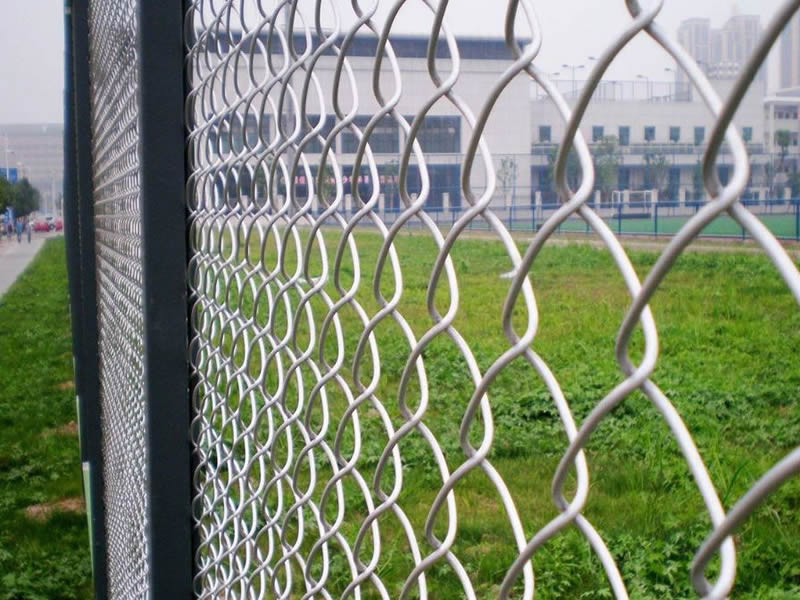
Selecting a perimeter barrier often comes down to a trade-off between transparency, strength, and installation speed. For many industrial and residential projects, the woven diamond structure provides a balance that solid walls or ornate ironwork cannot match.
The decision-making process for security fencing has shifted toward materials that offer long-term corrosion resistance without requiring constant painting or chemical treatment. This shift is primarily driven by the adoption of heavy galvanized coatings on low carbon steel.
Whether securing a commercial lot or a tennis court, understanding the technical specifications of a Chain Link Fence is essential for ensuring the structure does not sag or degrade prematurely under environmental stress.
Structural Mechanics of Diamond Mesh

The core strength of this fencing system lies in its woven diamond pattern. Unlike welded mesh, where the joints are rigid, the woven construction allows for a degree of flexibility. This means the fence can absorb impact or shift slightly with the ground without snapping the wires.
All professional rolls are finished with knuckled edges and line wires. These edges prevent the fabric from unraveling and ensure that the panel remains flat against the supporting posts, eliminating the gaps that typically occur in low-quality installations.
Technical Factors in Wire Gauge Selection
Selecting the correct wire gauge is a balance between cost-efficiency and physical resistance. In the industry, BWG (Birmingham Wire Gauge) is the standard metric. A thicker gauge, such as BWG 8, provides significantly higher tensile strength and is harder to cut, making it suitable for high-security zones.
Conversely, lighter gauges like BWG 11-13 are preferred for residential gardens or pet kennels where the primary goal is containment rather than deterring professional intrusion. The mesh size—ranging from 3/4" to 2"—further dictates the "openness" of the fence, influencing both visibility and the ability to keep out small animals.
When specifying these products, engineers must consider the height of the fence. Taller fences require heavier gauges to prevent the bottom from sagging or rolling up, ensuring a uniform surface that maintains its vertical integrity over decades of use.
Galvanization and Corrosion Lifecycle
Low carbon steel is the preferred base material due to its malleability and strength. However, without protection, it is highly susceptible to oxidation. The primary defense is a heavy galvanized coating, which creates a zinc barrier between the steel and the environment.
The longevity of a woven fence is determined not by the steel itself, but by the thickness and uniformity of the zinc layer; heavy galvanization prevents "red rust" and extends the service lifespan in humid or coastal climates.
This chemical process ensures that even if the surface is scratched during installation, the surrounding zinc will sacrificially corrode to protect the underlying steel. This makes it an ideal choice for highway borders and government facilities where maintenance budgets are limited.
Performance Comparison by Mesh Size
The aperture size of the mesh directly impacts its functional utility. Smaller mesh sizes provide higher security and better containment for pets or small debris, whereas larger mesh sizes offer better airflow and visibility for sports courts.
To evaluate the relative suitability of different specifications, we can look at a value index that weighs security, cost, and visibility. As the wire diameter increases, the security index rises, but the material cost increases proportionally.
Figure 2. Relative Performance Index by Wire Diameter
High-Security Application Scenarios
In high-risk environments, such as government facilities or industrial warehouses, standard diamond mesh is often augmented with barbed edges. This addition creates a psychological and physical deterrent that prevents climbing, significantly increasing the perimeter's security rating.
Beyond security, the versatility of the system allows it to be used in diverse settings. For example, in tennis courts or golf courses, the focus shifts toward uniform mesh holes and a flat surface to ensure a professional appearance and consistent ball bounce, which are key requirements for sporting infrastructure.
Evolution of Perimeter Security Standards
The industry has moved away from simple iron gratings toward more adaptable solutions. The rise of "security screens" and advanced wire mesh products has allowed for the integration of aesthetic beauty with functional strength, particularly in urban residential areas.
Modern manufacturing technology now enables precise control over wire diameter and weaving tension. This reduces the occurrence of "rolling" at the bottom of the fence, a common failure point in older installations that allowed intruders or animals to slide under the barrier.
As global supply chains evolve, the demand for standardized certifications has increased. Buyers now prioritize manufacturers who can provide consistent galvanization thickness and documented tensile strength, ensuring that the fence will not fail prematurely under heavy wind loads or physical impact.
Material Evaluation Framework
When evaluating different fencing options, it is critical to match the specification to the operational environment. A fence designed for a residential backyard will fail if installed around a high-security construction site.
The primary trade-off involves wire gauge versus cost. While BWG 8 is vastly superior in strength, it may be overkill for a simple property line. The table below provides a conceptual framework for selecting the right specification based on the intended use.
Ultimately, the combination of low carbon steel and a heavy zinc coating remains the most cost-effective solution for long-term perimeter management across most global markets.
| Application Scenario | Recommended Gauge | Ideal Mesh Size | Priority Factor |
|---|---|---|---|
| Residential/Pets | BWG 11-13 | 3/4" - 1" | Cost/Containment |
| Tennis Courts | BWG 11-13 | 1" - 1-1/2" | Uniformity/Aesthetics |
| Commercial Lots | BWG 8-11 | 1-1/2" - 2" | Durability/Visibility |
| Highway Perimeters | BWG 8-11 | 2" | Corrosion Resistance |
| Govt Facilities | BWG 8 | 1" - 1-1/2" | Intrusion Prevention |
| High Security | BWG 8 + Barbed | 1" | Maximum Deterrence |
Questions & Answers
Technically, they refer to the same product. "Cyclone fence" is a common regional term, while "Diamond mesh" describes the physical woven pattern. Both utilize woven steel wire to create a flexible yet strong panel that is widely used for security and containment across various industries.
The choice depends on the security level required. BWG 8 is a thicker wire, providing significantly more structural rigidity and resistance to cutting, making it ideal for high-security areas. BWG 13 is thinner and more economical, suitable for low-risk boundaries such as residential gardens or internal livestock partitions.
Low carbon steel is prone to rust when exposed to moisture and oxygen. Galvanization applies a layer of zinc that acts as a sacrificial anode. This means the zinc corrodes first, protecting the internal steel core and preventing structural failure due to oxidation, which is essential for fences in humid or coastal areas.
Yes, one of the primary advantages of woven mesh is its flexibility. Unlike rigid panels, the diamond mesh can be contoured to follow the slope of the ground. This prevents large gaps at the bottom of the fence, provided that proper tensioning and line wires are used during installation.
Galvanized fences are virtually maintenance-free. Because the zinc coating prevents rust, there is no need for regular painting. Occasional inspections to ensure the tension is still tight and that the knuckled edges haven't been compromised are usually sufficient to maintain the fence for its full service life.
Not always, but it is highly recommended for deterrent-focused perimeters. While a thick BWG 8 wire is hard to cut, it is still climbable. Adding barbed edges at the top creates a physical barrier that makes scaling the fence significantly more difficult and dangerous for intruders.
Final Thoughts
The effectiveness of a perimeter barrier is not found in the material alone, but in the alignment of technical specifications with the actual risks of the environment. From the choice of BWG gauge to the application of heavy galvanization, each decision impacts the long-term cost of ownership and the level of security achieved.
As infrastructure requirements evolve, the reliance on durable, woven steel solutions continues to grow. By focusing on structural integrity and corrosion resistance, property owners can ensure a secure, low-maintenance boundary that serves its purpose for decades.

Related article & blog

Send Inquiry
If you are interested in our products, leave your information here and we will be in touch shortly.