Expanded Metal Mesh Performance Analysis
When specifying materials for high-visibility security or privacy screens, the balance between transparency and structural integrity often becomes a critical engineering hurdle. Traditional gratings often compromise aesthetics, while standard meshes may lack the req
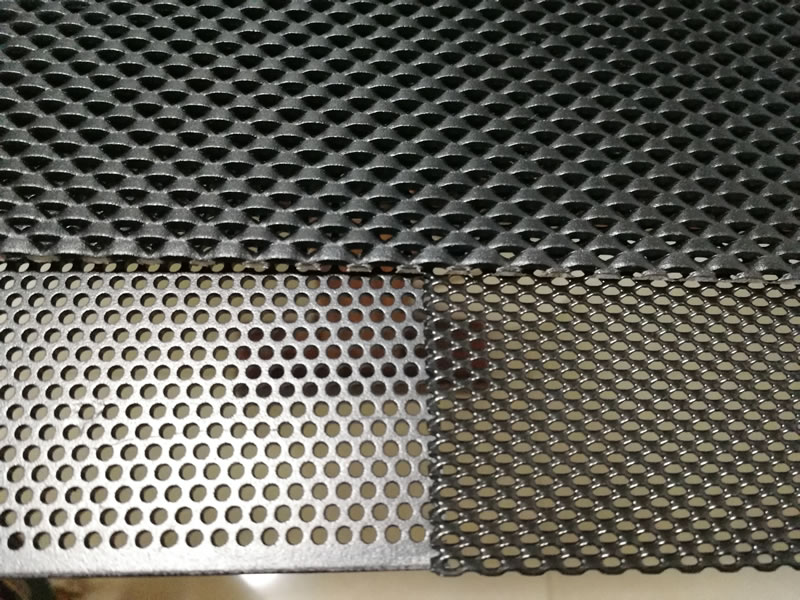
When specifying materials for high-visibility security or privacy screens, the balance between transparency and structural integrity often becomes a critical engineering hurdle. Traditional gratings often compromise aesthetics, while standard meshes may lack the required impact resistance for perimeter protection.
The architectural shift toward "limited vision" solutions has driven the adoption of specialized aluminium expanded metals. These materials are engineered to allow outward visibility while restricting the view from the outside, effectively merging the functions of a security barrier and a privacy filter.
Understanding the technical nuances of Expanded Metal Mesh allows architects and facility managers to optimize for weight, cost, and corrosion resistance without sacrificing security.
The Mechanics of Limited Vision Mesh

Limited vision mesh, often referred to as one-way mesh or privacy mesh, operates on a specific geometric principle. By utilizing a precise angle of expansion and strand thickness, the mesh creates a visual barrier that inhibits external sightlines while maintaining a clear view for those inside.
This effect is not a chemical coating but a result of the physical structure of the expanded metal. The overlapping strands create a "blind spot" for outside observers, making it a preferred choice for security screens and cyclone-prone regions where visual privacy is as essential as structural strength.
Engineering Parameters for DVA Screens
The performance of a DVA aluminium screen is defined by its geometric specifications. Standard industry configurations typically utilize a plate thickness of 0.5mm and a strand thickness of 1.2mm. These dimensions are calibrated to provide sufficient rigidity to resist forced entry while remaining lightweight enough for residential and commercial door frames.
Aperture size is the second critical variable, with common openings measuring 2mm x 3mm or 1mm x 3mm. A tighter opening increases the privacy effect (limiting vision further) but can slightly reduce airflow. Selecting the correct opening depends on whether the primary goal is total privacy or a balance between security and ventilation.
Beyond geometry, the surface treatment plays a vital role in longevity. Powder coating is used to provide a protective layer against oxidation. Common architectural colors include black, white, grey, and yellow, which are applied to ensure that the aluminium does not corrode in humid or coastal environments.
Material Trade-offs: Aluminium vs. Steel
When selecting between aluminium and steel for expanded metal applications, the decision usually hinges on the environmental exposure and the required strength-to-weight ratio. While stainless steel (AISI 304/316) and galvanized steel offer higher absolute tensile strength, they introduce significant weight and cost burdens.
Aluminium expanded metal, specifically the DVA variant, provides a cost-effective alternative that significantly reduces the load on hinges and sliding mechanisms while maintaining high corrosion resistance through advanced powder coating.
This makes aluminium the ideal choice for hinged and sliding doors where operational ease is a priority. In markets like Australia and New Zealand, the preference for aluminium is driven by the need for materials that can withstand salty air without the heavy maintenance required by lower-grade steels.
Comparative Performance Index
To evaluate the suitability of different mesh types, it is helpful to look at a qualitative index across five key metrics: Weight Efficiency, Cost-Effectiveness, Corrosion Resistance, Visual Privacy, and Impact Strength.
Aluminium DVA mesh excels in weight and cost, whereas stainless steel dominates in absolute strength. The following index provides a conceptual comparison based on standard industry application requirements.
Figure 2. Material Suitability Relative Index
Practical Deployment Scenarios
The application of DVA mesh extends beyond simple windows. In a typical residential setting, it is frequently integrated into hinged and sliding doors to serve as both a security barrier and an insect screen. Because it is fire-and-knife proof, it replaces traditional iron gratings, providing a more modern aesthetic while maintaining the same level of burglary prevention.
In commercial or industrial environments, these screens are often used for fire escape exit screens and cyclone screens. The ability to provide a "ultra-clear visual experience" from the inside while remaining opaque from the outside makes it ideal for security checkpoints and high-traffic entrances where surveillance and privacy must coexist.
Evolution of Security Mesh Finishes
Historically, security meshes were limited to raw galvanized finishes or basic paint, which were prone to peeling and rust. The shift toward industrial powder coating has transformed the product from a purely functional item into an architectural element.
Modern powder coating processes ensure an equal aperture and a fault-free finish. This not only prevents corrosion but also allows the mesh to blend seamlessly with the building's exterior. Colors like saffron yellow, bronze, and silver are now common, enabling customization for luxury residential projects.
Furthermore, the combination of a flat surface and durable coating makes installation simpler. A perfect flat surface prevents the mesh from bowing or warping, which is critical when fitting screens into tight tolerances of double doors or security windows.
Selection Framework for Procurement
Procuring the correct mesh requires a systematic evaluation of the site conditions. Buyers must decide between the affordability and lightness of aluminium and the extreme durability of stainless steel (AISI 304 or 316). For most residential privacy and security needs, aluminium is the optimal choice due to its balance of properties.
It is also essential to verify the weight per square meter; for instance, a standard DVA mesh typically weighs around 0.86Kgs/m2. This metric is vital for ensuring that the chosen door or window frame can support the installation without sagging over time.
The following table provides a decision framework for comparing the different types of security mesh available, such as diamond grilles and perforated aluminium, based on typical project requirements.
| Material Type | Primary Strength | Typical Application | Relative Cost |
|---|---|---|---|
| DVA Aluminium | Weight/Privacy | Residential Screens | Low-Medium |
| Stainless Steel 316 | Max Corrosion Res. | Coastal/Industrial | High |
| Galvanized Steel | Structural Rigidity | Perimeter Fencing | Medium |
| Diamond Grille | Impact Resistance | Heavy-Duty Security | Medium-High |
| Perforated Alum. | Airflow/Aesthetics | Decorative Facades | Medium |
| Stainless Steel 304 | General Durability | Commercial Windows | Medium-High |
Questions & Answers
Limited vision mesh, such as DVA Aluminium screen, is an expanded metal product designed with a specific strand overlap and angle. This geometry allows people inside a building to see out clearly, while people outside find it difficult to see in. It effectively provides privacy and security without the need for blinds or curtains, making it an ideal solution for security doors and windows.
Yes, when specified correctly. High-grade aluminium expanded mesh is engineered to be knife-proof and impact-resistant. While stainless steel has higher absolute strength, the structural integrity of the DVA aluminium screen is sufficient for most residential security needs. It is designed to prevent forced entry while being significantly lighter and more cost-effective than steel alternatives.
The choice depends on your priority between privacy and airflow. A 1mm x 3mm opening provides a higher degree of "limited vision," increasing privacy from the outside. A 2mm x 3mm opening allows for slightly more airflow and light penetration while still maintaining a significant privacy effect. For high-security zones, the smaller aperture is generally preferred.
Powder coating primarily enhances the corrosion resistance and aesthetic appeal of the aluminium. It does not significantly change the mechanical strength of the expanded metal, but it is essential for preventing oxidation, especially in coastal regions. It also ensures a smooth, fault-free finish that prevents snagging and improves the overall longevity of the installation.
With professional-grade powder coating and correct installation, aluminium expanded metal screens typically offer long-term durability. Many manufacturers provide guarantees of up to ten years on their products. The lifespan is generally extended when the mesh is properly integrated into a sturdy frame and maintained with simple cleaning to remove salt or industrial deposits.
Yes, one of the primary advantages of DVA mesh is its dual functionality. Because the apertures are small (typically 1mm to 2mm), it effectively acts as a barrier against most insects and mosquitoes while providing high-level security. This eliminates the need for a separate insect screen, reducing the number of layers and simplifying the door or window design.
Final Thoughts
The transition from heavy iron bars to advanced Expanded Metal Mesh solutions represents a broader industry trend toward "invisible security." By leveraging the geometric properties of aluminium and the durability of powder coatings, it is now possible to achieve high-level perimeter protection without sacrificing the aesthetic or psychological comfort of a home.
For those evaluating materials, the key lies in matching the strand thickness and aperture size to the specific environmental and security risks of the site. Whether opting for the agility of aluminium or the resilience of stainless steel, the objective remains the same: a secure, private, and long-lasting barrier.

Related article & blog

Send Inquiry
If you are interested in our products, leave your information here and we will be in touch shortly.