Temporary Fencing Panels Technical Specifications and Performance Analysis
Securing a perimeter quickly and efficiently is a critical requirement for construction sites, public events, and industrial zones. The shift toward modular systems has made the deployment of temporary barriers a matter of hours rather than days, focusing on rapid a
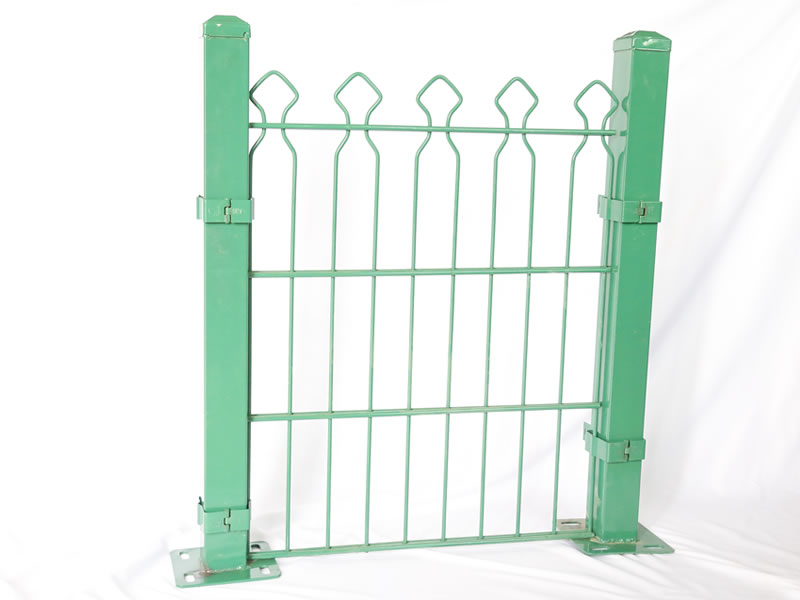
Securing a perimeter quickly and efficiently is a critical requirement for construction sites, public events, and industrial zones. The shift toward modular systems has made the deployment of temporary barriers a matter of hours rather than days, focusing on rapid assembly and structural reliability.
The efficacy of these systems depends heavily on the material composition and the welding technique used to ensure the panels remain flat and stable under wind load or accidental impact. From low carbon steel to specialized PVC coatings, the technical specifications of the mesh directly influence its lifespan and resistance to environmental degradation.
For those managing large-scale projects, understanding the balance between tensile strength and ease of installation is key. This guide examines the technical architecture of Temporary Fencing Panels and how to evaluate them for specific industrial applications.
Structural Fundamentals of Welded Mesh

The core of high-quality temporary fencing lies in the automatic welding process. By laying iron wires horizontally and vertically and applying sophisticated welding techniques, manufacturers can achieve a level and flat structure that resists warping. This rigidity is essential when panels are joined via plastic or high-strength steel wire clamps, ensuring the entire line remains solid.
Anping Yuandong Metal Product Co., Ltd. utilizes these automated processes to maintain consistency across large batches. The focus is on ensuring that each intersection is securely bonded, which prevents the "sagging" effect often seen in lower-grade temporary installations.
Technical Specifications and Materiality
Material selection is the primary determinant of a fence's tensile strength. Most industrial-grade panels utilize low carbon steel wire, which provides the necessary ductility for fabrication while maintaining structural integrity. For specific requirements, tensile strength is often categorized by wire type: line wires typically range between 45-55kgs/mm², while cross wires are reinforced to 60-70kgs/mm² to provide lateral stability.
Dimensional versatility allows these panels to adapt to various security levels. Standard widths range from 0.5m to 2.5m, with wire diameters varying between 1.0mm and 3.0mm. Hole sizes—such as 50x50mm or 100x100mm—are selected based on whether the goal is simple boundary marking or preventing the passage of small animals and debris.
The assembly logic relies on a precise fit between the panels and the posts (typically 2.1mm to 2.3mm). This synergy, combined with the specific panel sizes (e.g., 1.8m x 30m or 2m x 30m), allows for a modular approach where segments can be added or removed based on the evolving needs of the site.
The Role of Surface Treatment in Durability
Because temporary fences are exposed to diverse weather conditions, the coating process is as important as the steel itself. The industry standard involves a multi-stage approach: initial electro-galvanizing or hot-dipped galvanizing, followed by a PVC coating. This layering creates a dual barrier against oxidation.
The combination of hot-dipped galvanization and PVC coating ensures that the steel core is shielded from moisture and salt air, significantly extending the wearable life of the product in corrosive environments.
Beyond protection, PVC coatings offer aesthetic flexibility. Common assortments include black, green, and white, though custom colors can be applied to match corporate branding or local zoning requirements for parks and recreation areas. This versatility ensures that security does not have to come at the expense of visual integration.
Evaluating Performance Indices
When comparing different mesh configurations, stakeholders often use a relative value index to determine the best fit for their project. Factors such as corrosion resistance, installation speed, and structural rigidity are weighted against the cost of materials. For example, a PVC-coated welded mesh ranks higher in longevity than a basic galvanized mesh but requires a slightly higher initial investment.
The following assessment model illustrates the relative performance of different material treatments across five key operational metrics. This allows procurement officers to visualize where a specific product excels and where trade-offs are being made.
Figure 2. Relative Performance Index by Coating Type
Diversified Application Scenarios
The utility of these panels extends far beyond simple construction site boundaries. In agricultural settings, they are frequently deployed for poultry houses and fruit drying screens, where the mesh size is calibrated to allow airflow while preventing predator entry. Similarly, in the mining and transportation sectors, these panels serve as runway enclosures and draining racks, leveraging their corrosion resistance to withstand harsh industrial chemicals.
In urban environments, the focus shifts toward property management. Companies and residential gardens use PVC-coated panels for a cleaner look that blends into the landscape while providing a sturdy deterrent. The ability to supply these in both rolls and panels allows for customized installation, whether the terrain is flat and linear or requires complex contouring around existing structures.
Trends in Modular Perimeter Security
The industry is moving toward "smart deployment" systems where the focus is on reducing the man-hours required for installation. This has led to the refinement of the clamping systems, moving from basic wire ties to high-strength steel wire clamps and specialized plastic connectors that snap into place, reducing the risk of human error during setup.
Environmental sustainability is also influencing material choices. There is an increasing demand for coatings that are non-toxic and more resistant to UV degradation, ensuring that the PVC does not crack or peel under prolonged sun exposure. This shift is particularly evident in the public sector, where park and recreation area fencing must meet strict environmental safety standards.
Furthermore, the integration of precision machinery in factories—such as those operated by Anping Yuandong—ensures that panels are produced with near-zero tolerance for variance. This precision is what allows for the seamless "plug-and-play" nature of modern temporary fencing, where every panel is identical and every post fits perfectly.
Selection Framework for Procurement
Choosing the correct fencing system requires a trade-off analysis between initial cost, deployment speed, and expected duration of use. For a short-term event, a lighter-gauge galvanized panel may suffice. However, for a long-term infrastructure project, the investment in PVC-coated, high-tensile steel is justified by the reduction in maintenance and replacement costs.
Technical buyers should pay close attention to the wire diameter and the welding strength. A 2.5mm wire provides a significantly different impact resistance than a 1.0mm wire, which can be the difference between a secure perimeter and one that is easily breached.
The following table provides a conceptual comparison framework to help determine the most suitable configuration based on common operational requirements.
| Application Scenario | Recommended Wire Dia | Coating Priority | Relative Suitability |
|---|---|---|---|
| Construction Site | 2.5mm - 3.0mm | Galvanized / PVC | High Stability |
| Agricultural/Poultry | 1.0mm - 2.0mm | PVC Coated | High Airflow |
| Public Park/Garden | 1.5mm - 2.5mm | Custom Color PVC | High Aesthetic |
| Mining/Industrial | 2.5mm - 3.0mm | Hot-dipped Galv. | Max Corrosion Res. |
| Short-term Event | 1.0mm - 1.5mm | Electro-galv. | Rapid Deploy |
| Property Boundary | 2.0mm - 2.5mm | PVC Coated | Long-term Value |
Questions & Answers
Unlike chain link, which is woven, Euro-style panels are welded. This creates a rigid, flat structure that does not sag over time. The automatic welding process ensures that the horizontal and vertical wires are bonded firmly, providing better impact resistance and a more professional appearance for industrial and commercial use.
PVC coating acts as a secondary waterproof barrier over the galvanized steel. This prevents oxygen and moisture from reaching the metal core, which effectively halts the rusting process. In coastal or high-humidity areas, PVC coating can extend the usable life of the panels by several years compared to untreated steel.
For high-security needs, a wire diameter of 2.5mm to 3.0mm is recommended. These thicker wires offer significantly higher tensile strength and are much harder to cut or bend. When paired with 50x50mm mesh holes, they provide a robust physical barrier that is suitable for construction sites and industrial zones.
Yes, the PVC coating process allows for a wide range of colors. While black, green, and white are standard, manufacturers can coat the mesh in custom colors to meet a company's branding requirements or to comply with specific environmental aesthetics in parks and residential areas.
The most efficient method is using specialized plastic clamps or high-strength steel wire clamps. These allow for "tool-less" or minimal-tool installation, meaning panels can be snapped into the posts quickly. This modularity is what makes the system "temporary" and easy to relocate.
Absolutely. Because they are available in various mesh sizes (such as 50x100mm) and are corrosion-resistant, they are ideal for poultry houses and egg baskets. The rigid structure prevents predators from pushing through the mesh, while the PVC coating makes them easy to clean and maintain.
Final Thoughts
Selecting the right temporary fencing system is a balance of technical precision and operational practicality. By focusing on the quality of the weld, the thickness of the wire, and the integrity of the surface coating, project managers can ensure a secure perimeter that minimizes maintenance and maximizes safety.
As the industry moves toward more modular and sustainable solutions, the value of high-precision manufacturing becomes evident. Investing in panels with verified tensile strength and professional-grade coatings ensures that your security infrastructure remains reliable, regardless of the environment.

Related article & blog

Send Inquiry
If you are interested in our products, leave your information here and we will be in touch shortly.