Hexagonal Wire Netting Material Specifications and Performance Analysis
Selecting the right containment or fencing solution often comes down to a balance between structural flexibility and tensile strength. In the realm of industrial and agricultural wire products, the hexagonal geometry offers a unique advantage, allowing the mesh to c
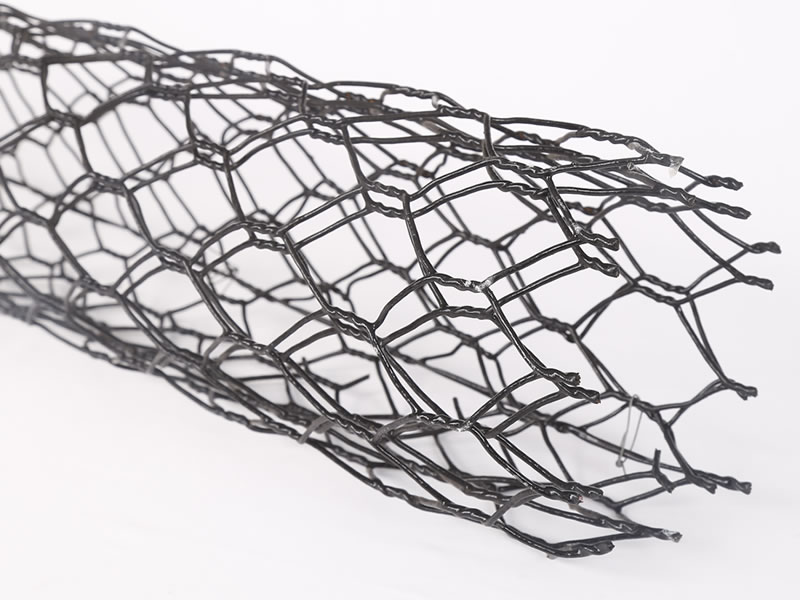
Selecting the right containment or fencing solution often comes down to a balance between structural flexibility and tensile strength. In the realm of industrial and agricultural wire products, the hexagonal geometry offers a unique advantage, allowing the mesh to conform to irregular surfaces without losing its integrity.
The technical requirements for these systems vary significantly depending on whether the priority is predator control, poultry housing, or erosion prevention. Understanding the interplay between wire gauge, coating types, and weave twists is essential for ensuring the longevity of the installation in diverse environmental conditions.
From general-purpose enclosures to heavy-duty reinforced barriers, choosing the appropriate Hexagonal Wire Netting requires a deep dive into material specifications and processing methods to avoid premature failure or insufficient protection.
The Geometry of Hexagonal Weaving

The hexagonal structure is not merely an aesthetic choice but a functional necessity for flexible fencing. By twisting wires into a six-sided pattern, the mesh gains the ability to stretch and contract, allowing it to be draped over uneven terrain or curved structures without the warping common in square welded meshes.
This specific weave ensures that if a single wire is cut, the surrounding hexagons maintain their shape, preventing the entire section from unraveling. This characteristic makes it indispensable for poultry netting and general-purpose boundary markers.
Material Composition and Corrosion Resistance
The longevity of any wire product is dictated by its base material and subsequent finishing. Most industrial netting begins with low carbon steel wire, chosen for its ductility during the weaving process. However, raw steel is highly susceptible to oxidation, necessitating advanced coating technologies to withstand moisture and chemical exposure.
Hot-dipped galvanization remains the gold standard for outdoor durability, as it creates a thick, bonded layer of zinc that protects the inner steel core through sacrificial anode action. For environments with higher acidity or extreme humidity, PVC coating is often applied over the galvanized layer, adding a polymer shield that prevents direct contact between the metal and corrosive agents.
The choice between electro-galvanizing and hot-dipping depends on the intended lifespan; electro-galvanizing offers a smoother finish for indoor or short-term use, while hot-dipping is reserved for permanent installations like heavy-type wire netting and perimeter fences.
Processing Dynamics: Normal vs. Reverse Twist
The way the wire is twisted during manufacturing fundamentally alters how the netting behaves when tension is applied. Normal twist hexagonal netting is the standard for most commercial poultry and garden applications, providing a stable, predictable mesh size.
Reverse twist processing creates a mesh that is inherently more stable and less prone to "sliding" or distorting when the netting is pulled or stretched across a wide area, making it superior for structural reinforcements.
For manufacturers like Anping Yuandong Metal Product Co., Ltd., the ability to offer both twisting methods allows clients to tailor the mesh to the specific mechanical stress of their environment, whether they require the easy malleability of a normal twist or the rigid stability of a reverse twist.
Structural Performance Metrics
Evaluating the performance of hexagonal mesh involves analyzing the relationship between wire gauge (BWG) and mesh size. A smaller mesh (e.g., 1/2") paired with a thicker gauge provides a dense barrier against small rodents and pests, whereas larger mesh (e.g., 4") is designed for heavy-duty containment where visibility and airflow are prioritized over fine-grain filtration.
The following index illustrates the relative suitability of different mesh specifications across key performance categories, helping buyers determine the optimal balance for their specific use case.
Figure 2. Comparative Suitability Index by Mesh Specification
Critical Application Scenarios
In a typical industrial setting, such as a large-scale poultry farm, "chicken wire" is not a one-size-fits-all product. Poultry netting must balance the need to prevent predator intrusion with the requirement for ventilation. Using a mesh size of 1" with a BWG of 20-24 is common, as it provides the necessary barrier without restricting the movement of air or the visibility of the livestock.
Conversely, in civil engineering projects focusing on slope stabilization or erosion control, heavy-type wire netting is utilized. These installations often require hot-dipped galvanized finishes to prevent soil acidity from corroding the mesh over decades of service, ensuring the land remains secure and the netting remains intact under the pressure of sediment and vegetation.
Evaluating Future Coating Trends
The industry is shifting toward multi-layered protection. While simple galvanization was once sufficient, the rise of sustainable agriculture and high-salinity coastal installations has increased the demand for PVC coated and enamelled green wire mesh. These coatings not only enhance corrosion resistance but also provide camouflage, reducing the visual impact of fencing in natural landscapes.
Furthermore, the integration of higher-grade low carbon steel allows for thinner gauges that maintain the same tensile strength as older, heavier products. This reduction in material volume without a loss in performance helps in reducing shipping costs and easing the installation process for large-scale projects.
As user expectations evolve, there is an increasing focus on the uniformity of the coating. Inconsistencies in the PVC layer can lead to "pinhole" corrosion, where moisture penetrates the polymer and attacks the steel, leading to hidden structural failure. Precision in the coating process is now a primary differentiator for high-end manufacturers.
Selection Framework for Buyers
Selecting the correct specification requires a systematic approach. Buyers must first define the primary threat (e.g., small insects vs. large animals), then determine the environmental exposure (e.g., indoor dry vs. outdoor coastal), and finally choose the most cost-effective coating that meets the required lifespan.
A common error is over-specifying the wire gauge, which increases cost and weight without providing additional functional benefit, or under-specifying the coating, leading to premature replacement costs that far outweigh the initial savings.
The following table provides a conceptual guide for matching mesh specifications to typical operational requirements, based on common industry standards.
| Application | Recommended Mesh | Optimal Finish | Key Priority |
|---|---|---|---|
| Poultry Housing | 1/2" to 1" | Hot-dipped Galv. | Predator Exclusion |
| Garden Fencing | 1" to 2" | PVC Coated (Green) | Aesthetics/Corrosion |
| Soil Stabilization | 3" to 4" | Heavy Galvanized | Tensile Strength |
| General Purpose | 1" to 1-1/2" | Electro-galvanized | Cost Efficiency |
| Animal Enclosures | 2" to 3" | Hot-dipped Galv. | Durability/Airflow |
| Coastal Barriers | Various | PVC over Galv. | Salt Spray Resistance |
Questions & Answers
Galvanizing before weaving ensures the entire wire, including the core, is protected before it is shaped. Galvanizing after weaving covers the completed mesh, which can provide a more uniform external layer and seal the twisted joints, but may leave some internal points of the twist less protected if the zinc does not penetrate fully. The choice depends on whether the priority is overall wire integrity or surface smoothness.
In the BWG (Birmingham Wire Gauge) system, a lower number indicates a thicker wire. For example, a 15 BWG wire is significantly stronger and more rigid than a 24 BWG wire. Higher gauge (thicker) wires are used in heavy-type wire netting to resist physical impact and high tension, whereas lower gauge (thinner) wires are used for lightweight poultry netting where flexibility is more important than raw strength.
PVC coating should be selected for environments with high moisture, chemical exposure, or where the fence must blend into a natural landscape. While galvanization provides excellent rust protection, PVC adds an extra layer of insulation that prevents the steel from contacting corrosive elements entirely. It is especially recommended for coastal areas or livestock pens where animal waste can accelerate metal corrosion.
Yes, specifically when using "heavy type" wire netting with reverse twist processing. This combination provides the stability needed to hold back soil or reinforce concrete elements. The hexagonal shape allows the mesh to distribute pressure more evenly across the surface than linear grids, provided the wire gauge is sufficient to handle the load requirements of the project.
Standard industrial widths typically range from 3 feet to 8 feet. The choice of width is usually determined by the height of the enclosure or the dimensions of the area being stabilized. Wider rolls reduce the number of seams required in a long installation, which improves both the structural integrity and the aesthetic appearance of the finished project.
Generally, no. Electro-galvanization creates a very thin layer of zinc compared to hot-dipping. While it is cost-effective and visually appealing for indoor applications or temporary partitions, it will rust significantly faster when exposed to rain and humidity. For any permanent outdoor installation, hot-dipped galvanized or PVC-coated wire is strongly recommended to ensure longevity.
Final Thoughts
The utility of hexagonal wire netting lies in its versatility, but its success in the field depends entirely on the precision of its specifications. By aligning the wire gauge, twist method, and coating technology with the actual environmental demands, operators can significantly extend the life of their infrastructure and reduce maintenance overhead.
As material science advances, the transition toward composite coatings and higher-strength low-carbon steels will continue to redefine the boundaries of what these flexible mesh systems can achieve. Whether for agricultural protection or industrial stabilization, a data-driven approach to selection is the only way to ensure long-term reliability.

Related article & blog

Send Inquiry
If you are interested in our products, leave your information here and we will be in touch shortly.