Welded Wire Mesh Technical Specifications and Performance Analysis
Selecting the right structural reinforcement or containment system often comes down to a critical choice between different wire configurations. While woven options exist, the precision and rigidity offered by welded intersections provide a level of stability that is
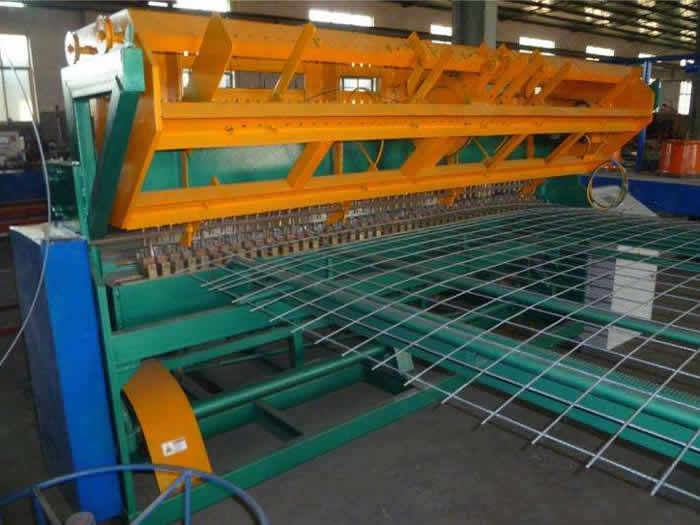
Selecting the right structural reinforcement or containment system often comes down to a critical choice between different wire configurations. While woven options exist, the precision and rigidity offered by welded intersections provide a level of stability that is indispensable for modern industrial and construction frameworks.
The shift toward automated production has fundamentally changed how these materials are manufactured, allowing for tighter tolerances and highly customized mesh sizes. This evolution is particularly evident in how raw materials like galvanized iron and stainless steel are processed into rigid panels or flexible rolls to meet specific load-bearing requirements.
Understanding the intersection of machinery capabilities and material properties is key to optimizing cost and performance. For those integrating these systems into their projects, exploring the technical specifications of Welded Wire Mesh ensures the resulting structure meets both safety standards and operational needs.
The Mechanics of Resistance and Rigidity

Unlike woven mesh, where wires are interlaced, the stability of this material is derived from the fusion of longitudinal and transverse wires at each crossing point. This process creates a rigid grid that resists deformation under pressure, making it a primary choice for concrete reinforcement and security barriers.
The structural integrity depends heavily on the quality of the weld and the consistency of the wire diameter. When these variables are controlled, the resulting mesh exhibits a high strength-to-weight ratio, ensuring that the panels remain flat and the apertures stay uniform across large surface areas.
Technical Parameters in Mesh Production
The production of industrial mesh is governed by several critical variables: wire diameter, mesh aperture size, and welding speed. For instance, machines designed for lighter applications might handle wires from 2mm to 4mm, while heavy-duty equipment is required for diameters reaching up to 12mm. The balance between welding speed and joint strength is a constant technical trade-off in high-volume manufacturing.
Raw material selection further defines the technical capability of the mesh. Galvanized iron is utilized for atmospheric corrosion resistance, while stainless steel is reserved for chemical exposure or high-hygiene environments. Black annealed wire serves a different purpose, often used in temporary construction or agricultural settings where flexibility and cost-efficiency are prioritized over long-term oxidation resistance.
Furthermore, the transition from roll production to panel production allows for diverse applications. Roll machines are optimized for continuous length and flexibility, whereas panel machines focus on precise cutting and rigid geometry, enabling the creation of standardized sheets for flooring or wall reinforcements.
Impact of PLC Automation on Precision
Programmable Logic Controllers (PLC) have replaced manual adjustments in the wire mesh industry, introducing a level of intelligence to the fabrication process. By automating the feeding mechanism and the weft wire supply, manufacturers can eliminate the human error associated with manual spacing and timing.
The primary advantage of PLC-driven systems is the ability to adjust weft distance at random on a single sheet, allowing for variable-density mesh that can respond to localized stress points in a structure.
This automation also results in a smoother finish compared to traditional mechanical machines. The reduction in noise and energy consumption, coupled with higher stability during high-speed operations, allows for a more sustainable production cycle without sacrificing the precision of the final welded joint.
Material Suitability and Performance Indices
Evaluating the suitability of a mesh requires a comparison of its physical properties against the environmental stressors of the application. A material that performs well in a poultry cage may fail in a reinforced concrete slab due to differences in tensile strength and corrosion rates.
By analyzing relative performance indices, procurement managers can determine the optimal balance between material cost and longevity. The following index illustrates the relative suitability of different materials across common performance metrics.
Figure 2. Material Performance Suitability Index
Deployment Scenarios in Modern Infrastructure
In a typical industrial setting, such as the construction of a reinforced warehouse floor, the use of welded panels reduces the labor required for onsite tying compared to loose rebar. The uniformity of the grid ensures that the load is distributed evenly, minimizing the risk of structural cracking over time.
Beyond construction, these materials are critical in specialized containment. For example, the poultry and livestock industry relies on specific wire diameters and aperture sizes to prevent predator entry while maintaining ventilation. In these cases, the selection of galvanized coatings is non-negotiable to withstand the ammonia-rich environment of animal housing.
Future Trajectories in Wire Fabrication
The trajectory of the wire mesh industry is moving toward "intelligent fabrication," where machinery can automatically adjust parameters based on real-time quality sensor feedback. This shift will likely reduce waste and allow for the production of hyper-customized panels with varying wire thicknesses within a single sheet to optimize material usage.
Environmental considerations are also driving the development of new coatings. While galvanization remains the standard, there is a growing interest in eco-friendly polymer coatings that offer superior corrosion resistance without the environmental footprint of traditional acid-pickling processes.
As urbanization increases, the demand for lightweight yet high-strength security mesh is rising. This is pushing the industry toward higher-grade stainless steel alloys and more efficient welding techniques that maintain joint strength while reducing the overall mass of the installation.
Selection Framework for Industrial Mesh
Choosing the correct mesh involves a systematic evaluation of load, environment, and budget. A common mistake is prioritizing the lowest cost per square meter without accounting for the total cost of ownership, which includes installation time and the frequency of replacement due to corrosion.
Technical specifications such as those found in the YDP series of machines demonstrate the range of available options. From light-duty 2-4mm wire for poultry cages to heavy-duty 8-12mm wire for industrial fencing, the equipment defines the physical limits of the product.
The following table provides a decision framework for selecting the appropriate wire diameter and material based on the intended application and required performance.
| Application Type | Recommended Wire Dia. | Ideal Material | Key Priority |
|---|---|---|---|
| Poultry/Small Cage | 2mm - 4mm | Galvanized Iron | Cost & Ventilation |
| Security Fencing | 3mm - 7mm | Galvanized/Coated | Rigidity & Barrier |
| Concrete Reinforce | 5mm - 8mm | Black Steel/Galv | Tensile Strength |
| Industrial Panels | 8mm - 12mm | Stainless/Heavy Galv | Impact Resistance |
| Chemical Filtration | 1mm - 3mm | Stainless Steel | Corrosion Resistance |
| Decorative Screens | 2mm - 5mm | Stainless/Brass | Aesthetic Finish |
Questions & Answers
The primary difference lies in the joint. Woven mesh is created by interlacing wires over and under each other, which allows for some flexibility but can shift under load. Welded wire mesh is created by fusing the wires together at every intersection through electrical resistance welding. This results in a rigid, stable grid that maintains its shape and aperture size even under significant pressure, making it superior for structural and security applications.
The choice depends on the environment and budget. Galvanized iron is an excellent, cost-effective choice for outdoor use where moderate corrosion resistance is needed, such as in fencing or agriculture. Stainless steel is significantly more durable and resistant to harsh chemicals, high temperatures, and saltwater, making it the necessary choice for food processing, pharmaceutical plants, or extreme marine environments where long-term integrity is critical.
Yes, provided the production uses PLC-controlled machinery. Modern automated systems allow the operator to adjust the distance of the weft wires randomly or according to a specific program on the same sheet. This is particularly useful for specialized industrial filters or reinforcement panels where higher density is required in high-stress areas while maintaining a wider mesh elsewhere to save on weight and material cost.
The main limitation is flexibility. Because the joints are fused, welded mesh cannot be easily bent or shaped around complex curves without specialized tools or damaging the welds. Additionally, if the coating is scratched or damaged in galvanized mesh, the exposed steel can rust, which may eventually compromise the weld joint if not treated. This is why stainless steel is preferred for applications where the mesh will be subject to frequent abrasion.
Welding speed is a critical variable in the production process. If the speed is too high, the dwell time at the intersection may be insufficient to create a full fusion weld, resulting in "cold joints" that can snap under load. Conversely, excessively slow speeds can cause over-welding, which may burn through the wire or create brittle joints. High-precision machines balance speed with current and pressure to ensure consistent joint strength across the entire panel.
It depends entirely on the material. Galvanized and black iron wires will oxidize and lose structural integrity at high temperatures. For high-heat applications, stainless steel welded mesh is the only viable option, as it maintains its mechanical properties and resists oxidation at temperatures where carbon steel would fail. Always verify the specific grade of stainless steel (e.g., 304 vs 316) to ensure it matches the temperature and chemical requirements of the site.
Final Thoughts
The transition from basic wire products to high-precision welded systems marks a significant shift in how industrial infrastructure is reinforced and secured. By leveraging PLC automation and a deep understanding of material science, manufacturers can now provide solutions that are not only stronger but more resource-efficient.
Ultimately, the success of any mesh-based installation depends on the alignment between the technical specifications of the product and the physical demands of the environment. Whether utilizing the heavy-duty capacity of a YDP-04 machine for industrial barriers or the precision of stainless steel for hygiene-critical zones, the focus must remain on long-term durability and structural stability.

Related article & blog

Send Inquiry
If you are interested in our products, leave your information here and we will be in touch shortly.