Perforated Metal Sheet Manufacturing Standards and Performance Analysis
Selecting the right aperture and material for industrial filtration or architectural screening often comes down to the precise geometry of the perforation. Whether it is for acoustic dampening, ventilation, or structural reinforcement, the mechanical properties of t
Selecting the right aperture and material for industrial filtration or architectural screening often comes down to the precise geometry of the perforation. Whether it is for acoustic dampening, ventilation, or structural reinforcement, the mechanical properties of the sheet must align perfectly with the environmental stress it will encounter.
The shift toward sustainable manufacturing has pushed the metal fabrication industry to refine how materials are utilized, reducing waste while maximizing the open area of the sheet. This evolution in precision punching and laser cutting has expanded the versatility of metal panels, making them essential in sectors ranging from aerospace to high-end interior design.
Understanding the technical trade-offs between hole patterns, material thickness, and coating options is critical for procurement managers. In this guide, we analyze the selection logic for Perforated Metal Sheet and how current manufacturing standards influence final product performance.
The Mechanics of Material Perforation

Perforation is a mechanical process that transforms a solid metal sheet into a functional component by removing specific portions of the material. Unlike weaving or welding, perforation relies on punching or shearing, which preserves the inherent strength of the base metal while introducing porosity.
The process requires a precise balance between the punch diameter and the bridge width—the remaining metal between the holes. If the bridge is too narrow, the sheet loses structural integrity; if it is too wide, the intended flow rate or transparency is compromised.
Technical Variables in Sheet Design
The utility of a perforated panel is defined by its "Open Area Percentage," which determines how much fluid, light, or sound can pass through the material. This is calculated based on the hole size and the pitch (the distance from the center of one hole to the next). For instance, a staggered pattern typically provides a higher open area than a straight pattern for the same hole size.
Material choice further dictates the performance. Stainless steel is prioritized for corrosive environments or food-grade applications, while galvanized steel offers a cost-effective balance for outdoor fencing or HVAC ducts. Aluminum is frequently selected for architectural facades due to its lightweight nature and natural oxide layer.
Post-processing treatments, such as deburring, are essential for safety and precision. In high-specification industrial settings, the removal of sharp edges from the perforation process prevents material snagging and ensures a professional finish for visible architectural elements.
Balancing Airflow and Structural Rigidity
Engineers face a constant tension between maximizing transparency and maintaining the load-bearing capacity of the metal. As the percentage of open area increases, the stiffness of the panel decreases, potentially leading to deformation under pressure or weight.
The optimal design of a perforated sheet is not found in the maximum open area, but in the minimum material thickness required to maintain structural stability while meeting the specific flow-rate requirements of the application.
To mitigate this loss of strength, designers often employ reinforcing ribs or combine perforated sections with solid borders. In the context of security screens or industrial guards, this hybrid approach ensures that the panel remains impenetrable while allowing for necessary ventilation.
Performance Index by Hole Pattern
Different perforation patterns serve distinct mechanical purposes. Round holes are the standard for general filtration, while square or slotted holes are often used for specialized gripping surfaces or aesthetic linear designs. The arrangement of these holes—whether staggered or aligned—significantly alters the flow dynamics.
The following index illustrates the relative suitability of common patterns based on an internal evaluation framework focusing on airflow efficiency, structural strength, and acoustic absorption.
Figure 2. Pattern Performance Comparison Index
Integration in Industrial Environments
In practical industrial applications, perforated sheets are rarely used in isolation. They are typically integrated into larger systems, such as machine guards, speaker grilles, or catalyst supports. A critical consideration here is the interaction between the perforation and the mounting method; welding near the holes can cause local warping if the heat input is not carefully controlled.
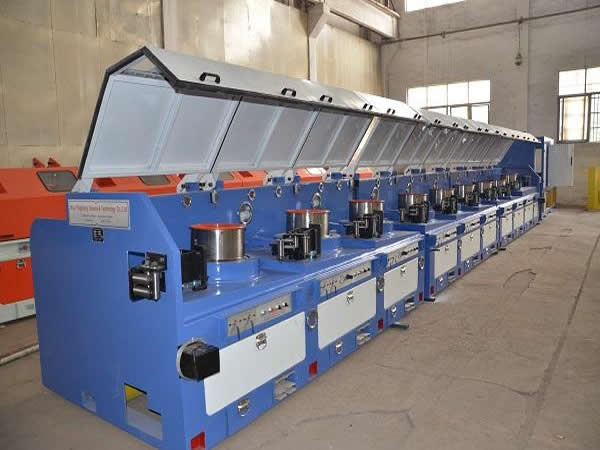
For enterprises like Anping Yuandong Metal Product Co., Ltd., which has operated since 1997, the focus has shifted toward providing integrated solutions. This includes supplying not only the finished panels but also the specialized machinery—such as expanded metal mesh machines—that allows clients to maintain a versatile internal production line.
Future Trajectories in Metal Fabrication
The industry is moving toward "intelligent perforation," where hole sizes vary across a single sheet to create graded filtration or artistic gradients. This is made possible by high-precision CNC laser cutting, which eliminates the need for physical dies and allows for rapid prototyping of complex designs.
Sustainability is also driving a change in coating technologies. Traditional powder coatings are being supplemented by advanced PVD (Physical Vapor Deposition) and eco-friendly anodizing processes that increase corrosion resistance without releasing harmful volatile organic compounds (VOCs).
Furthermore, the integration of perforated metals with smart materials—such as phase-change materials for thermal management—is an emerging trend in architectural skins, allowing buildings to "breathe" and regulate temperature passively.
Selection Framework for Procurement
Selecting the correct sheet requires a systematic evaluation of the environment and the intended function. Procurement officers should start by defining the primary goal: Is the priority filtration efficiency, structural security, or aesthetic transparency? These goals often conflict, requiring a calculated trade-off.
Environmental factors, such as humidity, chemical exposure, and temperature fluctuations, should then dictate the material grade. For example, 316L stainless steel is necessary for marine environments, whereas carbon steel with a galvanized coating is sufficient for dry, industrial shelving.
Finally, the manufacturing method must be verified. Punching is ideal for high-volume, standard patterns, while laser cutting is reserved for low-volume, high-complexity projects. The following table provides a relative suitability matrix for different industrial scenarios.
| Application Scenario | Recommended Material | Optimal Pattern | Key Priority |
|---|---|---|---|
| Chemical Filtration | Stainless Steel 316 | Round Staggered | Corrosion Resistance |
| Architectural Facade | Aluminum / Corten | Custom Slot/Hex | Visual Aesthetics |
| Machine Guarding | Galvanized Steel | Round Straight | Impact Strength |
| Acoustic Panels | Perforated Aluminum | Micro-perforation | Sound Absorption |
| HVAC Venting | Galvanized / Alum | Round Staggered | Airflow Volume |
| Security Screens | High-Tensile Steel | Small Round/Square | Intrusion Prevention |
Questions & Answers
The open area is the percentage of the total sheet surface that consists of holes. For round holes in a staggered pattern, it is calculated by multiplying the area of one hole by the number of holes per unit area and dividing by the total area. This metric is vital for determining how much air or liquid can pass through the panel without creating excessive backpressure.
Staggered patterns generally provide better structural stability and a more uniform distribution of stress across the sheet. Straight patterns create linear "weak points" or fault lines along the rows of holes, which can make the sheet more prone to bending or tearing along those axes under heavy loads.
Punched perforations use a physical die and punch, making them significantly faster and more cost-effective for high-volume production of standard shapes. Laser cutting uses a concentrated beam of light to melt the metal, allowing for virtually any shape or size without the need for tooling, which is ideal for custom architectural work or low-volume prototypes.
Yes, provided that the material thickness and hole size are correctly specified. Security-grade sheets use high-tensile steel with small apertures to prevent tools from gaining leverage. When combined with specific coatings or woven reinforcements, they can replace traditional iron gratings for burglary prevention while maintaining visibility.
The best method depends on the environment. Hot-dip galvanizing is the industry standard for general outdoor use. For coastal or highly acidic environments, 316-grade stainless steel is recommended. Powder coating can be added over galvanization for an extra layer of protection and a specific color finish, though the edges of the perforations must be well-coated to prevent "edge creep" corrosion.
Deburring removes the sharp burrs and fragments left behind after the punching process. In industrial filtration, this prevents metal shards from contaminating the filtered medium. In architectural applications, it ensures a smooth touch and a cleaner aesthetic. For safety-critical applications, deburring is mandatory to prevent worker injury during installation and maintenance.
Final Thoughts
The versatility of perforated metal sheets lies in the mathematical precision of their design. By aligning the open area, material grade, and perforation pattern with the specific demands of the application, industries can achieve a balance of functionality, durability, and cost-efficiency.
As fabrication technology evolves toward more automated and customized solutions, the ability to source from manufacturers who provide both the final product and the supporting machinery remains a key competitive advantage for global supply chains.


Related article & blog

Send Inquiry
If you are interested in our products, leave your information here and we will be in touch shortly.