Pattern Perforated Metal Sheet
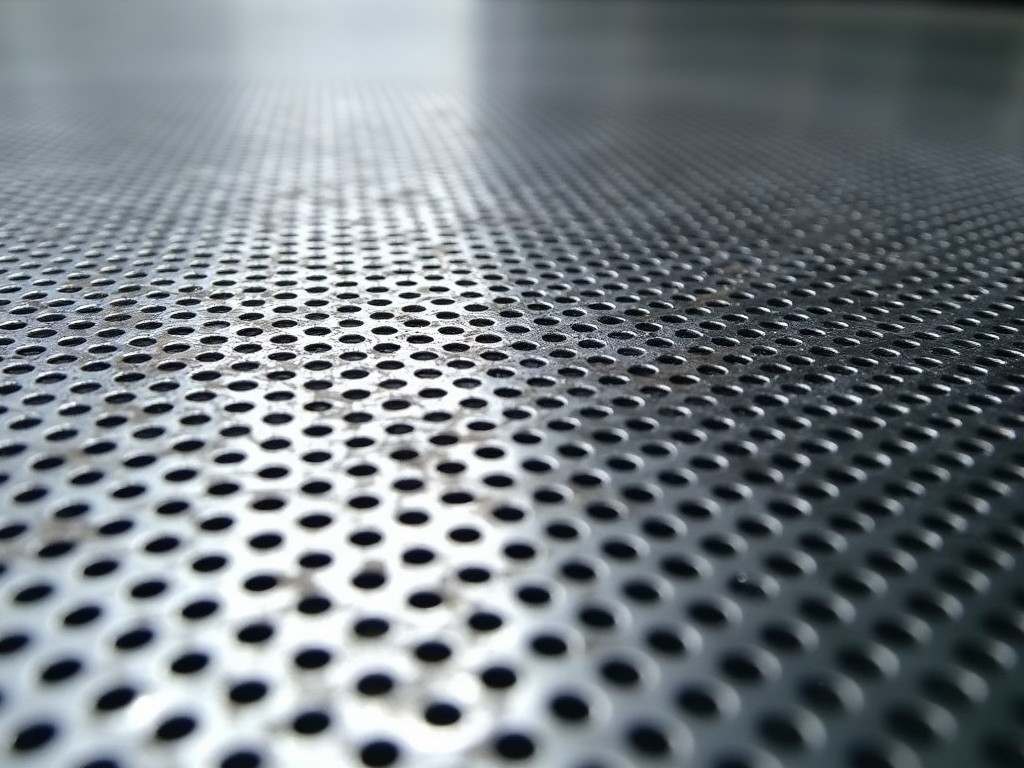
Pattern perforated metal sheets are engineered materials created by punching precise, repeatable hole patterns into flat metal substrates. These patterns are not random but follow specific geometric
Pattern Perforated Metal Sheet
Pattern perforated metal sheets are engineered materials created by punching precise, repeatable hole patterns into flat metal substrates. These patterns are not random but follow specific geometric arrangements—such as staggered, straight-line, or custom designs—to achieve targeted functional outcomes. The perforation process alters the sheet’s structural, acoustic, optical, and airflow properties while maintaining the base material’s inherent strength. Engineers select pattern perforated sheets when they need to balance structural integrity with controlled passage of light, air, sound, or liquids. The design of the perforation pattern directly influences performance characteristics, making pattern selection as critical as material choice.
Material Selection and Substrate Properties
The base metal significantly determines the sheet’s suitability for environmental and mechanical demands. Common substrates include cold-rolled steel for cost-effective indoor applications, galvanized steel for moderate corrosion resistance in semi-exposed environments, stainless steel grades 304 and 316 for harsh chemical or marine conditions, and aluminum for lightweight applications where weight reduction is critical. Material thickness typically ranges from 0.5 mm to 6.0 mm, with thinner gauges used for decorative or filtration purposes and thicker gauges for load-bearing screens or security barriers. The tensile strength and yield point of the substrate must be evaluated alongside perforation density to ensure the sheet maintains structural stability under expected loads.
Perforation Pattern Design and Functional Impact
Perforation patterns are defined by hole shape, size, arrangement, and open area percentage. Round holes are most common due to ease of fabrication and predictable flow characteristics, while square, slotted, hexagonal, or custom shapes serve specific needs like enhanced particle retention or directional airflow control. Staggered (60-degree) patterns offer higher open area and uniform distribution compared to straight-line layouts, which may be preferred for alignment with structural members. Open area—the ratio of hole surface to total sheet surface—directly affects airflow rate, light transmission, and sound absorption. For example, a 40% open area staggered round pattern provides approximately 30% higher airflow than a 25% open area straight-line pattern under identical pressure differentials, a critical factor in HVAC grille or acoustic panel design.
Manufacturing Considerations and Tolerances
Perforation is typically achieved using CNC turret punches or rotary dies, with hole accuracy dependent on tooling precision, material thickness, and punch-to-die clearance. Standard tolerances for hole diameter are ±0.1 mm for thicknesses under 2.0 mm and ±0.2 mm for thicker materials, while positional accuracy between hole centers is maintained within ±0.15 mm. Edge distortion, known as roll-over or burr, increases with material thickness and decreases with sharper tooling; secondary deburring or vibratory finishing may be required for applications demanding smooth surfaces, such as food processing or architectural facades. The direction of punch entry can influence surface appearance, so consistent punch orientation is specified for aesthetic applications where visual uniformity is essential.
Typical Applications Across Industries
In architectural facade systems, pattern perforated panels provide solar shading while maintaining visibility, with pattern density calculated to reduce cooling load by up to 25% in sun-exposed elevations based on computational fluid dynamics modeling. Industrial filtration systems utilize specific slot patterns to capture particulates of defined micron sizes, where open area and hole geometry are matched to fluid viscosity and flow rate to prevent premature clogging. Acoustic panels in mechanical rooms or auditoriums use perforated backing over absorptive cores; the hole size and spacing are tuned to target specific frequency ranges, with Helmholtz resonator principles guiding pattern selection for optimal sound attenuation at 500–2000 Hz. Security screens for windows or machine guards employ high-strength steel with small-diameter, high-density patterns to resist intrusion while allowing sufficient visibility and ventilation, meeting standards such as ASTM F1233 for forced entry resistance.
Customization Options and Engineering Support
Custom perforation patterns are developed from client-supplied CAD files or technical sketches, with engineering review focused on manufacturability, structural implications, and cost efficiency. Hole size can be adjusted from 0.8 mm to 50.0 mm depending on material thickness and tooling capabilities, while pitch (center-to-center distance) ranges from 1.2 mm to 100 mm, enabling open areas from 5% to over 70%. Material selection guidance includes corrosion rate estimation for specific environments, weight calculations per square meter for structural load analysis, and surface finish recommendations such as mill finish, brushed, anodized (for aluminum), or powder-coated. Prototyping services allow validation of airflow, light transmission, or acoustic performance before full-scale production, reducing risk in performance-critical applications.
Quality Control and Inspection Protocols
Quality assurance begins with incoming material certification, verifying thickness, grade, and surface condition against mill test reports. During production, automated vision systems check hole position, diameter, and pattern continuity at speeds exceeding 50 meters per minute, flagging deviations beyond set tolerances. Post-production inspection includes open area verification via image analysis, edge quality assessment for burr height, and flatness measurement using laser profilometers to ensure deviation remains under 3 mm per meter. For architectural or visible applications, surface appearance is evaluated under standardized lighting conditions to detect streaking, staining, or tool marks. All inspection data is retained for traceability, and material test reports are available upon request for project documentation.
| Property | Typical Range / Value | Notes |
|---|---|---|
| Material Thickness | 0.5 mm – 6.0 mm | Selected based on load requirements and perforation density |
| Hole Diameter | 0.8 mm – 50.0 mm | Limited by material thickness and tooling capabilities |
| Open Area | 5% – 70%+ | Directly impacts airflow, light transmission, and acoustic performance |
| Standard Tolerance (Hole Dia) | ±0.1 mm (<2.0 mm thickness) | ±0.2 mm (≥2.0 mm thickness); positional tolerance ±0.15 mm |
| Available Materials | Cold-rolled steel, Galvanized steel, SS 304/316, Aluminum | Other alloys available upon request |
Pattern perforated metal sheets are not commodity items but engineered components whose performance is defined by the interaction of material, pattern, and manufacturing precision. Selecting the correct specification requires understanding how hole geometry influences fluid dynamics, how pattern repetition affects structural load distribution, and how surface finish impacts long-term durability in the intended environment. By focusing on measurable characteristics—open area tolerance, hole positional accuracy, material yield strength, and corrosion resistance—engineers can specify these sheets with confidence, knowing they will perform as predicted over the product lifecycle. This approach minimizes the risk of over-specification, under-performance, or premature failure in demanding applications.

More Products

Send Inquiry
If you are interested in our products, leave your information here and we will be in touch shortly.