Perforated Aluminium Composite Panel
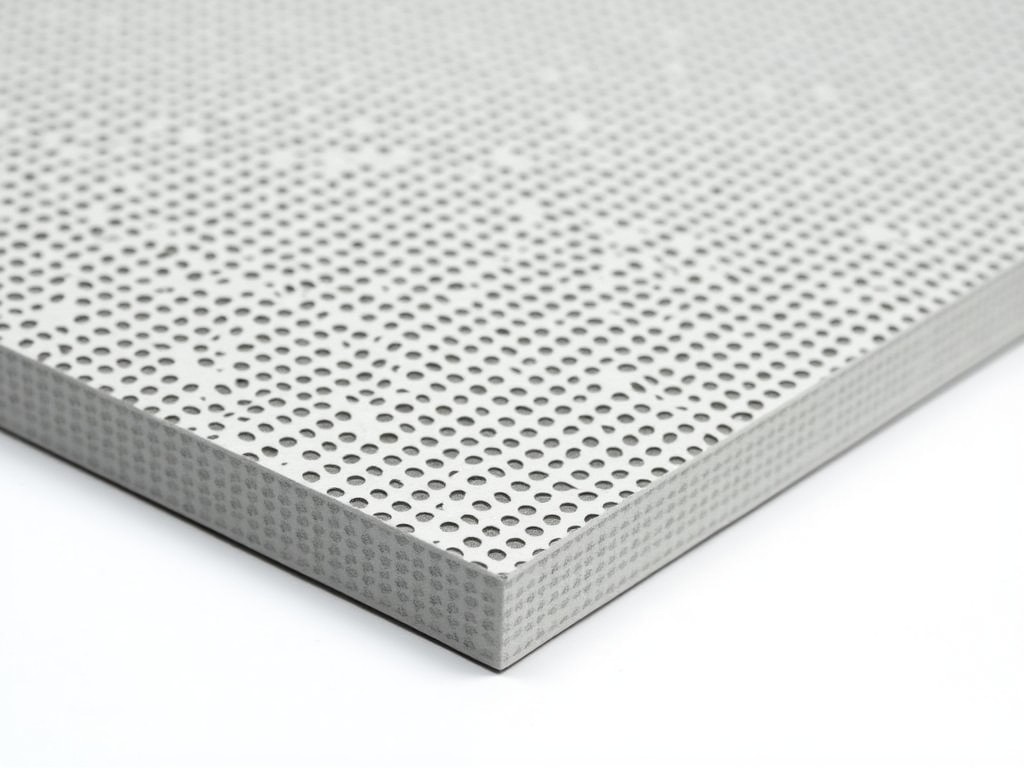
Perforated aluminium composite panels consist of two thin aluminium sheets bonded to a polyethylene or fire-retardant core, with a pattern of precisely punched holes across the surface. These
Perforated Aluminium Composite Panel
Perforated aluminium composite panels consist of two thin aluminium sheets bonded to a polyethylene or fire-retardant core, with a pattern of precisely punched holes across the surface. These perforations serve functional purposes beyond aesthetics, including airflow management, light diffusion, sound absorption, and visual screening while maintaining structural rigidity.
The perforation ratio—defined as the open area percentage relative to total panel surface—is a critical design parameter that directly influences performance characteristics such as pressure drop, acoustic attenuation, and visual transparency. Typical perforation patterns include round, square, slot, and custom geometries, each selected based on specific engineering requirements.
Unlike solid aluminium composite panels, perforated variants require careful consideration of hole edge treatment to prevent burr formation and ensure long-term durability, especially in exterior applications exposed to weathering and thermal cycling. Manufacturers use CNC punching or laser perforation techniques to achieve consistent hole quality and dimensional accuracy.
Material Composition and Core Options
The face sheets are typically made from 3003 or 5005 aluminium alloy, chosen for their formability, corrosion resistance, and compatibility with coil coating processes. Thicknesses range from 0.21mm to 0.50mm per side, with 0.30mm being common for exterior cladding applications where wind load resistance is a factor.
The core material determines the panel’s fire performance and thermal insulation properties. Standard polyethylene (PE) cores are suitable for interior use or low-rise exterior applications, while fire-retardant (FR) cores containing mineral fillers meet stricter building codes for high-rise and public infrastructure projects. Some variants use non-combustible mineral cores for maximum fire safety.
Core thickness typically ranges from 3mm to 6mm, influencing the panel’s flexural rigidity and span capability. Thicker cores increase stiffness but also weight, affecting handling and installation logistics. The bond between aluminium facings and core is critical—adhesive layers must withstand peel and shear stresses over the product’s service life, particularly under thermal expansion cycles.
Perforation Patterns and Open Area Ratios
Perforation design is not arbitrary; it follows engineering principles to balance functional performance with structural integrity. The open area ratio (OAR) is calculated as the total area of holes divided by the panel’s gross area, expressed as a percentage. Common OAR values range from 15% to 40%, depending on the intended function—lower ratios for screening and moderate ratios for ventilation or acoustics.
Hole diameter, pitch (center-to-center distance), and arrangement (staggered or aligned) directly affect airflow dynamics and sound transmission loss. For example, a 3mm diameter hole on a 6mm pitch in a staggered layout yields approximately 25% OAR, often used in HVAC louvers where pressure drop must remain below 50 Pa at 3 m/s face velocity.
Edge margins—typically 10–20mm unperforated border around the panel—are maintained to preserve bending strength and facilitate mechanical fastening. Custom perforation layouts, including logos, gradients, or variable density patterns, are feasible but require tooling adjustments and may increase lead time and cost.
Performance Characteristics
Structural performance depends on both the base composite panel properties and the perforation pattern. Perforations reduce the effective cross-sectional area of the aluminium facings, decreasing bending stiffness and increasing deflection under load. Engineers must apply reduction factors based on OAR when calculating allowable spans for wall cladding or ceiling systems.
Acoustic performance improves with higher OAR and specific hole geometries; perforated panels backed by absorbent materials (such as mineral wool or acoustic foam) act as Helmholtz resonators, targeting mid-frequency sound absorption. The perforation pattern tunes the resonant frequency, allowing designers to target noise reduction in specific bands (e.g., 500–2000 Hz for speech frequencies).
For exterior applications, surface finishes such as PVDF or FEVE fluoropolymer coatings provide UV stability and color retention exceeding 10 years under direct sunlight. Anodized or powder-coated finishes are alternatives, though they may offer different levels of corrosion resistance and color consistency compared to fluoropolymers.
Typical Applications
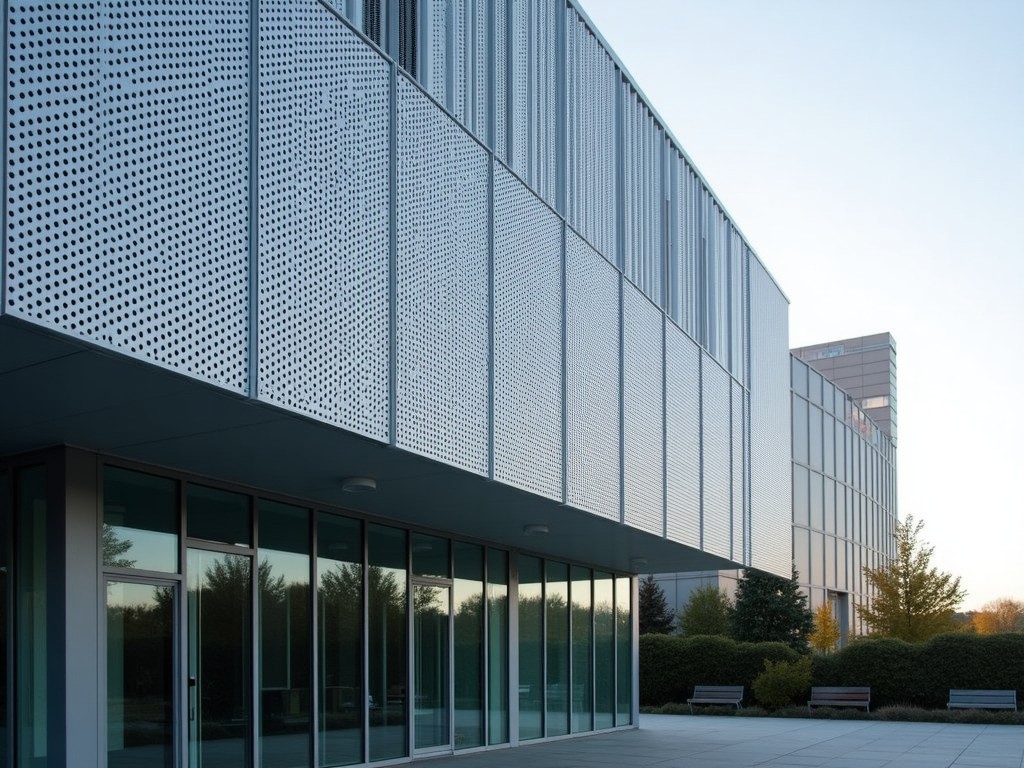
In architectural façades, perforated aluminium composite panels are used for solar shading devices where controlled daylight penetration reduces cooling loads while maintaining outward visibility. The perforation pattern can be optimized using solar angle analysis to block high summer sun while allowing low winter sun to pass through, improving building energy efficiency.
Interior ceiling and wall systems utilize these panels for acoustic management in offices, airports, and concert halls. When combined with sound-absorbing backing, they reduce reverberation time and improve speech intelligibility. The lightweight nature of the composite structure allows for large-span ceilings without excessive structural support.
More Products

Send Inquiry
If you are interested in our products, leave your information here and we will be in touch shortly.