Perforated Sheet Metal Patterns Manufacturer
Perforated sheet metal is a functional material engineered for controlled airflow, light diffusion, sound attenuation, and structural efficiency. The pattern of holes—defined by shape, size, spacing,
Perforated Sheet Metal Patterns Manufacturer
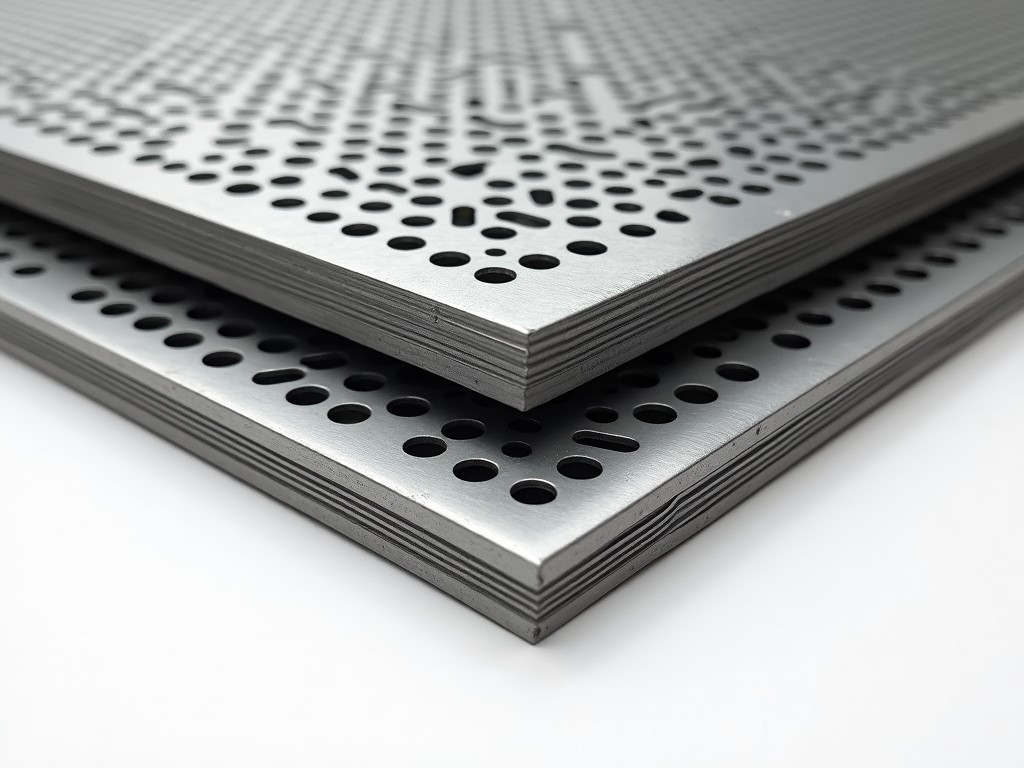
Perforated sheet metal is a functional material engineered for controlled airflow, light diffusion, sound attenuation, and structural efficiency. The pattern of holes—defined by shape, size, spacing, and orientation—directly determines performance in industrial applications. As a manufacturer specializing in perforated sheet metal patterns, we focus on translating application requirements into precise hole configurations using CNC punching, laser perforation, and rotary die techniques. This page explains how pattern selection impacts functionality, material behavior, and manufacturability, enabling engineers to specify perforated metal with confidence.
How Perforation Patterns Influence Performance
The open area percentage—calculated as the ratio of hole area to total sheet area—is the primary metric governing airflow, light transmission, and sound absorption. For example, a 40% open area allows approximately 40% of incident air or light to pass through, assuming laminar flow and normal incidence. Hole shape affects flow dynamics: round holes offer predictable turbulence, slotted holes provide directional flow control, and hexagonal patterns maximize open area while maintaining structural integrity. Pitch (center-to-center distance between holes) influences both strength and clogging resistance; smaller pitches increase open area but reduce ligament strength between holes, potentially leading to tearing under load.
Standard Pattern Geometries and Their Applications
Round hole patterns are the most common due to ease of tooling and predictable performance. They are used in HVAC diffusers, speaker grilles, and machine guards where uniform airflow and aesthetics matter. Square and rectangular holes provide higher open area for the same pitch and are preferred in filtration, drying trays, and solar shading where directional flow or light control is needed. Slotted holes—elongated rectangles—offer high flow capacity in one direction and are used in vibrating screens, grain dryers, and liquid separators. Hexagonal patterns, arranged in a staggered grid, deliver the highest theoretical open area (up to 50%+) with excellent strength-to-weight ratio, making them ideal for lightweight structural panels and acoustic ceilings.
Material Selection and Its Interaction with Perforation
Material thickness and type dictate the feasible hole size and pitch. Thinner materials (0.5–1.5 mm) allow smaller holes and higher open areas but are prone to deformation during punching. Thicker materials (>3 mm) require higher punch forces and may exhibit burring or hole distortion without proper tooling and lubrication. Common materials include cold-rolled steel (for cost-effective indoor use), galvanized steel (for corrosion resistance in humid environments), stainless steel 304/316 (for chemical or outdoor exposure), and aluminum (for weight-sensitive applications like aerospace or architectural facings). The material’s yield strength and elongation affect hole edge quality; ductile materials like aluminum produce cleaner edges than brittle alloys.
Customization Capabilities for Industrial Requirements
Beyond standard patterns, we produce custom hole layouts tailored to specific flow, acoustic, or structural needs. This includes variable pitch gradients for pressure equalization, multi-diameter hole arrays for staged filtration, and non-uniform patterns to mitigate resonance in vibrating panels. Edge-to-edge perforation is achievable with specialized tooling, minimizing waste in high-volume production. We also offer secondary operations such as leveling, deburring, and surface finishing (powder coating, anodizing, or passivation) to ensure dimensional stability and corrosion resistance post-perforation. All custom patterns are validated using CAD simulation and physical prototyping before full-scale production.
Quality Control and Dimensional Accuracy
Perforation accuracy is monitored using optical inspection systems that measure hole diameter, positional tolerance, and burr height. Typical positional tolerance is ±0.1 mm for CNC-punched patterns and ±0.05 mm for laser-perforated sheets. Hole diameter variation is kept within ±0.08 mm for round holes under 2 mm diameter. Open area is verified via gravimetric or image analysis methods, with tolerance typically held to ±2% of target value. Edge distortion and flatness are assessed using laser profilometry; sheets are leveled to meet DIN EN 10162 or ASTM A653 standards for flatness, depending on material and thickness. All inspection data is traceable to lot number and available upon request.
| Parameter | Typical Tolerance | Measurement Method |
|---|---|---|
| Hole Diameter | ±0.08 mm | Optical Micrometer / Vision System |
| Positional Tolerance | ±0.10 mm (punching) ±0.05 mm (laser) |
CMM / Laser Tracking |
| Open Area | ±2% of target | Gravimetric / Image Analysis |
| Flatness (per meter) | ≤3 mm | Laser Profilometer |
| Burr Height | ≤0.05 mm | Tactile Probe / 3D Scanner |
Applications Driven by Pattern Engineering
In industrial drying systems, perforated sheets with 30–50% open area and slotted holes oriented perpendicular to airflow ensure uniform moisture removal without creating dead zones. For acoustic enclosures, perforated panels backed with absorbent material use hole diameters between 1.5–3 mm and pitches of 4–6 mm to target mid-frequency noise (500–2000 Hz) while maintaining structural rigidity. Architectural sunshades leverage variable open area patterns—dense where solar gain is high, sparse where diffuse light is desired—using aluminum sheets with custom-punched geometries to reduce cooling loads by up to 25% in simulated conditions. In food processing, stainless steel perforated trays with 2 mm round holes on 4 mm pitch allow efficient drainage and steam penetration while resisting corrosion from acidic washdowns.
Design for Manufacturability and Cost Efficiency
Pattern design directly affects production cost and lead time. Standard round hole patterns on 2–10 mm pitch use off-the-shelf tooling, minimizing setup time and cost. Custom shapes or variable pitches require specialized punches or laser programming, increasing initial cost but reducing per-unit cost at volumes above 50 m². Material utilization is optimized by nesting patterns to minimize scrap; hexagonal and staggered layouts typically achieve 85–92% material yield versus 70–80% for square grids. We recommend specifying hole sizes no smaller than 0.8 mm for thicknesses over 1.5 mm to avoid tool breakage and excessive burring. Early collaboration on pattern feasibility prevents redesigns and ensures manufacturability without compromising performance.


More Products

Send Inquiry
If you are interested in our products, leave your information here and we will be in touch shortly.