Perforated Sheet Metal Top Suppliers
Perforated sheet metal is a versatile engineered material used across industrial applications where controlled airflow, light transmission, sound attenuation, or particulate filtration is required.
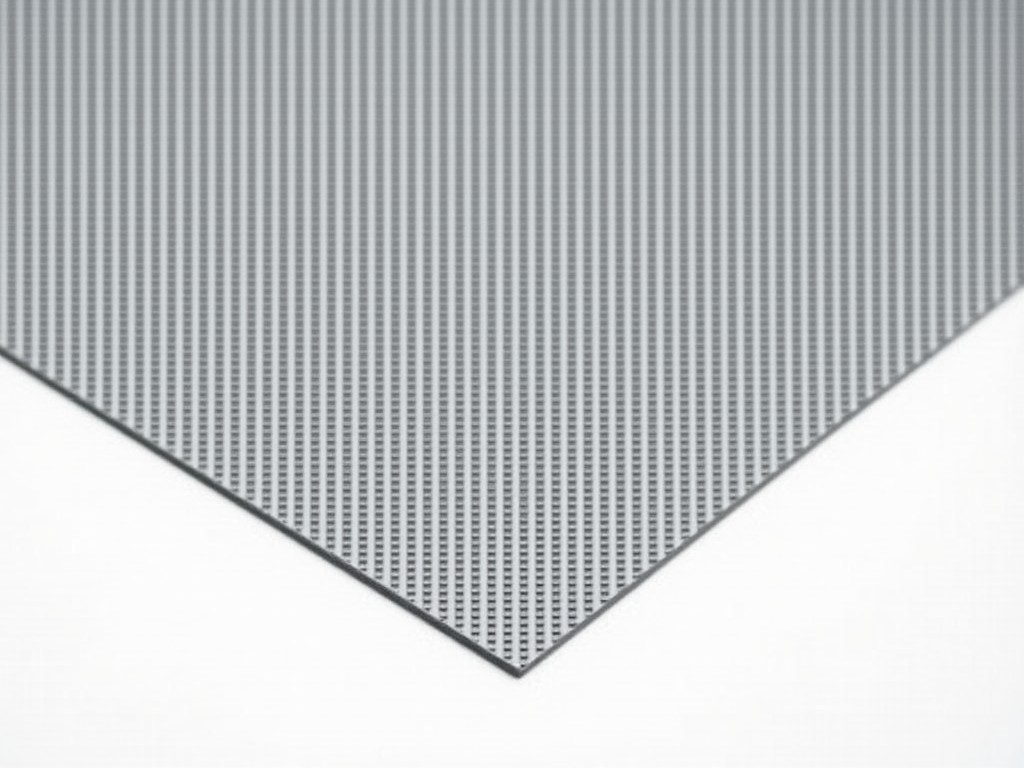
Perforated Sheet Metal: Supplier Selection and Technical Considerations
Perforated sheet metal is a versatile engineered material used across industrial applications where controlled airflow, light transmission, sound attenuation, or particulate filtration is required. Selecting a supplier involves evaluating their capability to meet precise dimensional tolerances, material specifications, and hole pattern consistency—factors that directly impact part performance and assembly integrity.
Suppliers with in-house tooling, CNC punch presses, and laser perforation systems offer greater flexibility for custom patterns and material thicknesses compared to those relying solely on standardized dies. Understanding the manufacturing process behind the perforation helps buyers assess lead time, cost implications, and quality control depth.
Key Technical Parameters in Perforated Sheet Metal
The functional performance of perforated sheet metal depends on three interrelated variables: hole diameter, pitch (center-to-center spacing), and open area percentage. These parameters determine flow characteristics, structural rigidity, and visual transparency.
For example, a 3mm hole diameter with 6mm pitch yields approximately 25% open area in a staggered pattern, suitable for light diffusion in lighting fixtures. Increasing hole size to 6mm at the same pitch raises open area to 50%, which may be necessary for HVAC intake screens but requires thicker material to prevent buckling under pressure differentials.
Material thickness must be selected based on span, load conditions, and perforation density. A general rule: unsupported spans exceeding 100 times the material thickness may require additional framing or perforation pattern adjustment to avoid deformation during handling or service.
Material Selection and Environmental Compatibility
Material choice affects corrosion resistance, weight, formability, and cost. Common options include cold-rolled steel, hot-dip galvanized steel, stainless steel (grades 304, 316), aluminum alloys (3003, 5052), and pre-painted steel.
In outdoor or humid environments, galvanized or aluminum perforated sheet resists oxidation better than bare steel. For chemical processing or marine applications, 316 stainless steel provides pitting resistance against chlorides, though at a 40–60% cost premium over 304 grade. Aluminum offers weight savings of approximately 65% compared to steel but has lower tensile strength, requiring thicker gauges for equivalent rigidity.
Pre-painted or powder-coated finishes are available for aesthetic or additional corrosion protection, though coating thickness must be accounted for in tight-tolerance applications. Post-perforation coating can prevent edge exposure but may fill small holes if not properly controlled.
Manufacturing Processes and Tolerance Capabilities
Perforation is typically achieved via CNC turret punching, laser perforation, or rotary die punching. CNC punching offers flexibility for variable patterns and short runs, with typical positional tolerances of ±0.1–0.3mm depending on machine calibration and material thickness.
Laser perforation enables complex geometries and micro-holes (<1mm diameter) but is slower and more energy-intensive, making it economical only for low-volume, high-precision applications such as filtration membranes or speaker grilles. Rotary die punching excels in high-volume production of repetitive patterns (e.g., standard HVAC grilles) but requires significant tooling investment and offers limited pattern flexibility.
Edge condition (burr height, roll-over) varies by process and tool sharpness. For applications requiring smooth edges—such as food handling or conveyor belts—suppliers may offer deburring, vibratory finishing, or laser edge melting as secondary operations. Always specify edge requirements in the RFQ to avoid unexpected post-processing needs.
Open Area Calculation and Design Implications
Open area percentage is not merely a theoretical value—it directly affects pressure drop, flow velocity, and acoustic performance. In HVAC systems, excessive pressure drop increases fan energy consumption; in acoustic panels, it alters sound absorption coefficients.
For round holes in staggered arrangement: Open Area (%) = (π × d² ÷ (2 × p²)) × 100, where d = hole diameter and p = pitch. For square holes: Open Area (%) = (d² ÷ p²) × 100. These formulas assume ideal geometry; actual values may vary slightly due to hole elongation or conical entry/exit from punching.
Buyers should verify open area claims with suppliers using physical test samples, particularly when the perforated sheet is part of a calibrated system (e.g., air distributor, flame arrestor). Discrepancies between nominal and measured open area can exceed 5% in thin materials or high-density patterns.
Quality Control and Inspection Practices
Consistent hole size and positional accuracy are critical for functional reliability. Reputable suppliers employ statistical process control (SPC) on key dimensions, using vision systems or coordinate measuring machines (CMM) to monitor hole diameter, pitch, and open area across production batches.
Visual inspection checks for edge deformation, burrs, coating defects, and material scratches. For applications requiring leak-tightness (e.g., pressure vessels, fuel filters), suppliers may conduct bubble testing or pressure decay tests on perforated zones. Always request inspection reports or certificates of conformance (CoC) that reference specific test methods and sampling plans.
Traceability—linking raw material coils to finished product via lot numbers—enables root cause analysis if field issues arise. Suppliers without traceability systems pose higher risk for regulated industries such as aerospace, medical devices, or food processing.
Comparison of Common Perforation Patterns
| Pattern Type | Typical Applications | Advantages | Limitations |
|---|---|---|---|
| Staggered Round (60°) | HVAC grilles, speaker backs, light diffusers | High open area, good strength-to-weight ratio, uniform appearance | More complex tooling than inline; slightly higher cost |
| Inline Round | Filtration screens, drainage plates, architectural panels | Simple tooling, easy to predict flow direction, lower cost | Lower open area at same pitch; can create directional flow bias |
| Square | Security barriers, machine guards, decorative facades | High structural rigidity, easy to clean, modern aesthetic | Lower open area than round; sharp corners may concentrate stress |
| Slot (Longitudinal) | Conveyor belts, drying trays, magnetic separators | High flow capacity in one direction, effective for particle separation | Anisotropic properties; requires alignment during installation |
| Custom (Logo, Text, Geometry) | Branding panels, architectural features, functional art | Unique visual identity, functional integration (e.g., grip patterns) | Higher setup cost, longer lead times, limited repeatability |
Applications: Engineering Rationale
In industrial drying systems, perforated sheet metal trays allow uniform air passage while supporting product load. The hole pattern must balance open area (for drying efficiency) with structural integrity (to prevent sagging under wet material weight). Staggered 4mm holes at 8mm pitch in 1.2mm aluminum provide ~25% open area and sufficient rigidity for spans up to 600mm.
For acoustic enclosures around generators or compressors, perforated facings protect absorbent material while allowing sound transmission. The perforation acts as a Helmholtz resonator; optimal performance requires matching hole size, depth, and open area to the target frequency range. Suppliers often provide acoustic performance data based on ASTM C423 or ISO 354 testing.
In food processing, perforated stainless steel belts enable washing, draining, or cooling. Hole size must prevent product loss while allowing adequate fluid drainage. 3mm holes in a staggered pattern on 1.5mm 304SS belt are common for small fruits or vegetables; larger items may require 6–8mm holes to avoid clogging.
Customization and Procurement Workflow
Effective collaboration begins with a clear specification: material grade, thickness, dimensions, hole pattern (or open area target), edge condition, finish, and quantity. Suppliers often request a sketch or DXF file to confirm hole layout, especially for non-standard patterns or proximity to bends.
Lead times vary based on material availability, tooling requirements, and production load. Standard patterns in stock materials may ship in 5–7 business days. Custom tooling adds 2–4 weeks. Expedited services are available but typically incur a 20–50% premium.
Minimum order quantities (MOQs) depend on material width and coil setup. For slit-to-width orders, MOQs may start at 200–500kg. Full-coil orders often have lower per-kilogram costs but require storage and handling capacity. Always confirm whether pricing includes perforation, leveling, and edge trimming.
Risk Mitigation in Supplier Evaluation
Supplier visits or virtual audits can reveal capabilities not evident in catalogs. Look for evidence of calibrated equipment, documented QC procedures, and experienced operators. Ask about their process for handling material variation (e.g., thickness tolerance within a coil) and how they adjust perforation parameters accordingly.
Request sample panels with your specified pattern and material. Measure hole diameter, pitch, and edge quality using calipers or a optical comparator. Verify flatness—excessive curl or wave can interfere with downstream processing like bending or welding. A tolerance of ±0.5mm/meter is typical for leveled perforated sheet.
Consider long-term supply stability. Does the supplier maintain safety stock of common materials? Can they scale production if your demand increases? Dual-sourcing strategies reduce risk but require qualification of alternate suppliers to identical standards.
Technical evaluation of perforated sheet metal suppliers should focus on measurable capabilities: tolerance control, material expertise, process flexibility, and quality verification. Prioritize suppliers who engage in technical dialogue rather than relying solely on standard catalog offerings.
To discuss your specific perforation requirements—including material selection, pattern design, or inspection criteria—contact our technical team to begin a specification review.
Request Technical Consultation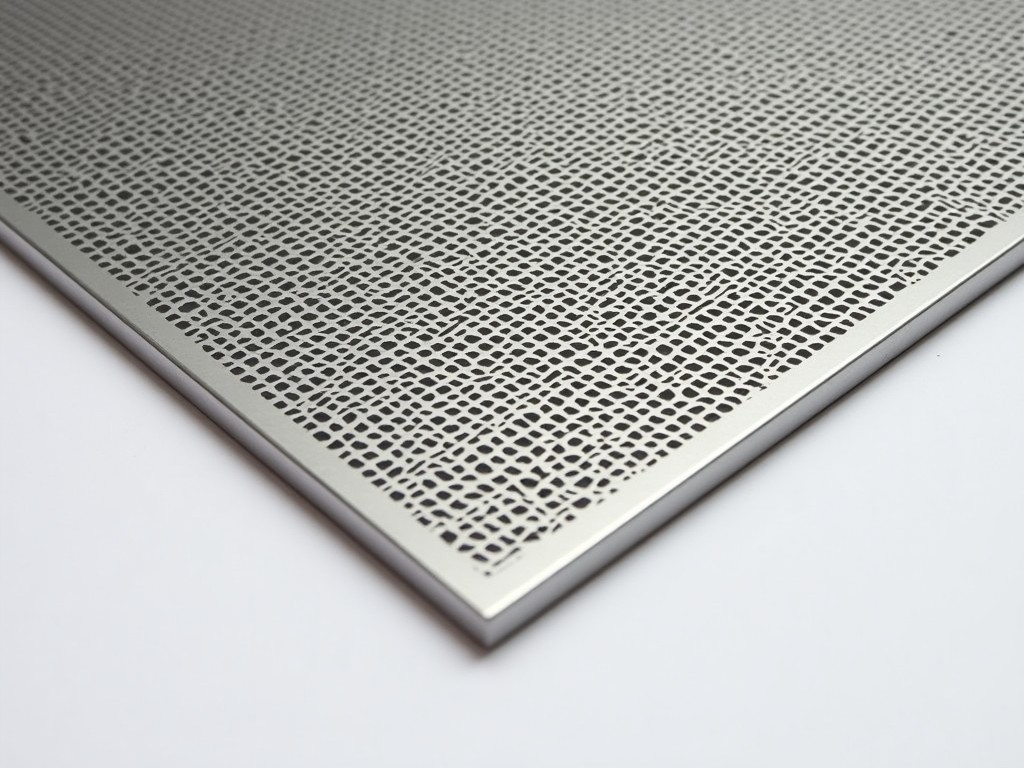
More Products

Send Inquiry
If you are interested in our products, leave your information here and we will be in touch shortly.