Perforated Sheet Metal Stainless Factory
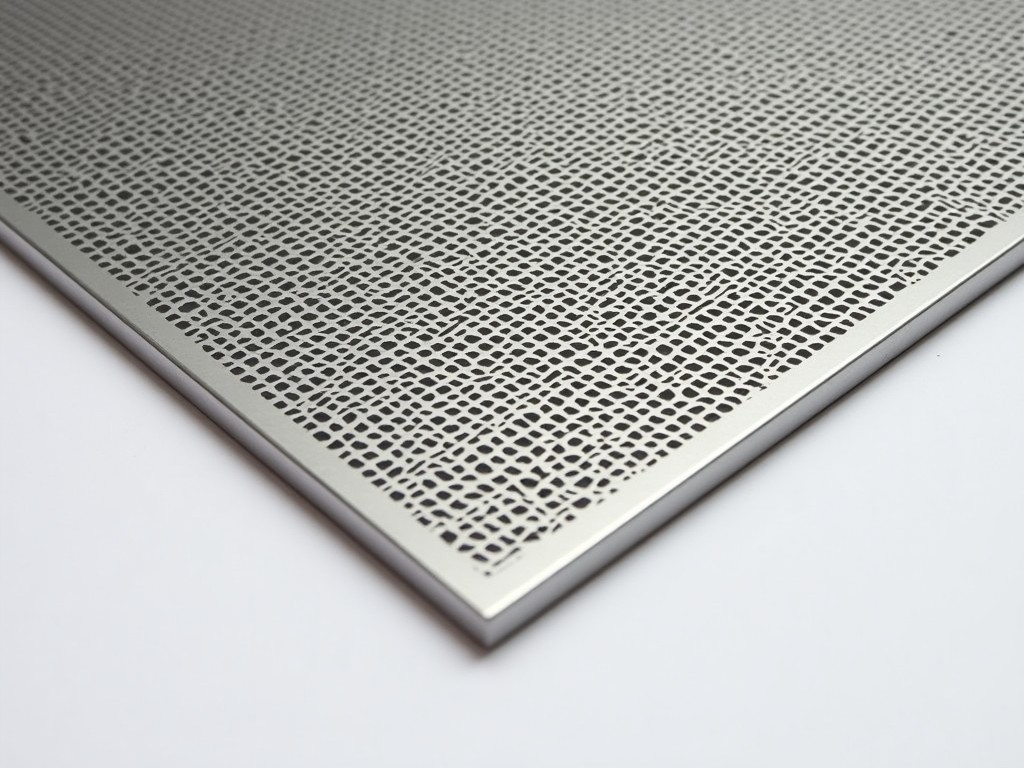
Perforated stainless steel sheet metal is produced by punching precise hole patterns into flat rolled stock using CNC-controlled turret presses or laser systems. The process maintains material
Perforated Sheet Metal Stainless Factory
Perforated stainless steel sheet metal is produced by punching precise hole patterns into flat rolled stock using CNC-controlled turret presses or laser systems. The process maintains material integrity while creating open area ratios tailored to specific engineering requirements. Hole geometry, spacing, and pattern repetition directly influence flow dynamics, structural rigidity, and acoustic performance in industrial applications.
Common stainless steel grades used include 304, 316L, and 430, selected based on corrosion resistance needs, mechanical strength, and temperature exposure. 304 offers general-purpose resistance to atmospheric and mild chemical environments. 316L provides enhanced chloride resistance for marine or chemical processing settings. 430 is a ferritic grade chosen for cost-sensitive applications where magnetic properties and moderate corrosion resistance are acceptable.
Sheet thickness typically ranges from 0.5 mm to 6.0 mm, with thinner gauges favored for filtration and architectural uses, and thicker plates selected for load-bearing platforms or machine guards. Tolerances on hole diameter and positional accuracy are held to ±0.1 mm for precision applications, achievable through servo-driven punch tools and optical registration systems. Edge conditions—mill edge, slit edge, or deburred—are specified per downstream assembly or safety requirements.
Technical Specifications and Customization Options
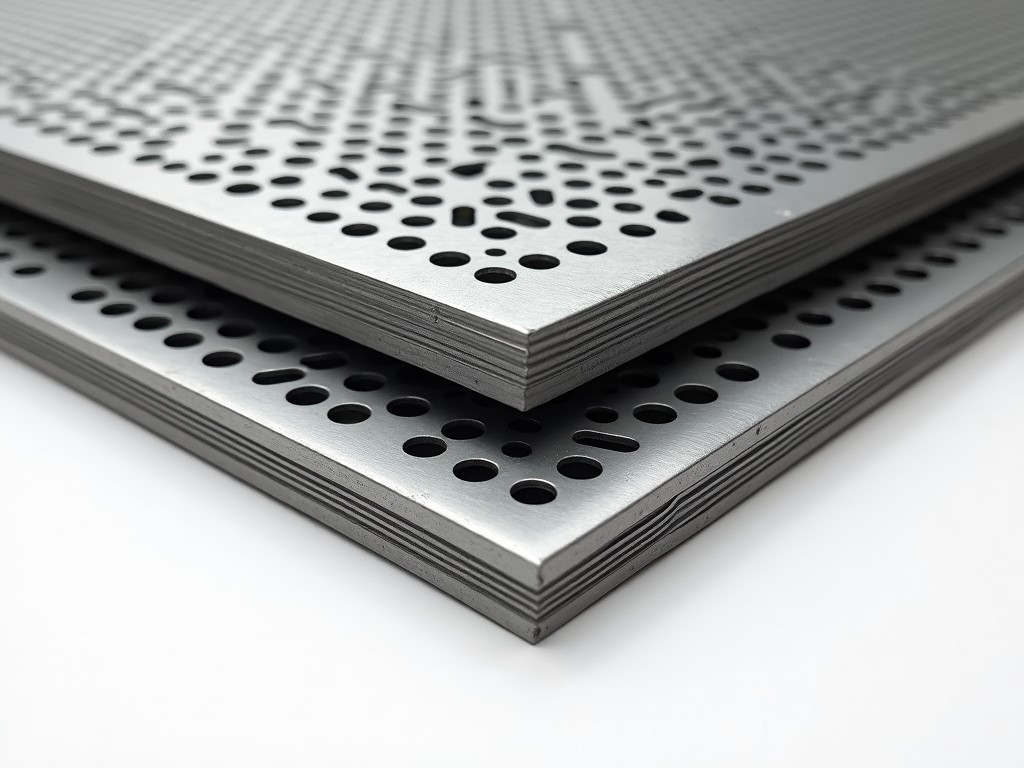
Perforation patterns are defined by three primary variables: hole shape, center-to-center pitch, and open area percentage. Round holes are most common due to efficient tooling and predictable flow characteristics. Square, slotted, hexagonal, and decorative patterns are available for specialized functions such as increased flow capacity, directional screening, or architectural aesthetics. Pitch determines both open area and structural ligament strength between holes.
Open area percentage—calculated as the ratio of hole surface to total sheet surface—directly impacts pressure drop in filtration systems, light transmission in shielding, and airflow in ventilation enclosures. Typical open area ranges from 15% for high-strength guards to over 60% for air intake screens. Custom patterns can achieve specific open areas while maintaining minimum ligament width (usually 1.5x material thickness) to prevent tearing during forming or use.
Secondary operations include leveling to correct coil set, edge trimming to exact dimensions, and surface finishing such as passivation or electropolishing for enhanced corrosion resistance. Forming capabilities—bending, rolling, or deep drawing—are assessed based on perforation proximity to bend lines to avoid hole distortion. Laser cutting is employed for complex profiles or prototyping where tooling costs would be prohibitive.
Industrial Applications and Functional Benefits
In food and beverage processing, perforated stainless sheets serve as drain screens, drying trays, and conveyor belts where hygiene, corrosion resistance, and cleanability are critical. The smooth surface and absence of crevices minimize bacterial retention, while hole size controls product drainage or air flow during cooling cycles. 316L is frequently specified due to exposure to acidic foods, cleaning agents, and steam sterilization.
Architectural applications utilize perforated panels for sun shading, facade cladding, and interior partitioning. The pattern modulates light diffusion and visibility while providing wind resistance. Aluminum-backed stainless composites are sometimes used to reduce weight, but monolithic stainless remains preferred for exterior durability in coastal or urban environments. Hole patterns are often customized to match building orientation and solar angles for optimal shading performance.
Industrial machinery manufacturers integrate perforated sheets as machine guards, noise attenuation panels, and fluid distributors. Hole patterns are engineered to balance visibility for operator safety with sufficient open area for cooling air or exhaust flow. Acoustic perforated liners, backed with absorbent material, reduce reverberant noise in enclosures by allowing sound penetration while blocking direct line-of-sight. Structural rigidity is maintained through strategic hole placement and ligament width.
Quality Control and Material Traceability
Material verification begins with mill test certificates (MTCs) confirming chemical composition and mechanical properties of the base coil. Incoming inspection includes thickness gauging, width measurement, and visual assessment for surface defects. Coil identification is maintained through the production line to ensure traceability from raw material to finished sheet.
In-process checks monitor punch force, hole diameter, and positional accuracy using vision systems or touch probes. Statistical process control (SPC) tracks critical dimensions to detect tool wear or alignment shifts before tolerances are exceeded. First article inspection validates hole pattern repeatability, edge condition, and flatness against customer drawings or CAD models.
Final inspection includes dimensional verification of length, width, and squareness, open area calculation via image analysis, and surface cleanliness assessment. Passivation effectiveness is verified through water break testing or ferroxyl spot checks when required. Packaging employs interleaving paper or plastic film to prevent surface abrasion during transit, with edge protection applied to vulnerable corners. Each bundle is labeled with heat number, specification, and quantity for seamless integration into customer inventory systems.
| Parameter | Typical Range / Options | Notes |
|---|---|---|
| Stainless Steel Grade | 304, 316L, 430 | Selected per corrosion environment |
| Sheet Thickness | 0.5 mm – 6.0 mm | Thinner for filtration, thicker for structural |
| Hole Shape | Round, Square, Slot, Hex, Custom | Round most common for efficiency |
| Open Area | 15% – 65% | Dependent on hole size and pitch |
| Standard Widths | 1000 mm, 1250 mm, 1500 mm | Custom slit widths available |
| Edge Condition | Mill, Slit, Deburred, Rounded | Per downstream handling or safety |
Ordering Information and Lead Times
To initiate a quotation, provide the stainless steel grade, sheet dimensions (length × width), thickness, hole pattern specification (shape, size, pitch, open area), edge condition, and any required secondary operations such as deburring, leveling, or cutting to size. Drawings or DXF files are preferred for complex patterns or non-rectangular profiles. Quantities influence pricing due to setup time and material yield optimization.
Standard lead times for stock grades (304, 316L) with common round hole patterns range from 2 to 4 weeks after drawing approval and material confirmation. Custom grades, non-standard hole shapes, or tight tolerance requirements may extend lead time to 6–8 weeks. Expedited processing is available for critical projects, subject to press capacity and material availability.
Samples are available upon request for pattern validation or material testing. A nominal fee may apply for custom pattern development, which is often credited toward the first production order. Packaging options include wooden pallets with corrugated interleaving, steel bands, and moisture-resistant wrapping for export shipments. All documentation—mill test certificates, inspection reports, and conformity statements—is provided digitally or as hard copy per customer requirements.
More Products

Send Inquiry
If you are interested in our products, leave your information here and we will be in touch shortly.