Perforated Stainless Steel Basket
A perforated stainless steel basket is a precision-engineered component designed for fluid containment, separation, and filtration in demanding industrial environments. Its structure combines the
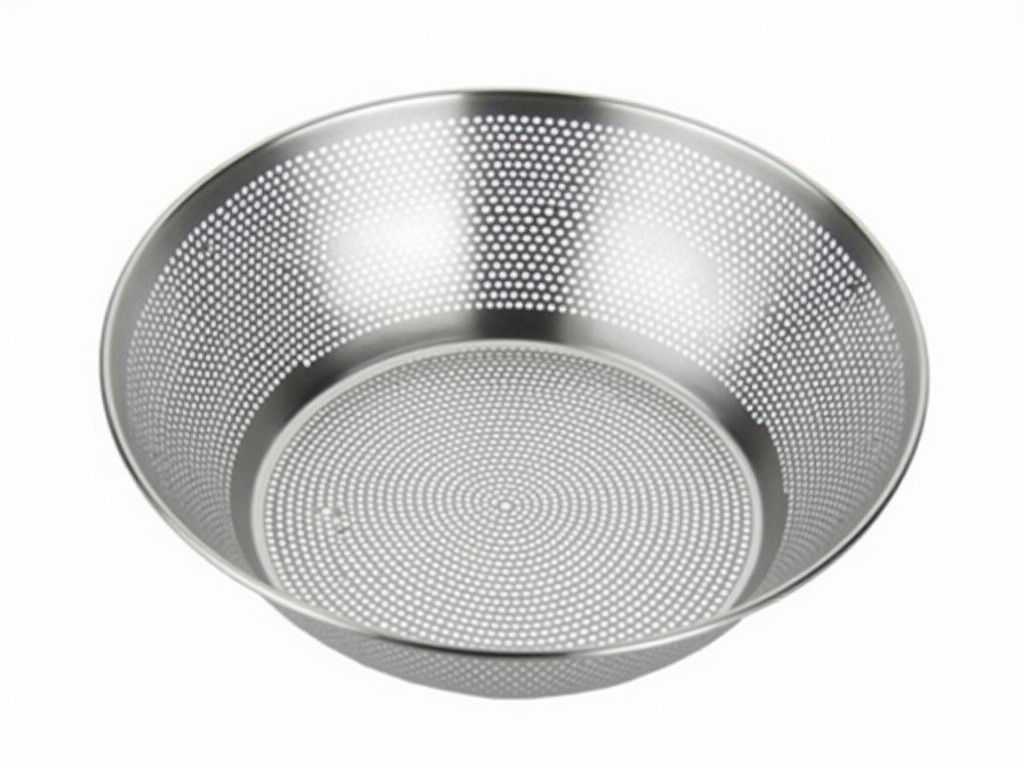
Perforated Stainless Steel Basket
A perforated stainless steel basket is a precision-engineered component designed for fluid containment, separation, and filtration in demanding industrial environments. Its structure combines the corrosion resistance of stainless steel with a patterned array of openings to allow controlled flow of liquids or gases while retaining solids above a specified size threshold. These baskets serve as critical elements in systems where hygiene, durability, and consistent performance under pressure or temperature extremes are non-negotiable.
Material Selection and Grade Characteristics
The base material for these baskets is typically austenitic stainless steel, selected for its balance of mechanical strength, formability, and resistance to aqueous corrosion. Grade 304 (UNS S30400) is commonly used for general industrial applications involving water, mild chemicals, and temperatures up to 870°F (465°C) intermittently. For environments with chloride exposure, such as marine settings or chemical processing involving acids, Grade 316 (UNS S31600) provides enhanced pitting and crevice corrosion resistance due to its molybdenum content. Duplex grades like 2205 may be specified when higher strength and stress corrosion cracking resistance are required, particularly in oil and gas or pulp and paper applications.
Perforation Patterns and Open Area Design
The perforation pattern directly influences flow dynamics, pressure drop, and particle retention efficiency. Standard hole shapes include round, square, slotted, and hexagonal, each suited to specific process requirements. Round holes offer the highest strength-to-open-area ratio and are easiest to manufacture consistently. Slotted perforations provide greater open area in the flow direction, reducing pressure drop in high-viscosity fluid applications. Open area typically ranges from 15% to 50%, depending on hole size, pitch, and pattern. For example, a 1/8" diameter hole on a 3/16" staggered pitch yields approximately 23% open area, while a 1/4" hole on a 3/8" pitch increases open area to about 35%. The selection balances hydraulic efficiency with structural integrity under expected load conditions.
Structural Design and Manufacturing Considerations
Basket construction begins with precision CNC punching or laser cutting of stainless steel sheet to achieve accurate hole placement and burr-free edges. The formed basket may be deep-drawn, welded, or seam-locked depending on depth, diameter, and required leak tolerance. Cylindrical baskets often feature a flared or rolled top edge for safe handling and improved rigidity. Bottom designs vary: flat for static drainage, conical for gravity-assisted discharge, or supported with a perforated plate for dual-stage filtration. Reinforcement rings or internal baffles may be added to prevent deformation under vacuum or pressure differentials. All welding follows ASME Section IX procedures with post-weld passivation to restore corrosion resistance in heat-affected zones.
Typical Industrial Applications
In food and beverage processing, these baskets are used in vegetable washers, blanchers, and pasta cookers where they retain product while allowing hot water or steam to circulate freely, ensuring uniform treatment without product loss. In chemical manufacturing, they serve as catalyst retainers in fixed-bed reactors or as filter elements in solvent recovery systems, where resistance to organic solvents and thermal cycling is essential. Wastewater treatment facilities employ them in grit chambers and screenings handling systems to capture inorganic solids before they damage pumps or clog downstream equipment. Aerospace parts washers use ultrasonic cleaning baskets with fine perforations to hold small components during degreasing cycles, preventing part impingement on tank walls while allowing cavitation-effective fluid exchange.
Customization Parameters
Dimensions are tailored to fit specific vessel housings or process lines, with diameters ranging from 2 inches for laboratory-scale units to over 48 inches for industrial scrubbers or large-format washers. Depth can be customized from shallow trays (1–2 inches) to deep containers exceeding 36 inches, depending on retention time and volume requirements. Perforation size is selected based on the minimum particle size to be retained, with standard options from 0.020" (0.5 mm) for fine filtration to 1" (25 mm) for coarse debris screening. Edge treatments include electropolished finishes for sanitary applications, passivated surfaces for general industry, or coated variants (e.g., PTFE) for non-stick or chemically aggressive environments. Handles, lifting lugs, or mounting flanges can be integrated per client specifications.
Quality Assurance and Inspection Protocol
Dimensional verification is performed using calibrated gauges and coordinate measuring machines (CMM) to confirm hole diameter, positional tolerance, and basket dimensions within ±0.005" for critical applications. Surface integrity is assessed via visual inspection under 10x magnification to detect burrs, sharp edges, or micro-cracks that could harbor contaminants or initiate corrosion. Material traceability is maintained through mill test reports (MTRs) linked to each production lot. For sanitary-grade baskets, surface roughness is measured to ensure Ra ≤ 32 µin (0.8 µm) where required. Pressure or vacuum testing may be conducted to validate structural integrity under operational differentials, particularly for sealed or submerged installations.
| Parameter | Typical Range / Options | Notes |
|---|---|---|
| Stainless Steel Grade | 304, 316L, 321, 2205 Duplex | Selected based on corrosion environment and temperature |
| Hole Diameter | 0.020" – 1.0" | Smaller holes increase retention; larger holes reduce pressure drop |
| Open Area | 15% – 50% | Determined by hole size, shape, and pitch |
| Basket Diameter | 2" – 48"+ | Customizable to fit housing or vessel |
| Depth | 1" – 36"+ | Affects retention volume and pressure drop |
| Edge Treatment | Rolled, Flared, Electropolished, Passivated | Impacts safety, cleanability, and corrosion resistance |
Engineering Value and Lifecycle Benefits
The primary value of a perforated stainless steel basket lies in its ability to maintain consistent performance over extended service life with minimal maintenance. Unlike polymeric or coated alternatives, stainless steel retains structural and functional integrity at elevated temperatures and in aggressive cleaning cycles involving caustics, acids, or high-pressure steam. Its reusability reduces long-term operational costs compared to disposable filter media, while its cleanability supports compliance with hygiene standards in food, pharmaceutical, and biotech industries. The deterministic nature of perforation geometry allows engineers to predict pressure drop and retention efficiency during system design, minimizing trial-and-error during commissioning.

More Products

Send Inquiry
If you are interested in our products, leave your information here and we will be in touch shortly.