Perforated Stainless Steel Screen
A perforated stainless steel screen is a flat or formed sheet of stainless steel with a regular pattern of holes punched or laser-cut through its thickness. The openings allow passage of fluids,
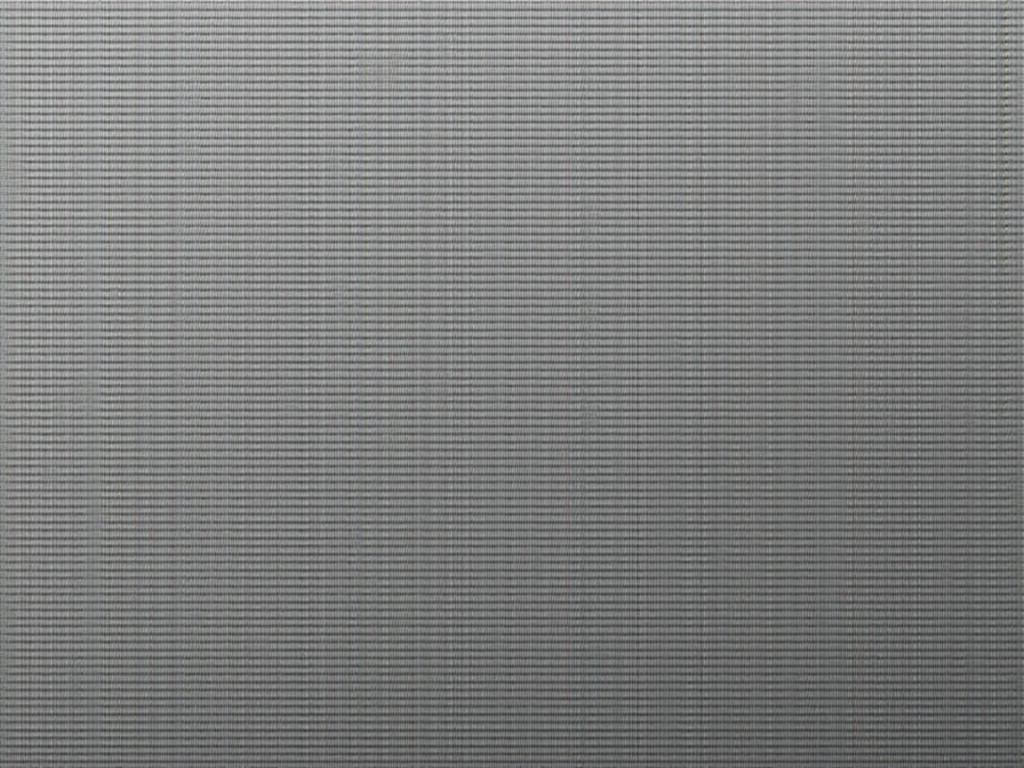
Perforated Stainless Steel Screen
A perforated stainless steel screen is a flat or formed sheet of stainless steel with a regular pattern of holes punched or laser-cut through its thickness. The openings allow passage of fluids, gases, light, or sound while providing structural integrity and surface protection. These screens are selected when both filtration or separation performance and mechanical durability are required in demanding environments.
The manufacturing process begins with coil or sheet stock of austenitic, ferritic, or duplex stainless steel grades. Hole patterns are created using CNC turret punches, rotary dies, or fiber lasers, depending on hole size, pattern complexity, and production volume. Post-punching, screens may undergo deburring, leveling, or surface treatments to remove burrs and ensure flatness. Edge treatments such as curling, hemming, or framing are applied based on installation requirements.
Key dimensional parameters include hole diameter, center-to-center pitch (or open area percentage), sheet thickness, and overall panel size. Hole shapes range from round, square, and slotted to hexagonal, decorative, or custom profiles. Open area—the percentage of the sheet surface occupied by holes—directly influences flow capacity, pressure drop, and visual transparency. Typical open areas for industrial screens range from 15% to 60%, depending on the application.
Material Selection and Corrosion Resistance
Stainless steel is chosen for perforated screens due to its chromium-rich passive oxide layer, which self-repairs in oxidizing environments and resists rust and chemical attack. The most common grades are 304 and 316L. Grade 304 offers good corrosion resistance in mild atmospheres, freshwater, and many food-processing environments at a lower cost. Grade 316L contains molybdenum, enhancing resistance to chlorides, sulfides, and acidic solutions, making it suitable for marine, chemical, and wastewater applications.
For high-temperature or highly oxidizing conditions, grades such as 310, 321, or 904L may be specified. Ferritic grades like 430 are used where magnetic properties are acceptable and cost is critical, though they offer lower corrosion resistance than austenitic types. Duplex grades (e.g., 2205) provide high strength and excellent stress corrosion cracking resistance, ideal for pressure vessels or structural screens in harsh chemical plants.
Material thickness typically ranges from 0.5 mm to 6.0 mm, though thinner or thicker gauges are available for specialized designs. Thinner sheets (<1.0 mm) are used in lightweight filters or decorative panels; thicker sections (>3.0 mm) support higher mechanical loads in vibratory screens, guards, or pressure-rated housings. The choice of thickness balances open area, structural rigidity, and resistance to deformation during punching or installation.
Hole Patterns and Open Area Engineering
The arrangement of holes—known as the pattern—directly affects strength, flow characteristics, and aesthetics. Common patterns include staggered (60°), straight (square), and diagonal (45°) layouts. Staggered 60° patterns provide the highest strength-to-open-area ratio due to efficient material distribution and are standard for most industrial screens. Straight patterns simplify alignment in modular assemblies but reduce longitudinal strength. Diagonal patterns offer intermediate properties and are sometimes used for directional flow control.
Hole size and pitch are selected based on the particle size to be retained, required flow rate, and pressure drop constraints. For example, a 3 mm diameter hole on a 6 mm staggered pitch yields approximately 23% open area. Increasing hole size or decreasing pitch raises open area but reduces ligament strength—the remaining material between holes. Screens with very high open areas (>50%) may require thicker stock or additional support to prevent sagging or tearing under load.
Slotted holes are often preferred in screening applications where elongated particles must pass or where directional flow control is needed. Slot length and width are specified independently, allowing fine-tuning of aspect ratio and flow resistance. Decorative or architectural screens may use custom shapes—such as logos, letters, or geometric motifs—produced via laser cutting for low-volume, high-detail applications.
Typical Industrial Applications
In food and beverage processing, perforated stainless steel screens are used as baskets, trays, and cylinder filters for washing, blanching, and solid-liquid separation. Their smooth, non-toxic surface complies with FDA and 3-A sanitary standards, and they withstand frequent CIP (clean-in-place) cycles with caustic and acidic solutions. Hole sizes are typically selected to retain food particles while allowing efficient drainage of liquids or brines.
Chemical and pharmaceutical plants employ these screens in catalyst retention, solvent filtration, and product drying systems. Corrosion resistance to aggressive media is critical, often necessitating 316L or duplex grades. Screens may be formed into cones, baskets, or cylindrical elements to fit inside pressure vessels or centrifuges. In these roles, mechanical stability under cyclic loading and resistance to blinding or fouling are key design considerations.
Water and wastewater treatment facilities use perforated screens as inlet strainers, aeration diffusers, and sludge dewatering media. Here, resistance to biofouling, abrasion from suspended solids, and long-term immersion in chlorinated or sulfide-containing water is essential. Screens may be mounted in channels or tanks to capture rags, plastics, or grit before they damage pumps or clog downstream processes. Open area is optimized to balance hydraulic capacity with solids capture efficiency.
In energy and power generation, perforated screens serve as turbine inlet guards, heat exchanger baffles, and silencer components. They must withstand high-velocity airflow, thermal cycling, and exposure to combustion byproducts. Materials such as 430 or 310 are chosen for heat resistance, while hole patterns are designed to attenuate noise without excessive pressure loss. Screens in gas turbines may also provide erosion protection against particulate-laced intake air.
Comparison of Common Specifications
| Parameter | Typical Range | Notes |
|---|---|---|
| Stainless Steel Grade | 304, 316L, 310, 430, 2205 | Selected based on corrosion, temperature, and mechanical requirements |
| Sheet Thickness | 0.5 mm – 6.0 mm | Thinner for filters, thicker for structural or vibratory use |
| Hole Diameter | 0.8 mm – 50 mm | Smaller holes for fine filtration; larger for drainage or airflow |
| Hole Shape | Round, square, slotted, hexagonal, custom | Shape affects flow direction, strength, and particle retention |
| Open Area | 15% – 60% | Balances flow capacity with structural integrity |
| Standard Sheet Size | 1000 mm × 2000 mm | Custom lengths and widths available upon request |
Customization and Fabrication Options
Perforated stainless steel screens are frequently customized to match specific equipment interfaces or process requirements. Common modifications include bending, rolling, or welding to form cylinders, cones, boxes, or complex geometries. Edge treatments such as hemming, flanging, or framing with angles or channels improve handling, sealing, and mounting stability. These fabrications are performed using press brakes, rollers, and TIG or MIG welding techniques, with post-weld cleaning to preserve corrosion resistance.
Surface finishes can be tailored beyond the standard mill finish. Options include brushed (#4), mirror (#8), bead blasted, or electropolished surfaces. Electropolishing removes surface iron and smooths microscopic peaks, enhancing corrosion resistance and cleanability—critical in pharmaceutical or semiconductor applications. Coatings such as PTFE or nylon may be applied for non-stick or wear-resistant properties, though these are less common due to compatibility and temperature limits.
Hole patterns can be varied across a single sheet to create gradient open areas, directional flow zones, or visual effects. This is achieved through CNC programming that adjusts punch density or laser path spacing. For large-format screens, multiple sheets may be joined using welding or mechanical fasteners, with attention to alignment and sealing at seams. Frames or support grids are often integrated to prevent deflection under load, especially in large-area or high-pressure-drop applications.
Quality Assurance and Inspection
Dimensional accuracy is verified using calibrated gauges, coordinate measuring machines (CMM), or optical comparators. Hole diameter, positional tolerance, and open area uniformity are checked against drawings, typically to IT13–IT16 standards for hole size and IT12–IT14 for positional accuracy. Edge flatness and squareness are assessed using feeler gauges or dial indicators, with acceptable deviations usually under 0.5 mm per meter, depending on application.
Visual inspection identifies burrs, sharp edges, surface scratches, or contamination from the punching process. Deburring methods—such as tumbling, brushing, or electrochemical polishing—are selected based on material thickness and hole size. For hygienic applications, surfaces are inspected for crevices or pits that could harbor bacteria, with electropolishing often specified to achieve a smooth, passive finish. Magnet testing may be used to verify austenitic grade integrity in non-magnetic requirements.
Material certification (EN 10204 3.1 or 3.2) is provided upon request, confirming chemical composition and mechanical properties of the base stainless steel. For pressure-containing or safety-critical screens, additional tests such as burst pressure, tensile strength, or fatigue cycling may be conducted. While not all perforated screens require formal certification, traceability and documentation are maintained for industrial buyers who require audit trails for regulatory compliance.
Ordering Information and Lead Times
To receive an accurate quotation, provide the following details: stainless steel grade, sheet thickness, hole diameter and shape, pattern layout (e.g., staggered 60°), open area requirement or pitch, overall dimensions, quantity, and any required fabrications (bending, welding, edging). If the screen is to be installed in a specific housing or machine, sharing interface drawings or mounting specifications helps ensure proper fit and function.
Standard perforated sheets in common grades and patterns are often available from stock, with lead times of 3–5 business days for cutting to size. Custom hole patterns, non-standard materials, or complex fabrications typically require 2–4 weeks, depending on tooling availability and production load. Expedited options may be available for urgent projects. Samples of material or perforated samples can be supplied upon request for approval before full production.
Packaging is designed to prevent deformation and surface damage during transit. Sheets are stacked on pallets with interleaving paper or plastic film between layers, secured with straps, and wrapped in shrink wrap or waterproof covers. For long or fragile pieces, custom crates or A-frame racks are used. Export shipments include corrosion-inhibiting desiccants and are marked for careful handling. All packaging complies with ISPM 15 for wood packaging where applicable.
More Products

Send Inquiry
If you are interested in our products, leave your information here and we will be in touch shortly.