Precision Stainless Mesh Cage Solutions
Stainless steel mesh cages are engineered enclosures designed to contain, protect, or support components in demanding industrial environments where corrosion resistance, structural integrity, and
Precision Stainless Mesh Cage Solutions
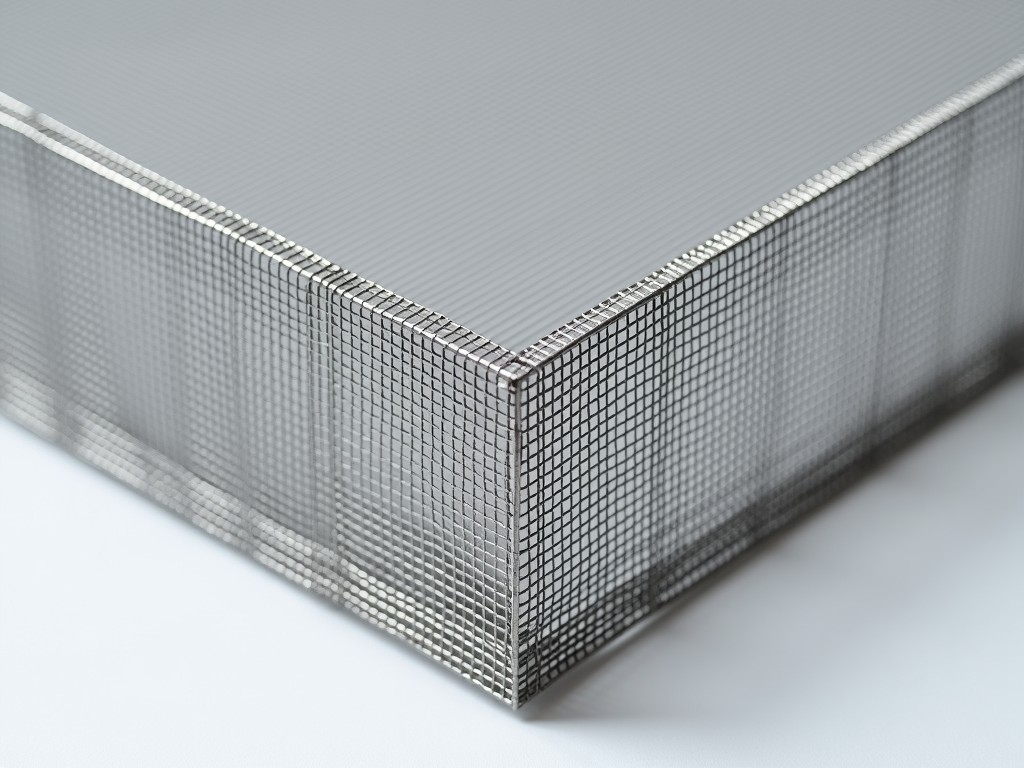
Stainless steel mesh cages are engineered enclosures designed to contain, protect, or support components in demanding industrial environments where corrosion resistance, structural integrity, and precise dimensional control are non-negotiable. Unlike standard fabrications, precision mesh cages integrate tightly controlled wire diameter, aperture size, and weld consistency to meet exacting functional requirements across filtration, shielding, containment, and process equipment applications. Their value lies not in generic strength but in predictable performance under specific mechanical, thermal, or chemical loads—making material selection, mesh geometry, and fabrication tolerance critical design inputs rather than afterthoughts.
Core Engineering Considerations
The functional efficacy of a precision stainless mesh cage depends on three interdependent variables: mesh specification, frame architecture, and joint integrity. Mesh specification defines the open area percentage, wire thickness, and weave pattern—directly influencing flow dynamics, particle retention, or electromagnetic shielding effectiveness. Frame architecture determines load distribution, mounting interface compatibility, and resistance to deformation under static or cyclic stress. Joint integrity, whether achieved through TIG welding, resistance welding, or mechanical fastening, dictates long-term durability by minimizing stress concentration points and preventing unraveling or gap formation under vibration or thermal cycling. Optimizing these elements requires balancing competing demands—for instance, increasing wire diameter improves strength but reduces flow capacity, necessitating application-driven trade-offs rather than universal maximization.
Material Selection Logic
While 304 and 316L stainless steels dominate due to their chromium-nickel microstructure offering inherent passivation in oxidizing environments, the choice between them is rarely arbitrary. 304 suffices for general industrial atmospheres and intermittent water exposure where chloride levels remain below 50 ppm. 316L, with its 2-3% molybdenum addition, becomes essential in marine settings, chemical processing involving chlorides or sulfides, or applications exceeding 60°C continuous exposure where pitting resistance is critical. For high-temperature processes above 800°C, heat-resistant grades like 310S or 321 may be specified despite higher cost and reduced formability, as they maintain austenitic stability and resist sigma phase formation that embrittles standard grades. Lesser-known options like 904L are reserved for specialized acid recovery systems where sulfuric acid concentrations exceed 70%—a niche where even 316L fails prematurely due to crevice corrosion.
Mesh Geometry and Performance Implications
Aperture size and wire diameter are not selected in isolation; their ratio defines the mesh’s structural efficiency and functional suitability. A 1mm aperture with 0.5mm wire (50% wire-to-aperture ratio) offers high open area (~25%) but limited rigidity, suitable only for low-stress filtration or ventilation guards. Increasing wire to 0.8mm at the same aperture raises structural stability by over 2.5x due to the cubic relationship between wire diameter and bending resistance, though open area drops to ~11%, impacting flow rates. Conversely, maintaining 0.5mm wire while reducing aperture to 0.5mm increases particle retention capability for sub-micron filtration but elevates pressure drop exponentially—often requiring multi-stage designs or pressure-assisted systems to remain viable. These relationships are quantified through Darcy-Weisbach calculations for fluid dynamics and von Mises stress models for mechanical loading, not empirical rules of thumb.
Customization Framework
True precision in mesh cage manufacturing begins with understanding the operational boundary conditions—not just nominal dimensions. Customization starts at the mesh level: specifying exact wire tolerance (±0.02mm), aperture uniformity (±5% across sheet), and edge treatment (self-framed, overlocked, or welded border) to prevent fraying or inconsistent tension. Frame integration involves matching flange hole patterns to existing equipment, incorporating reinforcing ribs where aspect ratios exceed 3:1 to prevent bowing, and designing removable sections for maintenance access without compromising seals. Surface treatments like electropolishing (Ra < 0.4µm) are applied not for aesthetics but to eliminate microcrevices that harbor contaminants in sanitary processes or initiate corrosion in halide-rich environments. Each modification is evaluated for its impact on stress distribution, cleaning efficacy, and long-term dimensional stability.
Quality Control Philosophy
Inspection goes beyond dimensional verification to include functional validation aligned with end-use requirements. For filtration cages, bubble point testing confirms pore throat size distribution matches rated retention capacity—critical when a 5µm nominal rating must guarantee 99.9% efficiency at 4.5µm to prevent downstream contamination. Electromagnetic shielding cages undergo transfer impedance testing per MIL-STD-461G across 10kHz to 1GHz to validate performance isn’t compromised by weld-induced discontinuities. Structural cages are subjected to cyclic load testing at 1.5x expected service load for 10,000 cycles to detect fatigue initiation at weld toes or mesh-frame interfaces. Visual inspection under 10x magnification checks for weld porosity, undercut, or wire deformation—defects invisible to the naked eye but capable of propagating under stress. Documentation includes material test reports (MTRs), weld procedure specifications (WPS), and non-destructive testing (NDT) logs traceable to specific production batches.
Typical Applications and Rationale
| Industry | Application | Why Precision Mesh Cage |
|---|---|---|
| Pharmaceutical Manufacturing | Containment of single-use bioreactor filters during sterile transfer | Requires crevice-free, electropolished 316L construction with <0.5mm aperture tolerance to prevent fiber shed and maintain laminar flow integrity during aseptic processing |
| Chemical Processing | Catalyst retention in fixed-bed reactors handling HCl-rich streams | Demands high molybdenum-content alloy (e.g., 316L or 904L) with precise weld penetration to resist localized corrosion at operating temperatures >120°C |
| Power Electronics | EMI shielding enclosure for high-frequency inverter components | Needs uniform aperture <1mm with consistent wire tension to achieve >80dB shielding effectiveness up to 3GHz, validated via slot impedance modeling |
| Food and Beverage | Sieving mesh in dairy powder classification systems | Requires 304 stainless with Ra < 0.2µm surface finish and FDA-compliant welds to prevent product entrapment and enable CIP/SIP cleaning without residue buildup |
Inquiry Preparation Checklist
To receive a technically accurate quotation and avoid iterative clarification cycles, prepare the following before contacting a supplier: detailed dimensional drawing with tolerance zones specified (not just nominal sizes), exact mesh specification including wire diameter, aperture size, weave pattern (plain, twill, dutch), and edge condition, material grade with any required certifications (e.g., EN 10204 3.1), intended operating environment (temperature range, chemical exposure, pressure differentials, vibration profile), required surface finish (Ra value, passivation standard, electropolishing depth), and any functional validation requirements such as bubble point, airflow resistance, or shielding effectiveness testing. Supplying this information upfront enables suppliers to assess feasibility, identify potential design conflicts (e.g., unsupported span limits), and provide accurate lead times based on material availability and process complexity.

More Products

Send Inquiry
If you are interested in our products, leave your information here and we will be in touch shortly.