Security Screens For Windows And Doors
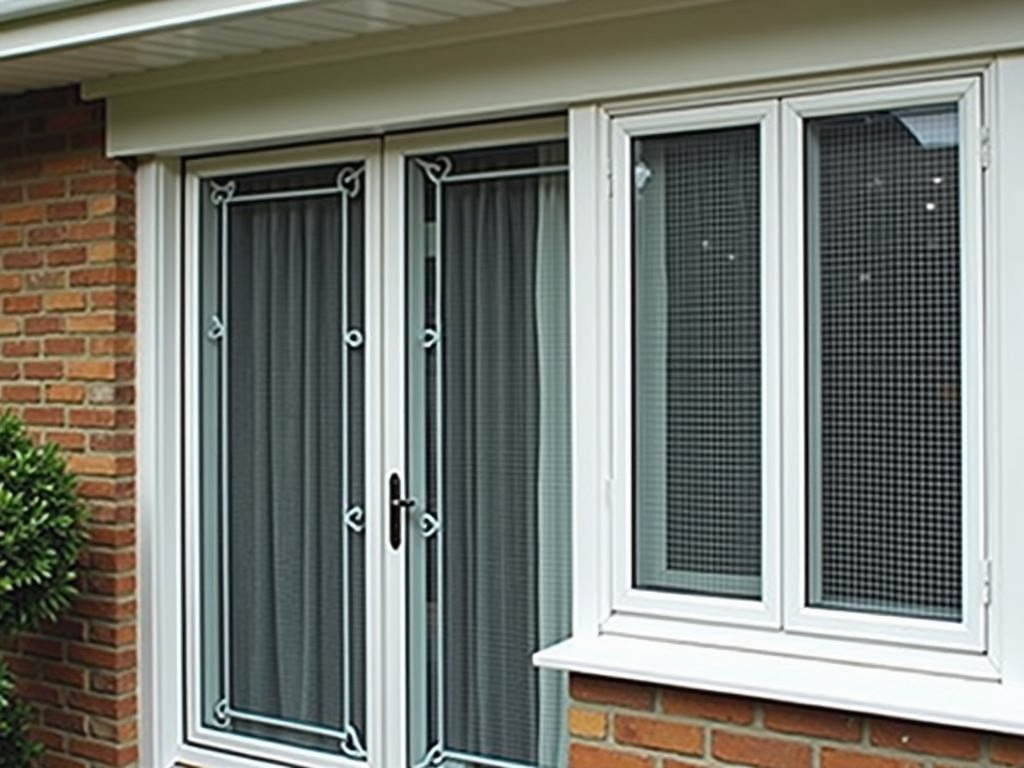
Security screens for windows and doors are engineered barriers designed to resist forced entry while maintaining visibility, ventilation, and emergency egress. Unlike standard insect screens, they
Security Screens for Windows and Doors
Security screens for windows and doors are engineered barriers designed to resist forced entry while maintaining visibility, ventilation, and emergency egress. Unlike standard insect screens, they incorporate high-tensile materials and reinforced framing to delay or prevent intrusion attempts. These systems are commonly specified in commercial, institutional, and high-security residential applications where physical security must coexist with architectural openness and life safety requirements.
The primary function of a security screen is to increase the time and effort required for an intruder to gain access through a window or door opening. This delay serves multiple purposes: it increases the likelihood of detection by occupants or security systems, allows time for alarm response, and discourages opportunistic attacks. Performance is measured not by absolute impenetrability, but by resistance to common attack methods such as kicking, cutting, levering, and tool-assisted breach attempts under defined test conditions.
Material Selection and Structural Design
The effectiveness of a security screen depends on the synergy between mesh material, frame composition, and attachment method. Mesh is typically manufactured from stainless steel alloys (such as 304 or 316 grade) or high-strength synthetic fibers like ultra-high-molecular-weight polyethylene (UHMWPE), each selected for specific trade-offs in strength, corrosion resistance, and visual transparency. Frame materials range from extruded aluminum with reinforced profiles to steel or composite systems, chosen based on load requirements, environmental exposure, and compatibility with the host opening.
Stainless steel mesh offers superior resistance to cutting and corrosion, making it suitable for coastal or industrial environments, though it may reduce visible light transmission by 20–40% depending on weave density. Synthetic fiber meshes, while lighter and more transparent, require UV stabilization and may exhibit lower resistance to sustained abrasion or extreme temperatures. Frame design must prevent mesh pull-out under load, often incorporating spline channels, mechanical clamping, or adhesive bonding to maintain integrity during dynamic impact.
Performance Standards and Testing Protocols
Security screens are evaluated against standardized test methods that simulate real-world intrusion scenarios. Commonly referenced standards include ASTM F3038 for forced entry resistance of window and door screens, AS 5041 (Australia/New Zealand) for security screen doors and windows, and EN 1627–1630 for burglary resistance of building elements. These protocols define specific tools, impact energies, and time-based criteria for classifying resistance levels.
Testing typically involves progressive force application using tools such as crowbars, screwdrivers, and knives, applied at vulnerable points like corners and mid-span. Results are classified based on the duration of resistance or the level of tool sophistication required to breach the screen. For example, a screen rated to withstand 3 minutes of sustained attack with basic hand tools provides a meaningful delay in most intrusion scenarios, particularly when integrated with alarm monitoring.
Applications Across Security Zones
The selection of security screens is driven by the specific threat profile and functional requirements of the installation site. In ground-floor retail environments, screens deter smash-and-grab attempts while allowing merchandise visibility after hours. In healthcare or educational facilities, they balance patient or student safety with the need for natural light and airflow, particularly in areas where barred windows would be psychologically restrictive or non-compliant with egress codes.
High-rise residential buildings often specify security screens for operable windows to prevent falls and deter climbing, while still meeting emergency escape requirements. In critical infrastructure or data centers, screens may be part of a layered defense strategy, delaying access to ventilation openings or service hatches. Each application influences decisions on mesh aperture size, frame anchoring strength, and compatibility with existing locking mechanisms or alarm sensors.
| Application Context | Primary Security Objective | Key Design Consideration |
|---|---|---|
| Ground-floor retail | Deter smash-and-grab entry | Mesh cut resistance, frame anchoring to sill/head |
| Healthcare facility | Prevent elopement, allow ventilation | Non-intrusive appearance, emergency release compliance |
| High-rise residential | Fall prevention, intrusion delay | Load-rated frame, child-safe operation, wind load resistance |
| Critical infrastructure | Delay access to vents/service points | Tamper detection integration, corrosion resistance, tool-resistant mesh |
Customization and Integration Factors
Security screens are rarely off-the-shelf components; they are typically engineered to match the specific dimensions, operating mechanism, and aesthetic requirements of the window or door assembly. Customization includes precise mesh tensioning to prevent sag or vibration, frame profiling to match existing sightlines, and hardware selection that does not interfere with locks, handles, or sensors. For operable units, hinge, slide, or lift mechanisms must be rated for the added mass and wind load of the screen without compromising ease of use.
Integration with building systems is a critical but often overlooked aspect. Screens must not obstruct motion sensors, camera views, or emergency signaling devices. In some cases, they are designed with breakaway sections or push-out mechanisms to satisfy egress codes while maintaining security under normal conditions. Surface finishes—such as powder coating, anodizing, or passivation—are selected to match architectural elements and resist environmental degradation over the expected service life, which commonly exceeds 15 years in protected installations.
Quality Control and Long-Term Performance
Manufacturing consistency directly impacts field performance. Quality control begins with material certification—verifying stainless steel grade, fiber tensile strength, and UV stabilizer content. During production, mesh tension is monitored to ensure uniform load distribution, and frame corners are inspected for proper sealing and mechanical fit. Final assembly includes operational testing: cycling the screen through open/close sequences to verify smooth operation and checking for gaps that could be exploited with thin tools.
Long-term performance depends on environmental factors such as UV exposure, salt spray, and thermal cycling. Accelerated aging tests are used to predict degradation of synthetic meshes or coating adhesion, while stainless steel assemblies are assessed for crevice corrosion or stress cracking risks. Recommended maintenance includes periodic cleaning with non-abrasive agents, inspection of fasteners and splines, and lubrication of moving parts—practices that significantly extend service life and maintain rated performance over time.
More Products

Send Inquiry
If you are interested in our products, leave your information here and we will be in touch shortly.