Round Stainless Steel Wire Mesh Baskets
Round stainless steel wire mesh baskets are engineered components used for containment, separation, and transport of materials in industrial processes. Their circular geometry ensures uniform stress
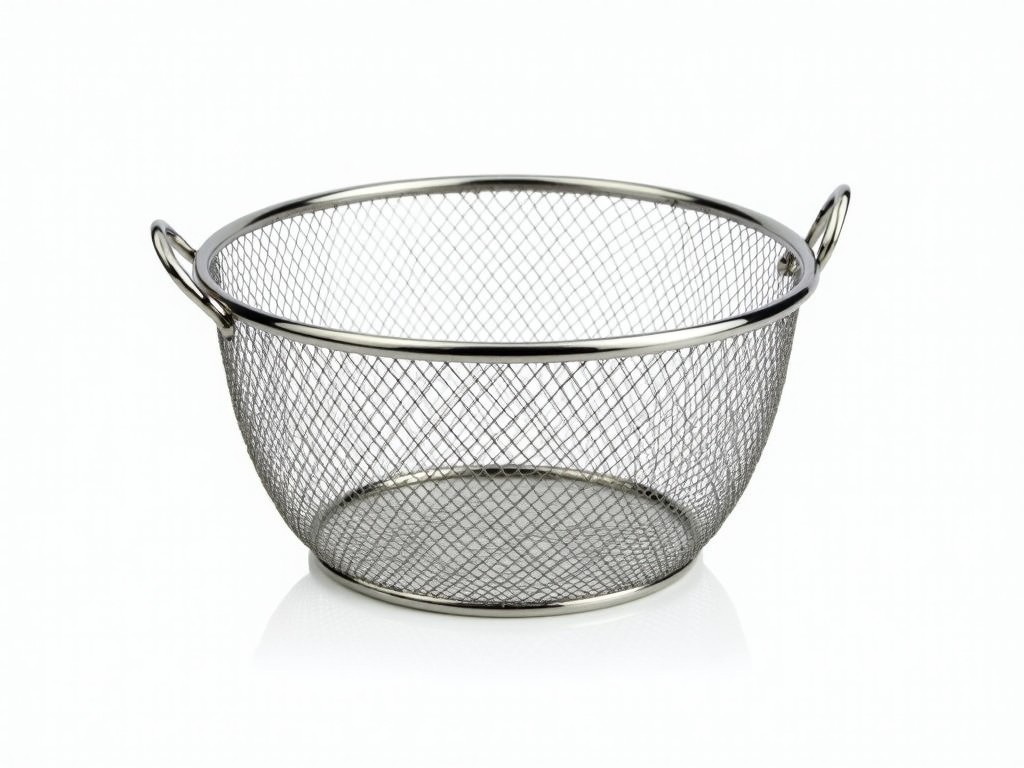
Round Stainless Steel Wire Mesh Baskets
Round stainless steel wire mesh baskets are engineered components used for containment, separation, and transport of materials in industrial processes. Their circular geometry ensures uniform stress distribution under load, while the woven wire mesh provides controlled permeability for liquids, gases, or fine particulates. These baskets are commonly specified in applications requiring corrosion resistance, thermal stability, and repeatable mechanical performance over extended service life.
Material Selection and Corrosion Resistance
The primary materials used are austenitic stainless steels, selected for their chromium-nickel alloy composition that forms a passive oxide layer resistant to oxidation and chemical attack. Grade 304 is standard for general industrial use in dry or mildly corrosive environments, offering good formability and weldability. Grade 316, with added molybdenum, provides superior resistance to chlorides and acidic compounds, making it suitable for marine, chemical processing, or food-grade applications where pitting corrosion is a concern.
Wire diameter and mesh opening are critical design parameters affecting both structural integrity and flow characteristics. Typical wire diameters range from 0.8 mm to 3.0 mm, balancing tensile strength with open area percentage. Mesh counts vary from 4x4 to 20x20 wires per inch, determining the size of particles that can pass through. These specifications are chosen based on the required retention size, pressure drop tolerance, and cleaning frequency in the target process.
Design Features and Structural Considerations
The basket body is typically formed from a single piece of welded or woven mesh cylinder, eliminating seams that could trap contaminants or weaken under cyclic loading. The base is either a solid perforated plate or a woven mesh disk, selected based on whether complete retention or drainage is required. Vertical sides may be straight or slightly tapered to facilitate nesting or stacking, depending on storage and handling constraints.
Reinforcement rings at the top and bottom rims increase rigidity and prevent deformation under load. These rings are often made from thicker gauge wire or solid rod, welded continuously to the mesh structure. Handles, when present, are integrated into the rim design or attached via welded lugs to ensure load-bearing capacity matches the basket’s rated capacity. All joints are inspected for weld continuity and absence of sharp edges that could damage handled materials or pose safety risks.
Typical Applications Across Industries
In chemical processing, these baskets hold catalysts during reactor loading and unloading, where their mesh allows solvent flow while preventing catalyst loss. The corrosion resistance of 316 stainless steel ensures compatibility with aggressive solvents and high-temperature regeneration cycles. In food processing, they are used for washing, blanching, or draining fruits and vegetables, with electropolished finishes meeting hygiene standards for direct product contact.
Pharmaceutical manufacturers use them in aseptic processing for holding filters or membranes during sterilization, where smooth surfaces and crevice-free design reduce bioburden retention. In automotive parts cleaning, they support immersion in degreasing baths or ultrasonic tanks, with mesh size chosen to retain small fasteners while allowing cleaning agents to penetrate complex geometries. Their reusability reduces waste compared to disposable alternatives in high-volume production lines.
Customization Options and Dimensional Parameters
Diameter ranges typically from 50 mm to 600 mm, with heights proportional to diameter for stable aspect ratios, though custom proportions are available for specific equipment fit. Mesh opening size is specified in microns or mesh count, tailored to the particle retention requirement — finer meshes for sub-millimeter particulates, coarser for bulk drainage. Wire diameter is adjusted accordingly to maintain burst strength and resistance to deflection under hydraulic or mechanical load.
Surface treatments include passivation to enhance corrosion resistance, electropolishing for smoothness and cleanability, or specialized coatings for non-stick or anti-static properties where required. Custom features such as split bodies for easy cleaning, removable lids with gaskets, or integrated lifting bails can be engineered based on operational workflows. All customizations are subject to validation against the intended process conditions, including temperature, pressure, and chemical exposure.
Quality Control and Manufacturing Standards
Raw material traceability is maintained through mill certificates verifying alloy composition and mechanical properties. Each basket undergoes dimensional inspection using calibrated gauges to confirm diameter, height, and mesh alignment within specified tolerances — typically ±1% for diameter and ±2 mm for height. Visual and tactile inspection checks for weld defects, protrusions, or loose wires that could compromise safety or product integrity.
Pressure or load testing may be performed upon customer request to validate structural performance under simulated service conditions. For hygienic applications, surface roughness is measured to ensure compliance with Ra values required for clean-in-place (CIP) procedures. All inspections are documented, and conformity reports are available upon request. Manufacturing follows internal procedures aligned with ISO 9001 principles, though certification status varies by supplier and should be confirmed during quotation.
Comparison Table: Material and Mesh Options
| Parameter | Grade 304 Stainless Steel | Grade 316 Stainless Steel |
|---|---|---|
| Primary Alloying Elements | Cr 18%, Ni 8% | Cr 16%, Ni 10%, Mo 2% |
| Corrosion Resistance | Good for mild atmospheres, water, food contact | Superior in chlorides, acids, marine environments |
| Typical Max Service Temp | 870°C (intermittent), 925°C (continuous) | 925°C (intermittent), 980°C (continuous) |
| Common Mesh Opening Range | 200 µm – 5 mm (4x4 to 20x20 mesh) | 200 µm – 5 mm (4x4 to 20x20 mesh) |
| Typical Applications | General processing, drying, storage | Chemical, pharmaceutical, food, marine |
Ordering Information and Lead Times
To receive a quotation, provide the required diameter, height, mesh specification (wire diameter and opening size or mesh count), material grade, and any special features such as handles, lids, or surface finish. Drawings or sketches are helpful but not mandatory — technical teams can derive dimensions from functional descriptions. Standard configurations in 304 or 316 stainless steel with common mesh sizes typically ship within 2–4 weeks after drawing approval, while custom geometries or specialized finishes may extend lead time to 6–8 weeks.
Samples are available for evaluation upon request, subject to availability and potential charges that may be credited toward a first order. Packaging is designed to prevent deformation during transit — baskets are nested where possible, separated by protective layers, and secured in crates or cartons with internal bracing. For export shipments, moisture-resistant packaging and corrosion-inhibiting treatments are applied as needed. All inquiries are reviewed by engineers who assess feasibility and suggest optimizations for manufacturability and performance.
More Products

Send Inquiry
If you are interested in our products, leave your information here and we will be in touch shortly.