Round Hole Perforated Stainless Steel Sheet
Round hole perforated stainless steel sheet is a precision-engineered material created by punching uniform circular openings into stainless steel blanks using calibrated tooling. The resulting
Round Hole Perforated Stainless Steel Sheet
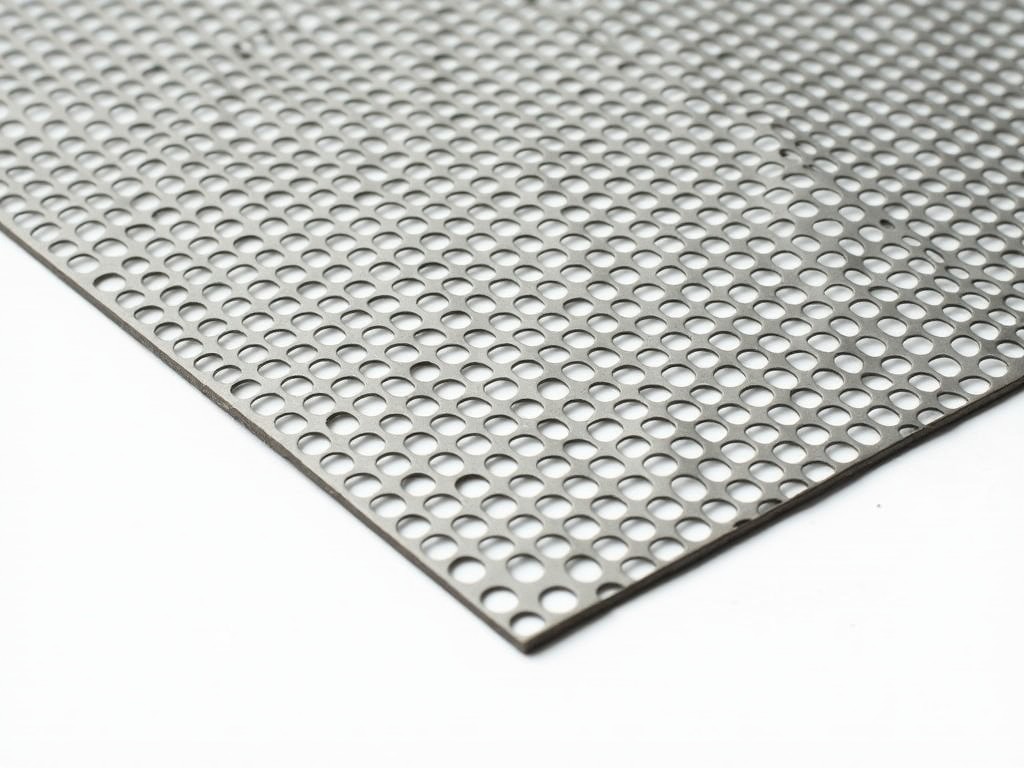
Round hole perforated stainless steel sheet is a precision-engineered material created by punching uniform circular openings into stainless steel blanks using calibrated tooling. The resulting product combines the corrosion resistance and mechanical strength of stainless steel with controlled open area, directional airflow, and light transmission properties essential for industrial separation, filtration, and architectural applications.
Material Selection and Mechanical Properties
The base material is selected from austenitic stainless steel grades based on environmental exposure and mechanical demands. Grade 304 offers general-purpose corrosion resistance in mild atmospheres and food processing environments with a tensile strength of approximately 515 MPa and yield strength of 205 MPa. Grade 316, containing 2-3% molybdenum, provides enhanced resistance to chlorides and acidic conditions, maintaining similar strength values but with superior pitting resistance in marine or chemical processing settings. For high-temperature applications up to 870°C intermittently, grade 310 may be specified due to its higher chromium and nickel content, though it is less commonly perforated due to increased tool wear during punching.
Perforation Geometry and Open Area Calculations
The perforation pattern is defined by three interrelated parameters: hole diameter, pitch (center-to-center distance), and layout arrangement. Standard round hole sizes range from 0.8 mm to 20 mm diameter, with pitches typically 1.5x to 3x the hole diameter to maintain structural integrity. The most common layouts are 60° staggered (triangular pitch) and 90° straight (square pitch). Open area percentage, a critical design factor for airflow and filtration efficiency, is calculated as: (hole area × number of holes per unit area) × 100. For example, a 3 mm diameter hole on a 6 mm pitch in a staggered layout yields approximately 39% open area, while the same hole on a 10 mm pitch yields 14% open area.
Thickness Considerations and Structural Limitations
Sheet thickness directly affects punchability, flatness, and load-bearing capacity. Thinner gauges (0.5–1.5 mm) are easily perforated with minimal burr and are suitable for decorative screens, filters, and ventilation panels where structural load is negligible. Medium thicknesses (1.5–3.0 mm) balance hole precision with rigidity, commonly used in machinery guards, conveyor screens, and process equipment. Thicker sheets (>3.0 mm) require higher punch forces, increasing the risk of material deformation, tool wear, and edge distortion; they are typically reserved for heavy-duty applications like perforated tread plates or structural supports where open area is secondary to strength. As a rule of thumb, the maximum practical hole diameter should not exceed the material thickness to avoid excessive deformation during punching.
Surface Finish and Edge Condition
The surface finish of the base sheet influences both appearance and perforating quality. Common finishes include 2B (dull, uniformly cold-rolled), BA (bright annealed, mirror-like), and No. 4 brushed (directional satin). A 2B finish is standard for industrial perforated sheets as it provides consistent tool contact and minimizes galling during punching. Edge condition after perforation depends on tool sharpness and material thickness; burr height typically ranges from 5–15% of material thickness on the exit side of the punch. Secondary operations such as deburring, tumbling, or electropolishing can be specified to reduce burr and improve cleanliness for food, pharmaceutical, or semiconductor applications.
Typical Industrial Applications
In food processing, perforated sheets are used in drying trays, washing conveyors, and sedimentation tanks where hygiene, corrosion resistance, and controlled drainage are required. The open area allows liquid runoff while retaining product, and the smooth surface facilitates cleaning-in-place (CIP) procedures. In chemical processing, they serve as catalyst supports, tray distributors in distillation columns, and protective screens for pumps and valves, where resistance to specific chemicals dictates grade selection (e.g., 316L for sulfide environments). Architectural applications include facade panels, sunshades, and interior partitions where the perforation pattern modulates light transmission, reduces wind load, and provides visual interest while maintaining durability in outdoor exposure.
Comparison of Perforation Layouts
| Layout Type | Hole Arrangement | Open Area Efficiency | Typical Use Cases |
|---|---|---|---|
| 60° Staggered | Triangular pitch, holes offset in alternating rows | Highest open area for given hole size and pitch | Filters, screens, ventilation panels where airflow is critical |
| 90° Straight | Rows and columns aligned at right angles | Lower open area than staggered at same pitch | Decorative panels, flooring, applications requiring aligned aesthetics |
| Radial Spiral | Holes arranged in concentric circles from a central point | Variable open area, decreases toward center | Acoustic dampening, specialized flow distribution, architectural features |
Customization Parameters and Ordering Information
To receive an accurate quotation, specify the following: material grade (e.g., 304, 316, 310), sheet dimensions (width × length), thickness, hole diameter, pitch, layout pattern, and required open area percentage if known. Indicate any secondary operations such as deburring, leveling, or custom cutting to size. For architectural projects, specify surface finish (2B, BA, No. 4) and any post-perforation treatments like powder coating or anodizing (where applicable). Tolerances: hole diameter typically ±0.1 mm for diameters under 5 mm, ±0.2 mm for larger holes; pitch tolerance ±0.15 mm; flatness within 5–10 mm/m depending on thickness and open area. Minimum order quantities vary by thickness and material but typically start at one sheet for standard sizes.
For technical consultation, material selection guidance, or to request a sample with your specified perforation pattern, contact our engineering team. Provide your application details including environmental conditions, mechanical loads, and required service life to ensure the recommended solution meets performance expectations.
More Products

Send Inquiry
If you are interested in our products, leave your information here and we will be in touch shortly.