Stainless Steel Bathroom Shower Caddy
A stainless steel bathroom shower caddy is a wall-mounted or tension-mounted storage unit designed to hold toiletries in wet environments. It addresses the core engineering challenge of material
Stainless Steel Bathroom Shower Caddy
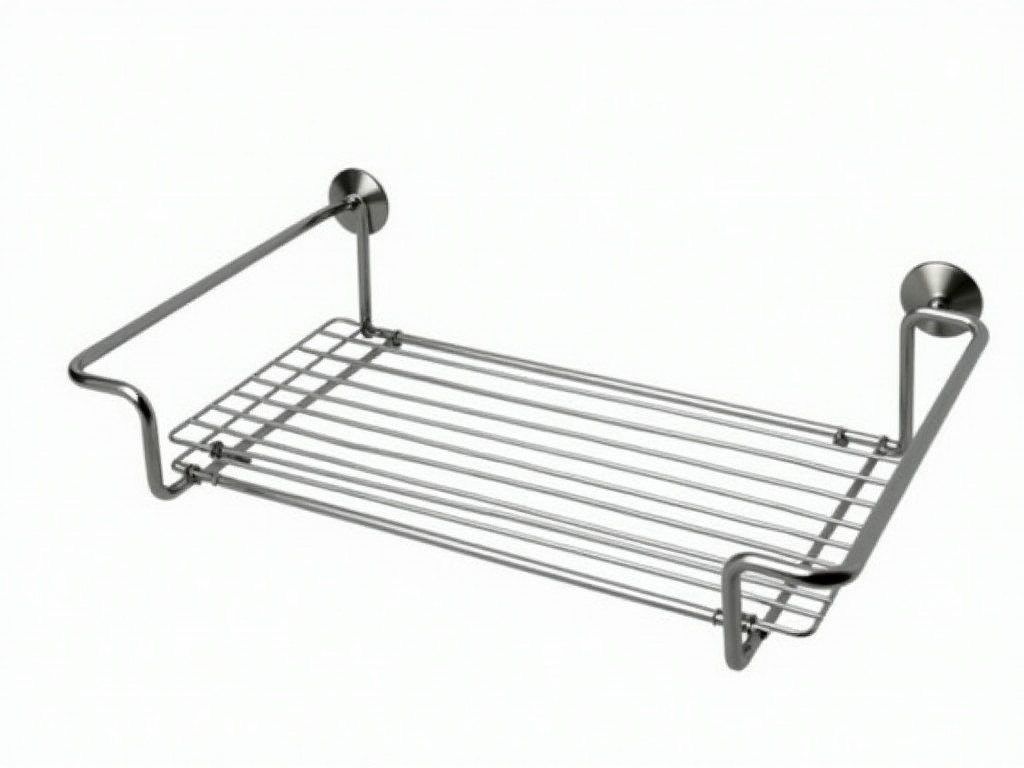
A stainless steel bathroom shower caddy is a wall-mounted or tension-mounted storage unit designed to hold toiletries in wet environments. It addresses the core engineering challenge of material degradation in high-humidity, chemically exposed spaces such as showers and bathtubs.
Industrial buyers prioritize corrosion resistance, load-bearing capacity, and long-term dimensional stability when selecting shower caddies for institutional, hospitality, or multi-residential applications. Material selection and structural design directly impact service life and maintenance frequency.
This product page explains the technical characteristics that determine performance in real-world conditions, enabling informed specification decisions based on environmental exposure, usage patterns, and lifecycle cost considerations.
Material Composition and Corrosion Resistance
The primary material used is austenitic stainless steel, typically grade 304 (18-8) or optionally 316 for enhanced chloride resistance. Grade 304 contains approximately 18% chromium and 8% nickel, forming a passive chromium oxide layer that self-repairs in oxidizing environments.
In shower applications, exposure to soap chlorides, acidic cleaners, and fluctuating temperatures can initiate pitting or crevice corrosion in lesser alloys. Grade 316 adds 2-3% molybdenum, significantly improving resistance to chloride-induced pitting, making it suitable for coastal installations or facilities using aggressive sanitization protocols.
Surface finish options include brushed (No. 4), mirror polish (No. 8), or electropolished. Brushed finishes hide minor scratches and are preferred in high-traffic areas; electropolishing reduces surface roughness to Ra < 0.4 µm, minimizing particle adhesion and easing cleaning in hygienic environments.
Structural Design and Load Capacity
Load-bearing capacity depends on rod diameter, wall thickness, and mounting configuration. Standard tension-mounted caddies use 16–19 mm diameter vertical rods with 1.2–1.5 mm wall thickness, constructed from rolled and welded stainless steel tube.
Shelf platforms are typically formed from 0.8–1.2 mm sheet steel, folded or welded to create upward-turned edges (typically 8–12 mm high) to prevent item slippage. The shelf-to-rod connection uses either friction-fit collars or set-screw clamps, allowing vertical adjustment without tools.
Under static load, a standard three-shelf caddy (300 mm wide × 100 mm deep per shelf) can support 15–20 kg evenly distributed before permanent deformation occurs. Dynamic loads from grabbing or impact are mitigated by the inherent ductility of austenitic stainless steel, which absorbs energy without brittle fracture.
Mounting Systems and Installation Considerations
Two primary mounting methods are employed: tension-based and fixed-wall. Tension-mounted systems use spring-loaded feet at the base and a threaded or compressible upper bracket to generate outward force between floor and ceiling or bathtub rim and showerhead.
Fixed-wall mounts utilize drilled anchors and corrosion-resistant screws (typically stainless steel) to secure mounting brackets directly to studs or masonry. This method eliminates reliance on vertical compression and is preferred in ceilings under 2.4 m or where floor-to-ceiling height varies significantly.
Installation requires verification of plumb alignment and adequate substrate strength. Tension systems demand a minimum floor-to-ceiling height of 2.1 m and maximum of 2.7 m for safe operation; outside this range, fixed mounting is recommended. Rubber or silicone pads at contact points prevent marring of delicate surfaces like acrylic or stone.
Typical Specifications and Customization Options
| Parameter | Typical Value / Option |
|---|---|
| Stainless Steel Grade | 304 (standard), 316 (optional for high-chloride environments) |
| Rod Diameter | 16 mm, 19 mm |
| Wall Thickness | 1.2 mm, 1.5 mm |
| Shelf Dimensions (W × D) | 250–350 mm × 80–120 mm |
| Shelf Height (Edge) | 8 mm, 10 mm, 12 mm |
| Finish | Brushed (No. 4), Mirror (No. 8), Electropolished |
| Mounting Type | Tension, Fixed-Wall |
| Adjustable Shelves | Yes (vertical spacing) |
| Maximum Static Load (Total) | 15–20 kg (evenly distributed) |
Custom dimensions, additional shelves, integrated soap dishes, or specialized finishes (e.g., PVD black or gold) are available upon request. Engineering teams can modify rod length, shelf count, or mounting hardware to accommodate non-standard spaces or specific load requirements.
Quality Control and Manufacturing Considerations
Manufacturing begins with certified stainless steel coil or tube, verified via mill test reports (MTRs) for chemical composition and mechanical properties. Tube is cut to length, deburred, and formed using CNC bending equipment to ensure consistent radius and angular accuracy.
Shelf components are stamped or laser-cut from sheet, then edge-formed and welded using TIG (GTAW) process to maintain corrosion resistance in the heat-affected zone. Post-weld, surfaces are passivated in nitric acid solution to restore the chromium oxide layer.
Final inspection includes dimensional verification (±0.5 mm tolerance on critical features), surface finish assessment (visual and profilometer), load testing (static and cyclic), and corrosion resistance validation via salt spray testing (ASTM B117) when specified. All units undergo visual inspection for scratches, dents, or polishing defects before packaging.
Applications in Institutional and Commercial Settings
In hospitality environments such as hotels and resorts, shower caddies reduce countertop clutter and improve guest experience by providing organized, accessible storage for toiletries. Wall-mounted versions eliminate floor contact, simplifying cleaning routines and reducing microbial harborage points.
In healthcare facilities, including patient bathrooms and assisted living units, corrosion-resistant materials and smooth, non-porous surfaces support infection control protocols. Electropolished finishes minimize biofilm adhesion, and the absence of crevices allows for effective disinfection with standard hospital-grade cleaners.
Multi-residential buildings (apartments, dormitories) benefit from vandal-resistant designs—using thicker walls, tamper-proof fasteners, and secure shelf retention—to withstand higher usage and potential misuse. Modular designs allow for rapid replacement of damaged units without disrupting adjacent fixtures.
For technical inquiries, customization requests, or quotation preparation, please contact our engineering team.
Request Technical Specification or Quote
More Products

Send Inquiry
If you are interested in our products, leave your information here and we will be in touch shortly.