Stainless Steel Mesh Strainer Basket
A stainless steel mesh strainer basket is a precision-fabricated component designed for solid-liquid separation in industrial process systems. It functions as a removable filter element that captures
Stainless Steel Mesh Strainer Basket
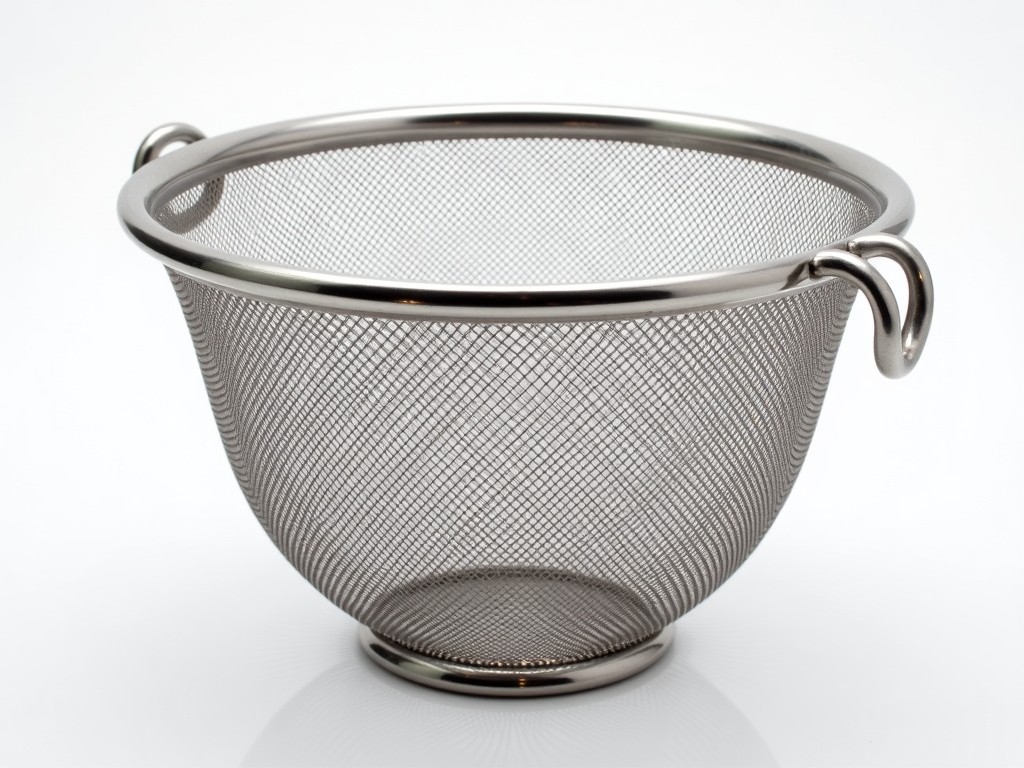
A stainless steel mesh strainer basket is a precision-fabricated component designed for solid-liquid separation in industrial process systems. It functions as a removable filter element that captures particulate contaminants while allowing fluid to pass through, protecting downstream equipment such as pumps, valves, heat exchangers, and nozzles from abrasion, clogging, or damage. These baskets are commonly installed in pipeline strainers, suction lines, and recirculation systems where continuous operation and easy maintenance are critical.
Unlike disposable filters, strainer baskets are engineered for repeated cleaning and long-term service life. Their performance depends on three interrelated factors: mesh aperture size, wire diameter, and basket geometry. The mesh opening determines the minimum particle size retained, while the wire thickness influences mechanical strength and pressure drop. Basket shape—typically cylindrical, conical, or rectangular—is selected based on housing compatibility, flow dynamics, and ease of removal during maintenance cycles.
Material Selection and Corrosion Resistance
Stainless steel mesh strainer baskets are predominantly manufactured from austenitic grades such as 304 and 316L due to their balanced combination of corrosion resistance, formability, and weldability. Grade 304 offers sufficient resistance to atmospheric oxidation, mild acids, and alkaline solutions in general industrial water and air systems. For environments containing chlorides, sulfides, or elevated temperatures—common in chemical processing, marine, or food-grade applications—316L is preferred due to its molybdenum content, which enhances resistance to pitting and crevice corrosion.
In high-purity or sanitary industries such as pharmaceuticals, biotechnology, or food and beverage, baskets may be electropolished post-fabrication to reduce surface roughness and minimize particle adhesion. This finish improves cleanability and supports compliance with standards such as ASME BPE or 3-A Sanitary Standards. Material test reports (MTRs) are typically available upon request to verify alloy composition and traceability, which is essential for regulated industries requiring material certification.
Mesh Specifications and Filtration Performance
The filtration rating of a strainer basket is defined by its mesh count and corresponding micron rating, which indicates the largest spherical particle that can pass through the openings. Mesh is specified in wires per linear inch (WPI), with higher counts indicating finer filtration. For example, a 20 mesh screen has approximately 840 micron openings, while a 100 mesh screen reduces this to about 149 micron. These values are nominal; actual performance depends on wire diameter and weave pattern.
Common weave patterns include plain square weave, twill weave, and Dutch weave. Plain weave offers symmetric flow resistance and is suitable for general use. Twill weave provides greater strength and finer filtration at the same mesh count due to staggered wire interlacing. Dutch weave, characterized by a finer warp wire and coarser shute wire, achieves high dirt-holding capacity and is often used in applications requiring retention of deformable particles or gels. Selection depends on the nature of the contaminant—whether it is abrasive, fibrous, compressible, or crystalline.
| Mesh Size (WPI) | Nominal Opening (Micron) | Typical Wire Diameter (mm) | Common Applications |
|---|---|---|---|
| 10 | 1680 | 0.60 | Coarse debris protection in cooling water lines |
| 40 | 350 | 0.30 | General process filtration in chemical and food systems |
| 100 | 149 | 0.15 | Fine particle removal in pharmaceutical and hydraulic systems |
| 200 | 74 | 0.10 | Ultrafine filtration in semiconductor wash and lubricant systems |
Basket Geometry and Housing Integration
The physical dimensions of the strainer basket must precisely match the strainer housing to ensure proper sealing and prevent bypass flow. Key dimensions include outer diameter, height, flange thickness, and handle configuration. Baskets are typically designed with a slight radial clearance (0.5–1.5 mm) to allow for thermal expansion and ease of insertion, while relying on a compressed gasket or O-ring at the top flange to achieve a seal against the housing lid.
Handles are integrated into the design for safe and efficient removal during maintenance. Common configurations include lift tabs, welded loops, or threaded stems compatible with retrieval tools. In high-pressure or hazardous service environments, baskets may feature locking mechanisms or safety stops to prevent accidental ejection under pressure. Vent holes or equalization ports are sometimes incorporated near the top to prevent vacuum lock during removal, especially in closed-loop systems.
For applications requiring frequent cleaning, baskets may be designed with smooth internal contours and minimal crevices to reduce trapping of solids. In sanitary designs, all welds are ground and polished to eliminate bacterial harborage points. Custom geometries—such as tapered, baffled, or compartmentalized baskets—are available upon request to address specific flow distribution needs or to facilitate sequential filtration stages within a single housing.
Pressure Drop and Flow Dynamics
Pressure loss across a strainer basket is a critical design consideration, particularly in high-flow or pump-suction applications. The total pressure drop consists of two components: clean basket resistance and fouling-induced increase. Clean basket loss depends on open area ratio—the percentage of mesh surface not obstructed by wire—and flow velocity. A higher open area ratio reduces resistance but may compromise mechanical strength; typical values range from 30% to 60% depending on mesh count and wire diameter.
As particulates accumulate, the effective flow area decreases, causing pressure drop to rise non-linearly. Monitoring this increase allows operators to determine optimal cleaning intervals before bypass flow or pump cavitation occurs. In systems where continuous operation is mandatory, duplex strainer configurations are often employed, allowing one basket to be serviced while the other remains online. Basket design must account for asymmetric loading in such setups to prevent deformation during service.
Computational fluid dynamics (CFD) analysis is sometimes used during the design phase to optimize basket geometry for uniform flow distribution and minimal turbulence. This is especially relevant in high-viscosity fluids or systems with strict residence time requirements. Engineers should consult flow coefficient (Cv) data or pressure drop curves provided by the manufacturer, which are typically derived from standardized test rigs using water at ambient temperature as the reference fluid.
Quality Control and Manufacturing Considerations
Manufacturing a reliable strainer basket begins with precise mesh cutting and edge treatment. The mesh is typically cut to size using laser or shear methods that minimize deformation, then formed into a cylinder or basket shape via rolling or pressing. Seams are joined by TIG welding to ensure full penetration and corrosion resistance, particularly in 316L grades where sensitization must be avoided through low-heat-input techniques and post-weld passivation.
Dimensional inspection is performed at multiple stages: mesh aperture verification using optical comparators or wire mesh gauges, basket diameter and height measurement with calipers or CMM, and flange flatness checks to ensure proper seating. Visual inspection under 10x magnification is standard for weld integrity, checking for cracks, porosity, or incomplete fusion. For sanitary applications, surface roughness (Ra) is measured to confirm compliance with electropolishing or mechanical finish requirements.
Burst or collapse testing may be conducted on sample units to validate mechanical strength under expected differential pressures. This is particularly important in high-pressure hydrocarbon or steam systems where basket failure could lead to catastrophic downstream contamination. Traceability is maintained through lot numbers etched or laser-marked on the flange, linking each unit to its material test report, welding procedure specification (WPS), and inspection records.
Customization Options and Engineering Support
Standard catalog baskets cover common sizes and mesh ratings, but many industrial applications require non-standard dimensions, special alloys, or integrated features. Customization options include alternative materials such as duplex 2205 for high-chloride environments, Hastelloy C-276 for reducing acids, or titanium for seawater service. Mesh can be supplied in perforated plate form for larger particle retention or as multi-layer configurations for graded filtration.
Additional features such as magnetic inserts for ferrous particle capture, polyurethane liners for abrasion resistance, or heating jackets for temperature-sensitive fluids can be incorporated based on process requirements. Engineers may also request baskets with differential pressure ports, quick-disconnect fittings, or compatibility with automated cleaning systems such as backflush or ultrasonic cleaning. Engraving or color-coding for identification is available upon request for plants with multiple strainer units in service.
To initiate a custom quotation, buyers should provide the strainer housing make and model, required mesh rating (in micron or mesh), operating temperature and pressure, fluid composition, flow rate, and any applicable industry standards (e.g., ASME, FDA, 3-A, ISO 9001). Lead times vary based on complexity but typically range from 2 to 6 weeks for fabricated units, with stocked standard baskets available for immediate shipment.
For technical inquiries, custom specifications, or to request a quotation, contact our engineering team.
Request Technical Support or Quotation

More Products

Send Inquiry
If you are interested in our products, leave your information here and we will be in touch shortly.