Stainless Steel Telescopic Drain Basket
A stainless steel telescopic drain basket is an adjustable strainer designed to fit varying sink dimensions while providing efficient debris capture and water flow control in commercial and
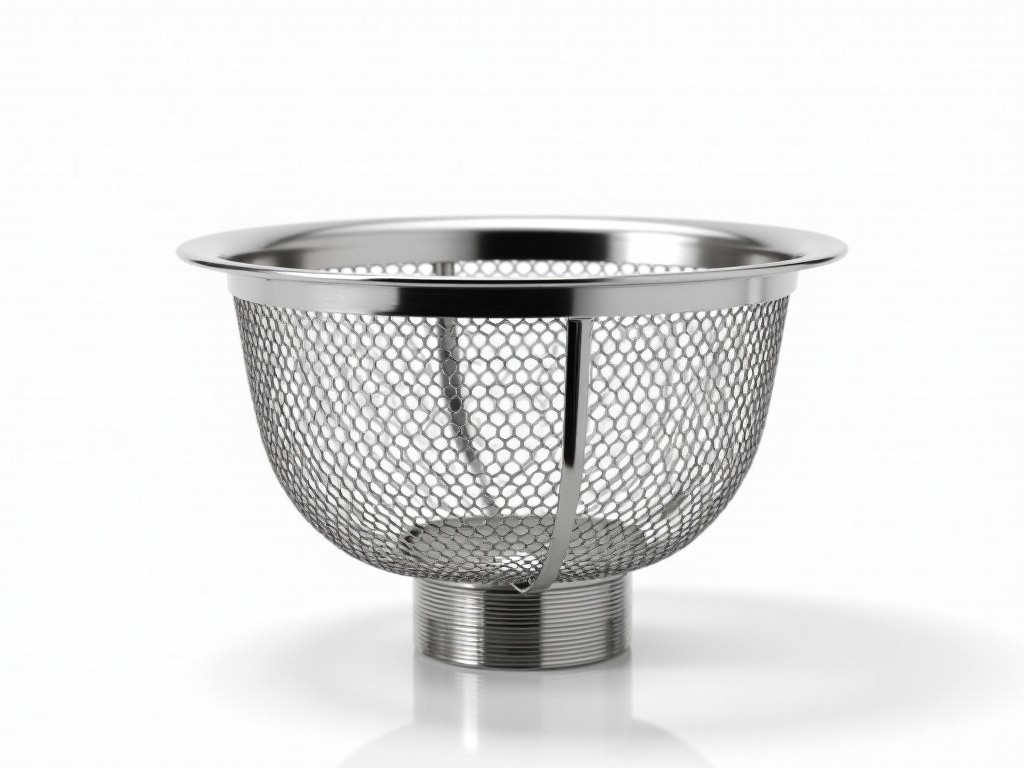
Stainless Steel Telescopic Drain Basket
A stainless steel telescopic drain basket is an adjustable strainer designed to fit varying sink dimensions while providing efficient debris capture and water flow control in commercial and industrial kitchen environments.
Its telescoping mechanism allows length adjustment typically between 300 mm and 500 mm, accommodating single-bowl, double-bowl, and prep sinks commonly found in food processing, hospitality, and institutional facilities.
Constructed from austenitic stainless steel grades such as 304 or 316, the basket resists corrosion from prolonged exposure to water, detergents, and food acids, maintaining structural integrity under frequent thermal cycling.
Key Design Features
The telescopic frame consists of two nested tubular sections with a spring-loaded locking mechanism that enables smooth extension and secure positioning at desired lengths without tools.
Perforated basket walls feature 3 mm diameter holes spaced at 6 mm pitch, achieving approximately 40% open area to balance debris retention with drainage efficiency, preventing clogging while capturing food particles down to 2 mm in size.
Integrated handles are ergonomically shaped with a 25 mm grip diameter and positioned 15 mm above the basket rim to facilitate safe handling when wet, reducing slip risk during removal and emptying.
Material and Construction Specifications
The primary structure uses 0.8 mm thick 304 stainless steel sheet for the basket body and 1.2 mm thick tubing for the telescoping frame, providing sufficient rigidity to withstand dynamic loads from water surge and manual handling without permanent deformation.
For environments with high chloride exposure—such as coastal kitchens or facilities using chlorine-based sanitizers—316L stainless steel is available, offering improved pitting resistance due to 2-3% molybdenum content.
All welded joints are passivated post-fabrication to restore the chromium oxide layer, ensuring uniform corrosion resistance across the entire surface and preventing crevice corrosion at connection points.
Adjustment Range and Compatibility
The standard adjustment range spans from 300 mm to 500 mm in 10 mm increments, controlled by a detent pin system that locks into preset holes along the inner tube, allowing repeatable positioning for consistent fit across multiple sink installations.
This range covers 90% of standard commercial sink widths, including 300 mm single bowls, 450 mm and 600 mm double bowls, and 500 mm prep sinks, eliminating the need for custom fabried adapters in most retrofit scenarios.
For sinks outside this range, custom tube lengths can be fabricated upon request, with minimum order quantities applying to non-standard configurations.
Performance Characteristics
Under typical flow conditions of 15 L/min, the basket maintains a pressure drop of less than 0.8 kPa, ensuring minimal impact on drainage velocity while effectively retaining solids.
Static load testing shows the handle assembly withstands up to 150 N of vertical force without yield, sufficient for lifting a full basket of wet food waste (approximately 1.2 kg) with a safety factor of 2.5.
Cycle testing of the telescoping mechanism demonstrates no loss of locking strength after 5,000 extension-retraction cycles, equivalent to over 3 years of daily use in a high-volume kitchen.
Applications in Industrial Settings
In food processing plants, these baskets are installed at washing stations to capture vegetable trimmings, bone fragments, and packaging debris before they enter drain lines, reducing the frequency of hydrojetting and preventing pump clogs in lift stations.
In commercial kitchens of hotels and hospitals, they protect grease interceptors by filtering solids that would otherwise accumulate and reduce separation efficiency, extending maintenance intervals and lowering operational costs.
In laboratory and pharmaceutical settings, electropolished versions are used to minimize particulate shedding and facilitate cleaning-in-place (CIP) protocols, meeting ISO 14644-1 cleanliness requirements for adjacent areas.
Customization Options
Basket depth can be modified from the standard 100 mm to 150 mm or 200 mm to accommodate higher volumes of debris in low-drainage-frequency operations, such as weekend-only facilities.
Perforation patterns are adjustable—smaller 2 mm holes for fine particle capture in semiconductor washing, or larger 5 mm slots for high-flow vegetable rinsing—allowing optimization based on specific waste streams.
Handle configurations include fold-down models for under-counter clearance or extended versions for deep sinks, with optional heat-resistant silicone grips for temperatures up to 80°C.
Quality Control and Testing
Dimensional accuracy is verified using calibrated gauges, with critical features such as tube ovality and perforation alignment held to ±0.2 mm tolerance to ensure smooth telescoping action and uniform flow distribution.
Material composition is confirmed via X-ray fluorescence (XRF) spectrometry on raw stock and finished parts, verifying nickel and chromium content within ASTM A240 specifications for 304 and 316 grades.
Surface finish is measured with a profilometer, ensuring Ra ≤ 0.8 µm for standard finishes and Ra ≤ 0.4 µm for electropolished variants, which improve cleanability and reduce bacterial adhesion.
| Specification | Typical Value | Notes |
|---|---|---|
| Material Grade | 304 or 316L | 316L for high-chloride environments |
| Adjustment Range | 300–500 mm | 10 mm increments, detent pin lock |
| Basket Depth | 100 mm (standard) | Custom: 150 mm, 200 mm available |
| Perforation Size | 3 mm diameter | 6 mm pitch, ~40% open area |
| Handle Load Capacity | 150 N vertical | Safety factor >2.5 for typical use |
| Cycle Life | >5,000 cycles | No loss of locking strength |
| Surface Finish (Ra) | ≤0.8 µm | Electropolished: ≤0.4 µm available |
Installation requires no tools or modifications to existing sink infrastructure. The basket is placed directly into the sink opening and adjusted to contact both sides, creating a stable fit that resists lateral movement during use.
Removal for cleaning is performed by lifting the handle and compressing the telescoping frame to clear the sink rim, allowing full access to the basket interior for manual washing or dishwasher placement.
Maintenance involves routine inspection of the locking mechanism for debris buildup and periodic passivation if exposed to harsh chemicals, though stainless steel construction minimizes upkeep needs in standard conditions.
For technical drawings, material certification, or to discuss custom dimensions for your facility, contact our engineering team.
Request Specification Sheet

More Products

Send Inquiry
If you are interested in our products, leave your information here and we will be in touch shortly.