Wholesale Perforated Metal Sheet Railing
Perforated metal sheet railing combines structural support with functional perforation patterns to create guardrail systems that meet safety requirements while enabling airflow, light transmission,

Wholesale Perforated Metal Sheet Railing
Perforated metal sheet railing combines structural support with functional perforation patterns to create guardrail systems that meet safety requirements while enabling airflow, light transmission, and visual openness. These systems are commonly specified in industrial facilities, commercial buildings, and infrastructure projects where durability, low maintenance, and design flexibility are critical. The perforations are engineered to balance open area percentage with load-bearing capacity, ensuring compliance with relevant safety codes without compromising performance.
Unlike solid bar or welded mesh railings, perforated sheet systems distribute loads across a continuous plate, reducing stress concentrations and improving resistance to impact and vibration. The perforation pattern is typically arranged in staggered or linear configurations, with hole sizes and spacing calculated to maintain structural integrity while achieving desired functional outcomes such as drainage, debris resistance, or acoustic dampening. This makes them suitable for environments ranging from food processing plants to outdoor pedestrian walkways.
Material Selection and Mechanical Properties
The base material for perforated metal sheet railing is selected based on environmental exposure, load requirements, and lifecycle cost. Common options include carbon steel (ASTM A36 or A1011), galvanized steel (hot-dip coated per ASTM A123), stainless steel (grades 304 or 316), and aluminum alloys (5052-H32 or 6061-T6). Each material offers distinct advantages: carbon steel provides high tensile strength at lower cost; galvanized steel adds corrosion resistance for humid environments; stainless steel resists chemical and saltwater exposure; aluminum delivers lightweight performance with natural oxidation resistance.
Thickness typically ranges from 1.5 mm to 6 mm, depending on span length, load conditions, and deflection limits. Thicker sheets are used for high-impact zones or long spans between posts, while thinner gauges may suffice for low-traffic areas or decorative infill panels. The perforation process does not significantly reduce tensile strength when hole diameter and pitch follow established engineering guidelines—typically maintaining 60–80% of the solid sheet’s load capacity when open area is kept below 40%.
Perforation Patterns and Functional Design
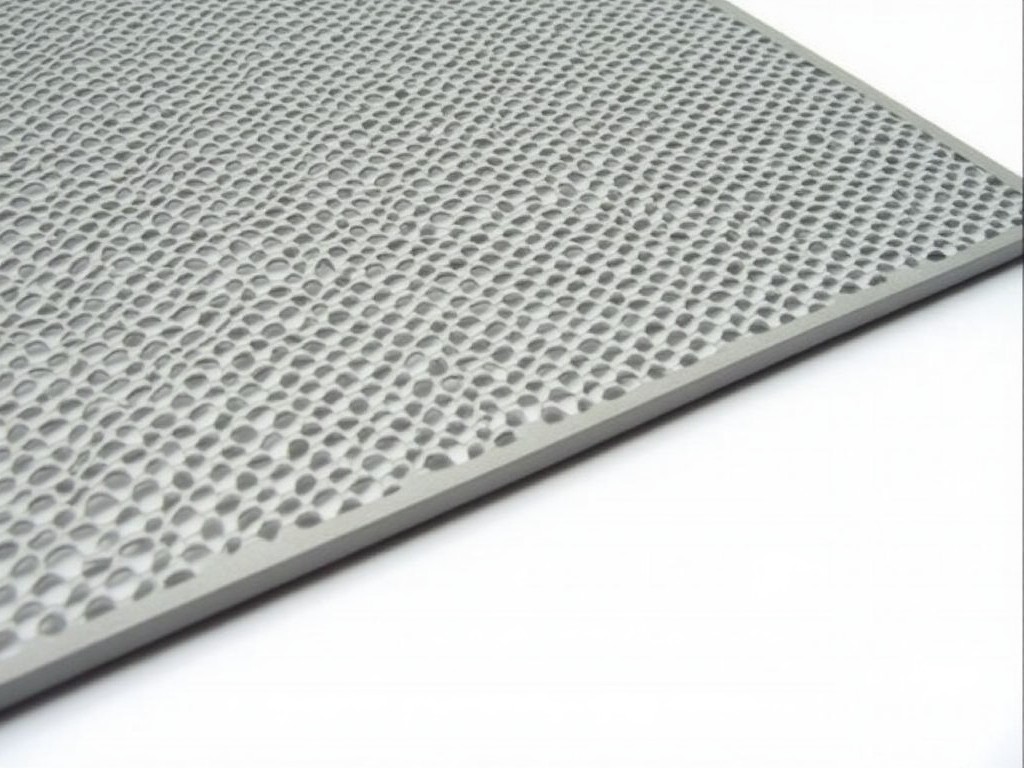
Perforation patterns are defined by hole shape, size, pitch (center-to-center distance), and arrangement. Round holes are most common due to ease of fabrication and uniform stress distribution, but square, slotted, hexagonal, and custom geometries are available for specific functional or aesthetic needs. Hole diameter usually ranges from 3 mm to 12 mm, with pitch varying from 6 mm to 25 mm, resulting in open area percentages typically between 15% and 50%, depending on the application.
Staggered (60-degree) hole patterns provide higher open area and better flow characteristics than linear patterns at the same pitch, while linear patterns offer easier alignment during installation and may be preferred for architectural consistency. Edge margins are maintained (usually 10–20 mm from the sheet edge) to preserve structural integrity and facilitate fastening. Post-punching deburring or vibratory finishing is standard to remove sharp edges and ensure safety compliance.
Structural Configuration and Installation
Perforated metal sheet railing is typically fabricated as infill panels mounted between vertical posts or integrated into a top rail and base shoe system. Posts are commonly fabricated from structural tubing (e.g., 50x50 mm or 75x75 mm square hollow section) or pipe, anchored to concrete or steel substrates using base plates and chemical or mechanical fasteners. The sheet panels are secured using methods such as welding, mechanical clamping with gaskets, or bolted flanges, depending on material compatibility and maintenance requirements.
Panel height is generally designed to meet local guardrail height requirements (e.g., 900–1100 mm for industrial guards, 1050–1200 mm for public access areas), with intermediate rails or toe boards added as needed for compliance with OSHA, IBC, or local building codes. Deflection limits are verified through engineering calculations or testing, ensuring that under specified loads (e.g., 0.5 kN/m uniform load or 1 kN point load), the system remains within allowable deformation thresholds to prevent hazard creation.
Applications Across Industrial Sectors
In food and beverage processing facilities, perforated stainless steel railing is preferred because its smooth, non-porous surface resists bacterial growth and allows for easy washdown, while perforations prevent liquid pooling and facilitate drainage during cleaning cycles. The open area also reduces wind load on outdoor installations, making it suitable for roof-mounted equipment platforms or walkways exposed to high winds.
In transportation infrastructure—such as train stations, bus terminals, and pedestrian bridges—perforated aluminum or galvanized steel railings provide corrosion resistance, low maintenance, and visual transparency that enhances situational awareness without compromising safety. The perforations can also be sized to deter climbing or vandalism while still allowing visibility and light penetration.
Manufacturing plants and warehouses use these systems for mezzanine guards, machine guarding, and perimeter safety barriers where impact resistance, ease of inspection, and resistance to dust accumulation are priorities. The perforations enable visual monitoring of equipment behind the barrier and reduce the likelihood of tool or debris buildup on the rail surface.
Customization and Fabrication Capabilities
Wholesale suppliers offer custom fabrication to match project-specific dimensions, perforation patterns, edge treatments, and finish requirements. Panels can be cut to length, notched for post clearance, or formed with return flanges for increased stiffness. Secondary operations include bending, rolling, or welding to create curved or complex geometries, with tolerances typically held to ±1.5 mm for hole placement and ±2.0 mm for overall dimensions, depending on material and thickness.
Surface finishes range from mill finish to powder coating (in standard or custom colors), anodizing (for aluminum), or passivation (for stainless steel), selected based on environmental exposure and aesthetic preferences. Powder coating provides UV resistance and additional corrosion protection, while anodizing enhances aluminum’s natural oxide layer for improved durability in architectural applications. All finishes are applied after perforation to ensure complete coverage of hole edges.
Quality Assurance and Testing
Quality control begins with material verification via mill test certificates (MTCs) confirming chemical composition and mechanical properties. Perforation accuracy is inspected using gauges or optical systems to verify hole size, pitch, and open area percentage against specifications. Dimensional checks ensure panel squareness, edge straightness, and hole margin consistency, with visual inspection for burrs, deformation, or surface defects.
Structural validation may include load testing of sample panels or posts to confirm resistance to specified loads, particularly for custom configurations or high-risk installations. Coating adhesion and thickness are measured using DFT (dry film thickness) gauges for painted or powder-coated finishes, and salt spray testing (ASTM B117) may be conducted upon request to validate corrosion resistance. All inspection results are documented and available for customer review.
Packaging and Logistics for Wholesale Orders
Finished railing panels are typically stacked on pallets with protective corner guards and interleaving materials (such as cardboard or polyethylene sheets) to prevent surface abrasion during transit. For longer panels, custom crating or A-frame racks may be used to minimize bending risk. Each bundle is labeled with part numbers, quantities, and handling instructions, and secured with polyester or steel strapping to prevent shifting.
Export shipments comply with ISPM 15 standards for wooden packaging, and moisture-barrier wraps or desiccant packs are included for overseas transport to prevent corrosion during transit. Lead times vary based on material availability and complexity but typically range from 2–4 weeks for standard configurations and 4–6 weeks for custom perforations or finishes. Sample panels or material coupons are available upon request to support qualification processes.
| Parameter | Typical Range / Options | Notes |
|---|---|---|
| Material | Carbon steel, Galvanized steel, Stainless steel (304/316), Aluminum (5052/6061) | Selected based on environment and load |
| Thickness | 1.5 mm – 6.0 mm | Depends on span and load requirements |
| Hole Diameter | 3 mm – 12 mm | Round, square, slot, or custom shapes |
| Pitch (Center-to-Center) | 6 mm – 25 mm | Staggered or linear arrangement |
| Open Area | 15% – 50% | Balances function and structural integrity |
| Panel Height | 900 mm – 1200 mm | Adjusted to meet local guardrail codes |
| Finish | Mill finish, Galvanized, Powder coat, Anodized, Passivated | Applied post-perforation for full coverage |
For project-specific requirements including custom perforation patterns, material certifications, or structural calculations, contact our technical team to discuss your application. We provide detailed submittals, shop drawings, and engineering support to ensure your perforated metal sheet railing meets all safety, functional, and delivery expectations.

More Products

Send Inquiry
If you are interested in our products, leave your information here and we will be in touch shortly.