Wholesale Perforated Metal Sheet Hexagon
Perforated metal sheets with hexagonal hole patterns are engineered for applications requiring controlled airflow, light diffusion, sound attenuation, and visual screening while maintaining
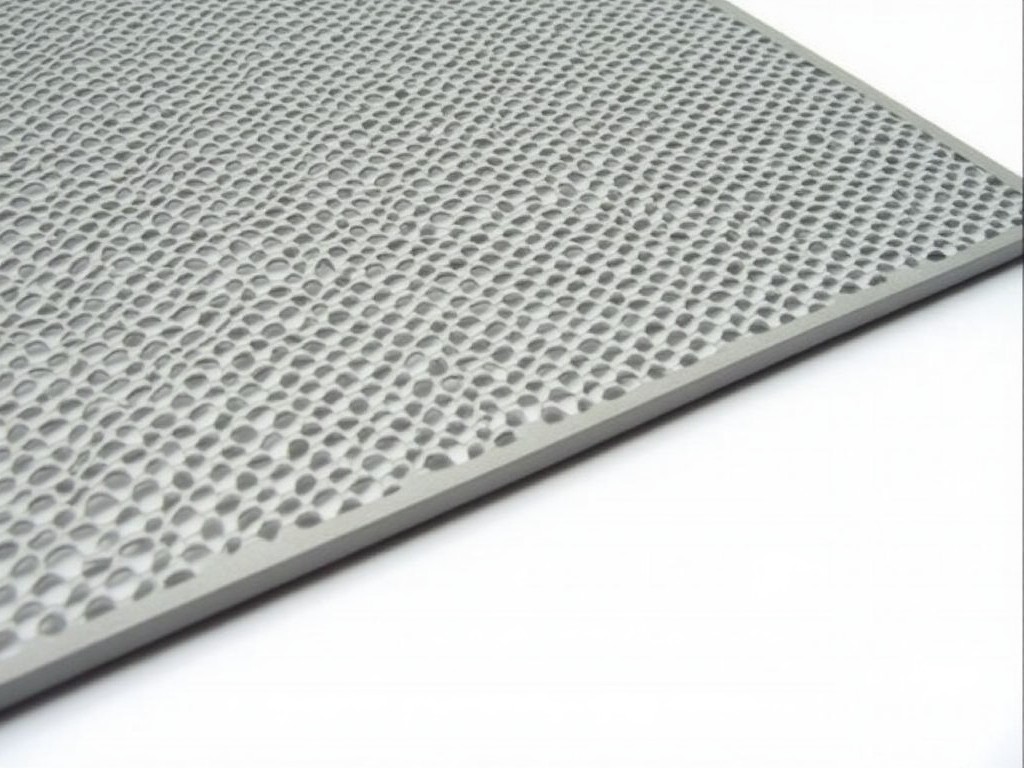
Wholesale Perforated Metal Sheet Hexagon
Perforated metal sheets with hexagonal hole patterns are engineered for applications requiring controlled airflow, light diffusion, sound attenuation, and visual screening while maintaining structural integrity. The hexagonal arrangement provides a high open area percentage with uniform stress distribution compared to round or square patterns, making it suitable for architectural facades, industrial filtration, and acoustic panels. This product page details the technical specifications, material options, and manufacturing considerations relevant to industrial buyers evaluating perforated hexagon sheets for wholesale procurement.
Wholesale supply ensures consistent quality across large volumes, critical for projects requiring uniform appearance and performance over extended surface areas. Buyers benefit from reduced unit costs through economies of scale while maintaining traceability to material certifications and production tolerances. The following sections explain the engineering rationale behind pattern design, material selection, and fabrication processes to support informed purchasing decisions.
Hexagonal Perforation Pattern Engineering
The hexagonal perforation pattern achieves superior mechanical efficiency due to its geometric properties. Each hexagon shares sides with six neighboring holes, creating a tessellated structure that maximizes open area while minimizing ligament width between holes. This arrangement results in approximately 15% higher open area compared to round perforations at the same hole size and pitch, directly impacting airflow capacity and light transmission.
Stress concentration factors are lower in hexagonal patterns than in square or round layouts under uniform loading, reducing the risk of crack initiation at hole edges. For applications involving cyclic pressure or vibration—such as HVAC diffusers or machine guarding—this translates to improved fatigue resistance. The pattern also provides directional stability; unlike square grids, hexagonal arrangements lack weak planes aligned with primary axes, enhancing resistance to shear deformation.
Open area percentage is calculated based on hole diameter, center-to-center pitch, and material thickness. Typical hexagonal perforations range from 20% to 60% open area depending on application requirements. Higher open areas reduce pressure drop in filtration systems but decrease structural rigidity; lower open areas increase strength but may restrict flow. Engineers select the optimal balance based on fluid dynamics, acoustic performance, or visual transparency needs.
Material Options and Properties
Material selection directly affects corrosion resistance, strength-to-weight ratio, formability, and surface finish—key factors in determining suitability for indoor, outdoor, or corrosive environments. Common substrates include carbon steel, stainless steel grades (304, 316), aluminum alloys (5052, 6061), and galvanized steel. Each material presents distinct trade-offs in cost, durability, and fabrication characteristics.
Carbon steel offers high tensile strength (typically 400–550 MPa) and low cost but requires protective coatings (e.g., powder coating, galvanization) for exterior use to prevent rust. Stainless steel 304 provides excellent atmospheric corrosion resistance with minimum yield strength of 205 MPa, while 316 adds molybdenum for enhanced resistance to chlorides and industrial atmospheres—critical for coastal or chemical processing environments. Aluminum alloys provide lightweight solutions (density ~2.7 g/cm³) with good formability and inherent oxide layer protection, though lower modulus of elasticity limits stiffness in long-span applications.
Galvanized steel combines the strength of carbon steel with a zinc coating (typically Z275 or Z600 designation) for barrier and sacrificial protection, suitable for moderate outdoor exposure. Material thickness typically ranges from 0.5 mm to 3.0 mm for perforated sheets, influenced by hole size, open area, and required rigidity. Thinner gauges increase flexibility for curved applications but may necessitate closer support spacing to prevent deflection under load.
Manufacturing Process and Tolerances
Perforation is achieved via CNC turret punching or rotary die punching, depending on volume and pattern complexity. Turret punching offers flexibility for variable hole sizes and custom patterns within a single sheet, ideal for prototyping or low-to-medium volume orders. Rotary die punching uses synchronized upper and lower dies to perforate continuous coil stock at high speeds, ensuring consistent hole placement and edge quality for large-volume wholesale orders—typically preferred for standardized hexagonal patterns exceeding 500 square meters.
Positional tolerance for hole centers is typically ±0.15 mm for turret punching and ±0.10 mm for rotary die systems, measured over 100 mm intervals. Hole diameter tolerance depends on punch wear and material thickness but generally stays within ±0.10 mm for tools under 6 mm diameter. Burr height on the exit side is controlled through punch-die clearance optimization and typically remains below 10% of material thickness; secondary deburring (thermal or vibratory) is available upon request for applications requiring smooth surfaces, such as food handling or architectural touch points.
Sheet flatness is maintained through leveling rolls post-perforation to counteract stress-induced warping, with typical tolerance of 3–5 mm/m deviation. Edge conditions (mill edge, slit edge, or deburred edge) are specified per order; slit edges may exhibit slight burrs requiring secondary processing if safety or sealing is critical. All manufacturing follows ISO 9001 quality management principles, with in-process checks for hole alignment, open area verification, and dimensional stability.
Typical Specifications Table
| Parameter | Typical Range / Value | Notes |
|---|---|---|
| Hole Diameter | 1.0 mm – 25.0 mm | Custom sizes available upon request |
| Center-to-Center Pitch | 1.5 mm – 50.0 mm | Determines open area and structural integrity |
| Open Area Percentage | 20% – 60% | Calculated from hole size and pitch |
| Material Thickness | 0.5 mm – 3.0 mm | Dependent on material and application load |
| Standard Sheet Size | 1000 mm × 2000 mm | Custom widths/lengths available; coils for rotary punching |
| Materials | Carbon Steel, SS304, SS316, Aluminum 5052/6061, Galvanized Steel | Certifications available (EN 10204 3.1, mill test reports) |
Applications and Functional Benefits
In architectural applications, hexagonal perforated panels serve as sun screens, facade cladding, or interior partitions where controlled light transmission and visual privacy are required. The geometric pattern reduces solar heat gain while allowing diffuse daylight penetration, lowering cooling loads in commercial buildings. Compared to solid louvers, perforated hexagon sheets provide superior airflow dynamics—reducing pressure drop by up to 30% at equivalent open area—making them ideal for mechanical equipment enclosures and HVAC diffuser panels where noise and turbulence must be minimized.
Industrial filtration systems utilize these sheets as support media for filter cartridges or as standalone screens in liquid and gas separation processes. The hexagonal opening promotes uniform flow distribution across the surface, reducing localized velocity peaks that can cause premature filter blinding or erosion. In acoustic applications, the pattern acts as a resonant absorber when backed with porous material; the hole size and cavity depth are tuned to target specific frequency ranges (typically 500–2000 Hz), improving sound absorption coefficients in auditoriums, industrial enclosures, and transportation infrastructure.
Decorative and safety applications include machine guarding, walkway treads, and decorative screens where slip resistance, visibility, and impact resistance are balanced. The interlocking hexagonal geometry provides inherent reinforcement against impact deformation compared to linear hole patterns. For outdoor installations, material choice and surface treatment (e.g., anodizing for aluminum, powder coating for steel) determine service life; properly specified systems exceed 25 years in moderate climates with minimal maintenance.
Customization and Ordering Considerations
Wholesale buyers typically require consistent specifications across large quantities to ensure uniform performance in multi-panel installations. Key customization parameters include hole size, pitch, open area percentage, material grade, thickness, sheet dimensions, edge treatment, and surface finish. Engineers should provide detailed drawings or schematics specifying tolerance zones, especially when perforations align with mating components or require precise positional accuracy for assembly.
Secondary operations such as bending, rolling, welding, or laser cutting to final shape are often performed post-perforation to avoid distortion of the hole pattern. It is critical to communicate these downstream processes during quoting so that appropriate material temper and perforation limits are applied. For example, deep drawing or tight radius bending may require annealed material states or reduced hole proximity to edges to prevent tearing.
Packaging for wholesale orders includes interleaving sheets with protective paper or plastic film to prevent surface abrasion during transit. Palletized units are secured with strapping and corner protectors; export shipments include moisture-barrier wrapping and fumigated pallets per ISPM 15 standards. Lead times depend on material availability, punch tool preparation, and volume—typically 2–4 weeks for stock materials and 4–6 weeks for special alloys or large custom orders. Sample sections (typically 300 mm × 300 mm) are available upon request to validate hole quality, flatness, and finish before full production.
For technical inquiries, quotation requests, or sample arrangements, contact our engineering team to discuss your project specifications. Provide details on application environment, required open area, material preference, and dimensional constraints to receive a tailored response with manufacturability feedback and lead time confirmation.
Request Technical Quote

More Products

Send Inquiry
If you are interested in our products, leave your information here and we will be in touch shortly.