Wholesale Perforated Metal Sheet Fence
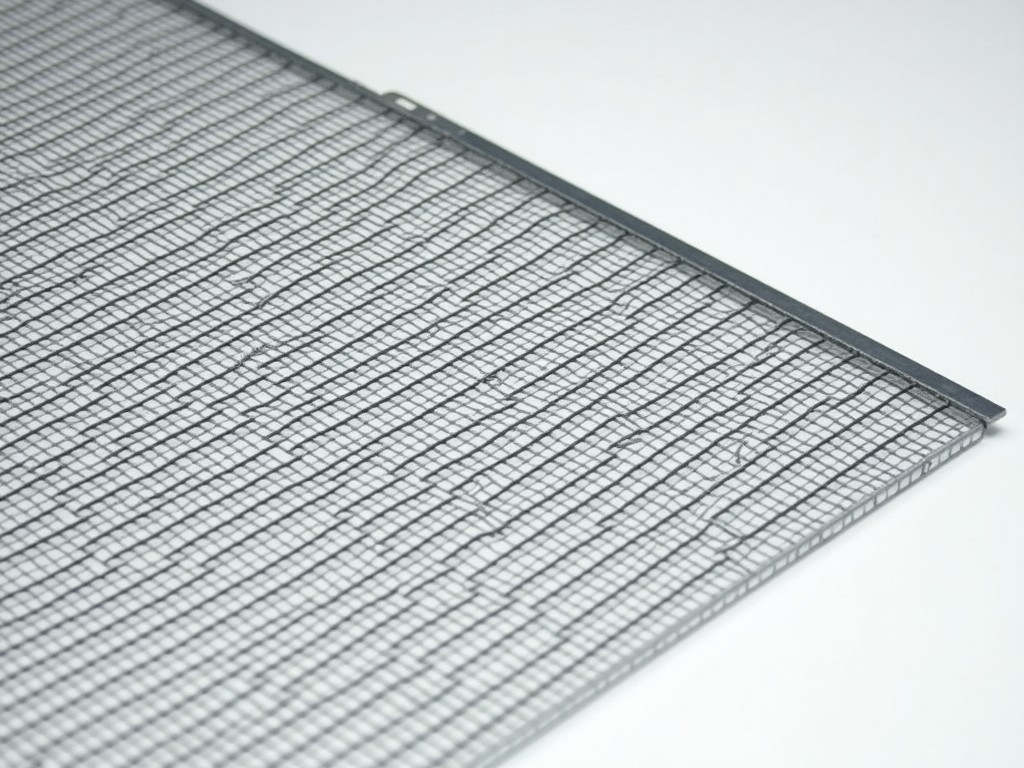
Perforated metal sheet fences are engineered barriers created by punching precise patterns of holes into flat metal sheets, then forming them into panels suitable for perimeter security,
Wholesale Perforated Metal Sheet Fence
Perforated metal sheet fences are engineered barriers created by punching precise patterns of holes into flat metal sheets, then forming them into panels suitable for perimeter security, architectural screening, or industrial enclosure applications. Unlike solid barriers, these fences combine structural integrity with controlled airflow, visibility, and light transmission—properties critical in environments where both protection and environmental interaction are required. The perforation pattern is not merely decorative; it directly influences structural performance, wind load resistance, and long-term durability under cyclic stress. Manufacturing begins with selecting base material—typically galvanized steel, stainless steel, or aluminum—based on corrosion exposure and mechanical demands. The sheet is then CNC-punched using hardened tooling to achieve consistent hole geometry and spacing, followed by edge folding or framing to enhance rigidity and safety. This process ensures dimensional stability and repeatability across large production volumes, essential for wholesale procurement where consistency affects installation efficiency and lifecycle cost.
Material Selection and Performance Characteristics
Material choice fundamentally determines the fence’s suitability for specific environmental and mechanical conditions. Hot-dip galvanized steel (Z275 coating) provides a cost-effective balance of strength and corrosion resistance for temperate climates with moderate humidity, offering typical yield strength of 250–350 MPa and service life exceeding 15 years in rural or suburban settings. For coastal, industrial, or high-moisture environments, 304 or 316 stainless steel is selected due to its chromium-nickel alloy composition, which resists chloride-induced pitting and maintains structural integrity at temperatures up to 870°C. Aluminum alloys (e.g., 5052-H32) offer a lightweight alternative with inherent oxide-layer protection, reducing dead load on support structures by up to 60% compared to steel while maintaining adequate tensile strength (190–220 MPa) for non-load-bearing screens. Thickness selection—typically ranging from 0.8mm to 2.5mm—depends on span length, wind load calculations (per ASCE 7-22), and impact resistance requirements, with thicker gauges used in high-traffic or vandalism-prone zones.
Perforation Patterns and Functional Implications
The perforation pattern is a critical design variable that governs the fence’s optical, aerodynamic, and acoustic behavior. Common patterns include round, square, slotted, and hexagonal holes, each arranged in staggered or straight grids to optimize open area percentage (OAP)—the ratio of hole area to total panel area. A 30% OAP round hole pattern (e.g., 8mm diameter holes on 12mm pitch) provides approximately 70% visual opacity while allowing 30% airflow, reducing wind pressure coefficients by up to 40% compared to solid barriers of equal height. Slotted perforations (e.g., 10mm x 30mm slots) offer directional airflow control and enhanced sound diffusion, making them suitable for highway noise barriers where mid-frequency attenuation is prioritized. Hexagonal patterns provide superior stiffness-to-weight ratios due to geometric load distribution, reducing deflection under uniform pressure by 15–20% versus round holes at identical OAP. Custom patterns—such as logos, gradients, or variable density zones—are achievable via CNC punching but require tooling investment and are typically reserved for architectural projects where aesthetic integration justifies the cost.
Structural Design and Installation Considerations
Perforated metal fence panels are rarely installed as freestanding elements; their performance depends entirely on the supporting structure and connection methodology. Panels are typically fabricated with flanged edges (15–25mm fold) or welded to C-channel or Z-channel frames to increase bending resistance and prevent hole distortion under load. Connection to posts—usually galvanized steel or aluminum H-beams, square tubes, or I-beams—occurs via bolt-through brackets, weld-on clips, or sliding rail systems that accommodate thermal expansion and allow for panel replacement without dismantling the entire span. For heights exceeding 2.4m, intermediate wind posts are recommended at 3–4m intervals to limit deflection under gust loads, particularly in regions with basic wind speeds exceeding 40 m/s (ASCE 7-22 Zone IV). Foundation design must account for overturning moments; concrete footings with embedded anchor bolts are standard, with depth and diameter calculated based on soil bearing capacity (typically 100–150 kPa for compacted gravel) and fence height. Proper installation includes maintaining a 20–50mm gap between panel and ground to prevent moisture entrapment and facilitate debris clearance.
Customization Options for Industrial Applications
Wholesale procurement often requires tailoring perforated metal fence specifications to precise project parameters beyond standard catalog offerings. Hole size, pitch, and arrangement can be adjusted to meet specific OAP targets—for example, increasing hole diameter from 6mm to 10mm while maintaining pitch raises OAP from 25% to approximately 45%, significantly reducing wind load but decreasing visual screening. Edge treatments include safety folds (180° hem), rounded radii (to eliminate sharp edges), or welded wire mesh overlays for added impact resistance in correctional or high-security facilities. Surface finishes extend beyond base material protection: powder coating (RAL colors available) provides UV-stable, chip-resistant layers for architectural integration; anodizing (for aluminum) enhances hardness and color stability; or passivation (for stainless steel) maximizes corrosion resistance in chemical exposure zones. Panel dimensions are commonly customized to match bay widths (e.g., 2.4m, 3.0m) to minimize on-site cutting and welding, with lengths up to 6.0m feasible for transport via standard flatbed trailers when properly braced.
Quality Control and Testing Protocols
Consistent quality in wholesale perforated metal fence production relies on rigorous, traceable inspection at multiple stages—not end-of-line testing alone. Raw material is verified via mill test certificates (MTCs) confirming chemical composition (e.g., Fe, C, Mn, Zn for galvanized steel; Cr, Ni, Mo for stainless) and mechanical properties before punching begins. During CNC punching, hole diameter, positional tolerance (±0.1mm), and burr height are monitored using automated vision systems or go/no-go gauges every 15–20 minutes to prevent cumulative tool wear defects. Post-forming, panel flatness is assessed using a straightedge and feeler gauge; acceptable deviation is typically ≤3mm over a 1m length to ensure proper frame alignment. Edge integrity is checked for crack-free folds via magnetic particle inspection (for steel) or dye penetrant (for aluminum/stainless). Final inspection includes OAP verification via area measurement, coating thickness (via magnetic or eddy current gauge), and adhesion testing (ASTM D3359) for painted finishes. Packaging includes waterproof wrap and corner protectors to prevent scratching and edge damage during transit, with each bundle labeled with material grade, thickness, pattern, and batch number for traceability.
| Parameter | Typical Range / Value | Notes |
|---|---|---|
| Base Material | Galvanized Steel (Z275), 304/316 Stainless Steel, Aluminum 5052-H32 | Selected based on environmental exposure and load requirements |
| Sheet Thickness | 0.8mm – 2.5mm | Thicker gauges used for higher spans or impact resistance |
| Hole Diameter (Round) | 3mm – 15mm | Smaller holes increase opacity; larger holes increase airflow |
| Pitch (Center-to-Center) | 5mm – 25mm | Determines open area percentage and structural stiffness |
| Open Area Percentage (OAP) | 15% – 50% | Customizable per project; affects wind load, visibility, and sound transmission |
| Standard Panel Height | 1.2m – 3.0m | Taller panels require intermediate posts or reinforced framing |
| Standard Panel Width | 0.6m – 2.4m | Custom widths available to match bay dimensions |
| Surface Finish | Mill finish, powder coating (RAL), anodizing (Al), passivation (SS) | Enhances corrosion resistance, aesthetics, or UV stability |
| Wind Load Resistance | Up to 2.0 kPa (depending on OAP and support) | Verified via ASCE 7-22 calculations; higher OAP reduces load |
Procurement decisions for wholesale perforated metal fence systems should be based on a clear understanding of how material, perforation geometry, and structural detailing interact to meet performance requirements—not on price alone. A lower initial cost from thin-gauge steel with coarse perforations may lead to premature deformation, increased maintenance, or failure under wind load, resulting in higher lifecycle expenses. Conversely, specifying over-engineered materials (e.g., 316 stainless for inland use) or excessive thickness adds unnecessary cost without proportional benefit. The optimal solution balances corrosion allowance, required open area, deflection limits, and installation logistics. Engaging suppliers early in the design phase allows for validation of hole pattern feasibility, tooling availability, and panel dimensions that align with standard material widths to minimize scrap. Requesting material test certificates, punch tolerance reports, and sample panels representing the final perforation pattern and edge treatment ensures that the delivered product matches the agreed specifications. For repeat orders, establishing a master approval sample with documented batch numbers enables consistent quality across shipments, reducing field modification risks and installation delays.
More Products

Send Inquiry
If you are interested in our products, leave your information here and we will be in touch shortly.