Mini Mesh Chain Link Fabric
Mini mesh chain link fabric is a precision-engineered woven wire product characterized by small aperture sizes and fine wire diameters, typically used where fine particle retention, filtration, or
Mini Mesh Chain Link Fabric
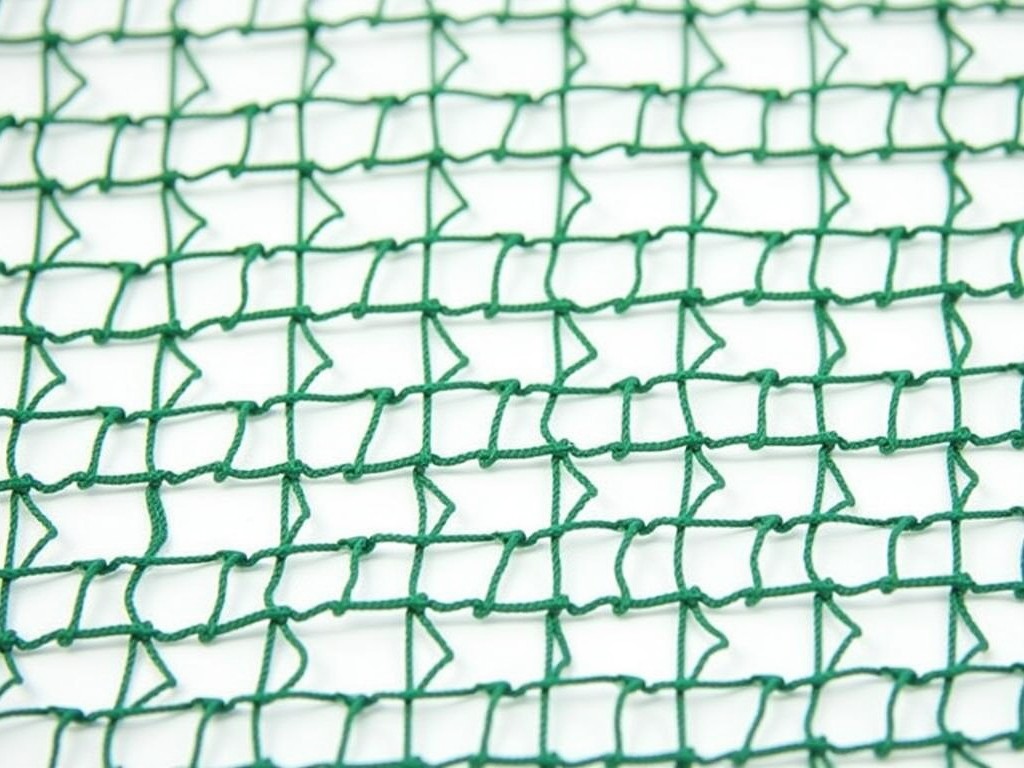
Mini mesh chain link fabric is a precision-engineered woven wire product characterized by small aperture sizes and fine wire diameters, typically used where fine particle retention, filtration, or protective screening is required. Unlike standard chain link fencing, which features larger openings for perimeter security, mini mesh variants are designed for applications demanding high open area with structural integrity under load.
The fabric is produced by interlocking pre-formed wire loops in a continuous helical pattern, creating a flexible yet stable sheet. This construction method avoids welding or soldering at intersections, preserving the mechanical properties of the base wire and allowing uniform stress distribution. The result is a fabric that resists unraveling when cut and maintains dimensional stability under tension or impact.
Technical Specifications
Key dimensional parameters include wire diameter, aperture size (opening width), and roll width. Wire diameters typically range from 0.3 mm to 1.0 mm, with corresponding aperture sizes from 1 mm to 6 mm, depending on the intended function. The helical twist direction (left or right hand) affects fabric behavior under load and must be specified for seamless splicing in continuous applications.
| Parameter | Typical Range | Notes |
|---|---|---|
| Wire Diameter | 0.3 mm – 1.0 mm | Selected based on mechanical load and corrosion needs |
| Aperture Size | 1 mm – 6 mm | Defined as clear opening between adjacent wires |
| Roll Width | Up to 2000 mm | Custom widths available; edge options include knuckle or twist |
| Material | Stainless steel (304, 316), galvanized steel, aluminum | Material choice drives environmental resistance |
Material Selection and Performance
Stainless steel grades 304 and 316 are commonly selected for mini mesh fabric due to their corrosion resistance and tensile strength. Grade 316 offers superior resistance to chlorides and acidic environments, making it suitable for marine or chemical processing applications. Galvanized steel provides a cost-effective option for indoor or low-moisture environments, though the zinc coating may degrade over time in abrasive or high-pH conditions.
Aluminum wire is used when weight reduction is critical, such as in mobile screening equipment or aerospace-related filtration. While aluminum has lower tensile strength than steel, its natural oxide layer provides adequate corrosion resistance in many atmospheric conditions. Fabric made from aluminum wire is non-magnetic, which can be advantageous in electronic shielding or sensor applications.
Manufacturing Considerations
The helical weaving process requires precise tension control during wire feeding to ensure uniform aperture size across the fabric width. Variations in tension can lead to tapered or skewed openings, which may compromise filtration efficiency or create stress concentrations. Manufacturers use closed-loop tension monitoring and precision guide systems to maintain tolerances within ±5% of target aperture dimensions.
Post-production treatments such as annealing may be applied to relieve internal stresses introduced during weaving, particularly for stainless steel variants. This improves formability and reduces the risk of spring-back during installation. Surface treatments like passivation or polymer coating can further enhance corrosion resistance or reduce friction in dynamic applications.
Applications
Mini mesh chain link fabric is widely used in industrial filtration systems where fine particulate capture is required without excessive pressure drop. The high open area-to-wire ratio allows efficient fluid or air passage while retaining particles larger than the aperture size. Common applications include liquid strainers in food processing, powder sieving in pharmaceutical manufacturing, and dust collection hoods in metalworking facilities.
In architectural and safety contexts, the fabric serves as infill panels for machine guards, conveyor covers, or ventilation barriers. Its flexibility allows it to conform to curved frames, while its tensile strength prevents deformation under impact or vibration. Unlike perforated sheet, mini mesh fabric does not produce sharp edges when cut, reducing installation hazards.
Additional uses include EMI/RFI shielding enclosures, where the conductivity of the wire mesh provides electromagnetic attenuation, and concrete reinforcement in thin-shell structures, where the fabric distributes cracking stresses. The choice of material and aperture size is directly tied to the functional requirement—whether it is particle size exclusion, airflow resistance, or mechanical load-bearing capacity.
Customization Options
Beyond standard rolls, mini mesh fabric can be fabricated into custom shapes such as gaskets, cylindrical filters, or tapered cones. Edge finishing options include knuckled (closed loop) for safety, twisted (barbed) for secure framing, or heat-sealed for fluid containment. These modifications are performed post-weaving and do not compromise the integrity of the helical structure.
Width splicing is achievable through interlocking helical wires, allowing continuous fabrication of widths exceeding standard roll limits. This technique is essential for large-scale filtration baskets or architectural panels. Custom aperture gradients—where opening size varies across the fabric—can be produced for graded filtration applications, though this requires specialized tooling and is subject to minimum order quantities.
Quality Control and Testing
Quality assurance begins with incoming wire inspection, verifying diameter, tensile strength, and surface finish against material specifications. During production, in-line vision systems monitor aperture uniformity and wire alignment, rejecting sections that deviate beyond set tolerances. Final inspection includes width measurement, edge integrity checks, and visual assessment for defects such as skipped wires or uneven twist.
For critical applications, additional testing may be conducted, including air permeability testing (per ISO 9237), tensile strength testing of the fabric width, and corrosion resistance evaluation via salt spray (ASTM B117) or humidity exposure. Test reports are available upon request and should be referenced when specifying the fabric for regulated industries such as food, pharmaceutical, or aerospace.

Product Categories


Send Inquiry
If you are interested in our products, leave your information here and we will be in touch shortly.