B2B 1 Inch Square Welded Wire Mesh
Welded wire mesh with 1-inch square openings is a standard grid configuration used across industrial, construction, and agricultural sectors. The opening size refers to the clear distance between
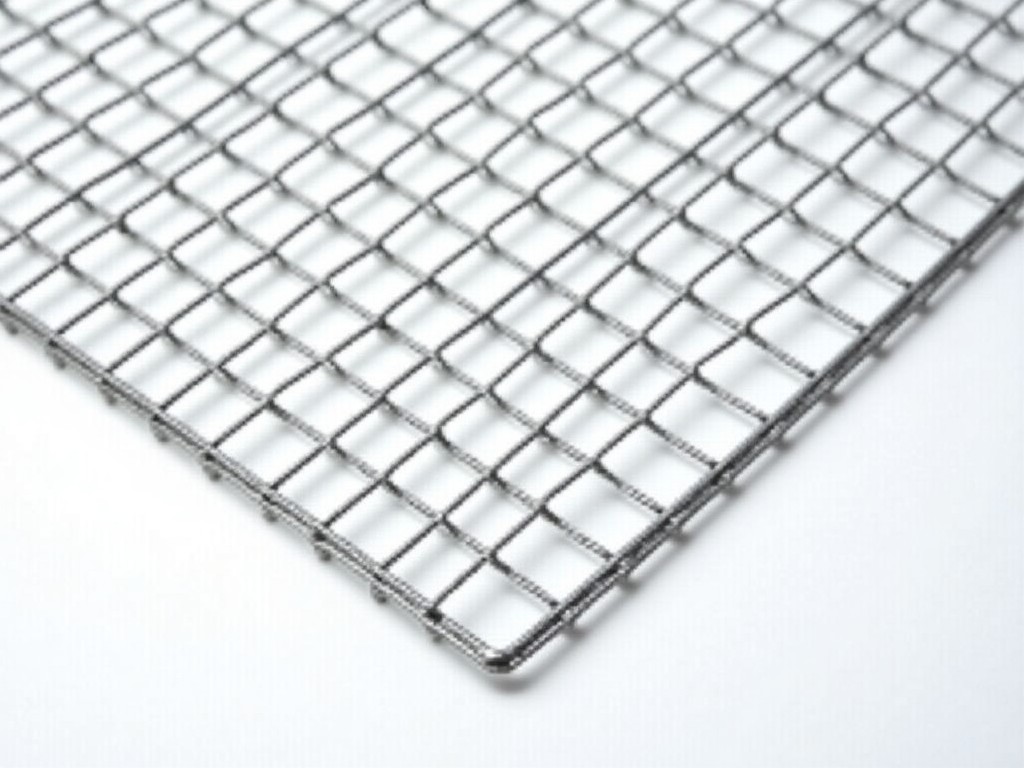
1 Inch Square Welded Wire Mesh for B2B Applications
Welded wire mesh with 1-inch square openings is a standard grid configuration used across industrial, construction, and agricultural sectors. The opening size refers to the clear distance between adjacent wires, measured from inner edge to inner edge. This dimension determines the mesh’s suitability for containment, reinforcement, or filtration based on the size of materials or particles it must retain or allow passage.
The wire diameter and material grade are independent variables that, combined with the 1-inch pitch, define the mesh’s mechanical performance. Common wire diameters range from 0.080" to 0.250", influencing tensile strength, rigidity, and corrosion resistance. Engineers specify this mesh when a balance of open area and structural integrity is required—such as in concrete forming, animal enclosures, or machine guarding—where neither excessive openness nor excessive blockage is desired.
Material Options and Mechanical Properties
The base material significantly affects the mesh’s behavior in service. Low-carbon steel (ASTM A1064) is the most common choice for general-purpose applications due to its weldability and cost-effectiveness. It typically contains 0.08–0.20% carbon, providing sufficient ductility for welding while maintaining yield strength between 40,000–60,000 psi. Galvanization (hot-dipped or electro-galvanized) adds a zinc coating weight of 0.3–1.2 oz/ft² to delay rust formation in outdoor or humid environments.
For corrosive environments—such as chemical processing, wastewater treatment, or marine exposure—stainless steel grades 304 or 316 are specified. Grade 304 offers resistance to oxidizing acids and atmospheric corrosion, while 316 includes molybdenum for enhanced resistance to chlorides and pitting. These alloys maintain tensile strength of 75,000–90,000 psi after welding, with minimal loss of ductility. Aluminum (alloys 5052 or 6061) is used where weight reduction is critical, offering approximately one-third the density of steel with corrosion resistance from a natural oxide layer.
Wire diameter selection depends on load requirements. A 0.120" wire in low-carbon steel provides approximately 180 lbs/in² of tensile strength per strand, suitable for light reinforcement. Increasing to 0.190" raises the load capacity to over 450 lbs/in², making it appropriate for structural concrete support or security barriers. The weld shear strength typically exceeds 80% of the parent wire’s tensile strength when proper resistance welding parameters are applied.
Manufacturing Process and Quality Control
The mesh is produced on automated resistance welding machines where straight longitudinal and transverse wires are fed into a patterned die. At each intersection, a controlled electrical current passes through the wires for 0.1–0.5 seconds, generating resistive heat that melts the contacting surfaces. Forge pressure then fuses the wires into a solid metallurgical bond without adding filler material. This process ensures consistent weld strength across the entire sheet, typically achieving 90–95% of the wire’s tensile strength at each node.
Dimensional accuracy is maintained through precision wire straightening and synchronized feed mechanisms. Opening size tolerance is typically ±0.030" for 1-inch square mesh, verified by measuring multiple samples across the sheet width and length. Wire diameter tolerance follows ASTM A1064 standards, usually ±0.002" for drawn wire. Flatness is controlled to within 1/8" deviation over a 4-foot span to prevent nesting issues during stacking or installation.
Quality control includes visual inspection for missed welds, burn-through, or wire misalignment. Non-destructive testing via magnetic particle inspection may be applied to critical batches to detect subsurface weld flaws. Tensile and bend tests are performed on sacrificial samples per lot to confirm ductility and strength retention after welding. Coating thickness (for galvanized or painted finishes) is measured via magnetic or eddy current probes to ensure compliance with ASTM A123/A153 or equivalent standards.
Typical Applications and Functional Rationale
In concrete construction, 1-inch square welded wire mesh is used as secondary reinforcement in slabs-on-grade, walkways, and precast panels. The grid controls crack propagation by distributing tensile stresses across a wide area, preventing localized widening. Unlike rebar, which acts discretely, the mesh provides isotropic resistance—effective regardless of crack orientation. It is placed in the upper third of the slab thickness where tensile stresses are highest due to shrinkage and temperature changes.
For animal containment, the 1-inch opening prevents livestock such as sheep, goats, or swine from pushing their heads through while allowing adequate ventilation and visibility. The opening size is critical: larger than 1.25" risks entrapment; smaller than 0.75" reduces airflow and increases material cost unnecessarily. Welded construction eliminates protruding wires that could injure animals, unlike woven mesh where strands can separate over time.
In industrial machine guarding, the mesh serves as a barrier that stops flying debris or tools while permitting visibility and airflow for cooling. The 1-inch opening complies with OSHA 1910.217 and ISO 14120 standards for preventing finger or tool entry—openings larger than 1.25" pose a hazard, while smaller openings unnecessarily restrict sightlines. The rigidity of welded mesh resists deformation under impact better than flexible alternatives, maintaining guard integrity after repeated stress.
Comparison Table: Material and Wire Diameter Options
| Material | Wire Diameter (in) | Tensile Strength (psi) | Typical Use Case | Corrosion Resistance |
|---|---|---|---|---|
| Low-Carbon Steel (Galvanized) | 0.080" | 50,000–60,000 | Temporary fencing, concrete reinforcement (light) | Moderate (1–2 years outdoor) |
| Low-Carbon Steel (Galvanized) | 0.120" | 55,000–65,000 | Slab reinforcement, animal enclosures | Moderate (3–5 years outdoor) |
| Low-Carbon Steel (Galvanized) | 0.190" | 60,000–70,000 | Security barriers, heavy-duty concrete formwork | Moderate (5+ years outdoor) |
| Stainless Steel 304 | 0.105" | 75,000–85,000 | Food processing, chemical plant screening | High (indoor/outdoor, mild chloride) |
| Stainless Steel 316 | 0.105" | 75,000–85,000 | Marine equipment, wastewater treatment | Very High (resists pitting) |
| Aluminum 5052 | 0.125" | 30,000–40,000 | Weight-sensitive panels, aerospace tooling | High (natural oxide layer) |
Customization and Ordering Considerations
Standard sheet sizes are 4' x 8' or 5' x 10', but custom dimensions can be produced to match project requirements, reducing field cutting and waste. Edge options include flush, framed, or rolled safety edges to prevent injury during handling. The mesh can be supplied flat or in rolls for easier transportation and deployment, particularly for long runs in fencing or filtration applications.
Surface treatments beyond galvanization include PVC coating (black or green, 0.010–0.020" thickness) for added corrosion resistance and color coding, or epoxy coating for chemical resistance in harsh environments. Annealing after welding is available to relieve stress and improve formability for bending or shaping into custom profiles. All specifications should be confirmed with the manufacturer to ensure compatibility with welding, fastening, or coating processes downstream.
Lead time typically ranges from 2–4 weeks for standard specifications, depending on material availability and coating requirements. Stainless steel or custom alloys may extend lead time to 6–8 weeks. Sampling is recommended for critical applications; a 12" x 12" sample can be provided to verify opening size, wire diameter, and finish before full production. Technical drawings or CAD files are helpful for ensuring dimensional accuracy in complex layouts.
For technical consultation, custom specifications, or to request a sample, contact our engineering team.
Request Quote or Sample
Product Categories


Send Inquiry
If you are interested in our products, leave your information here and we will be in touch shortly.