Black Perforated Metal Screen Panels Suppliers
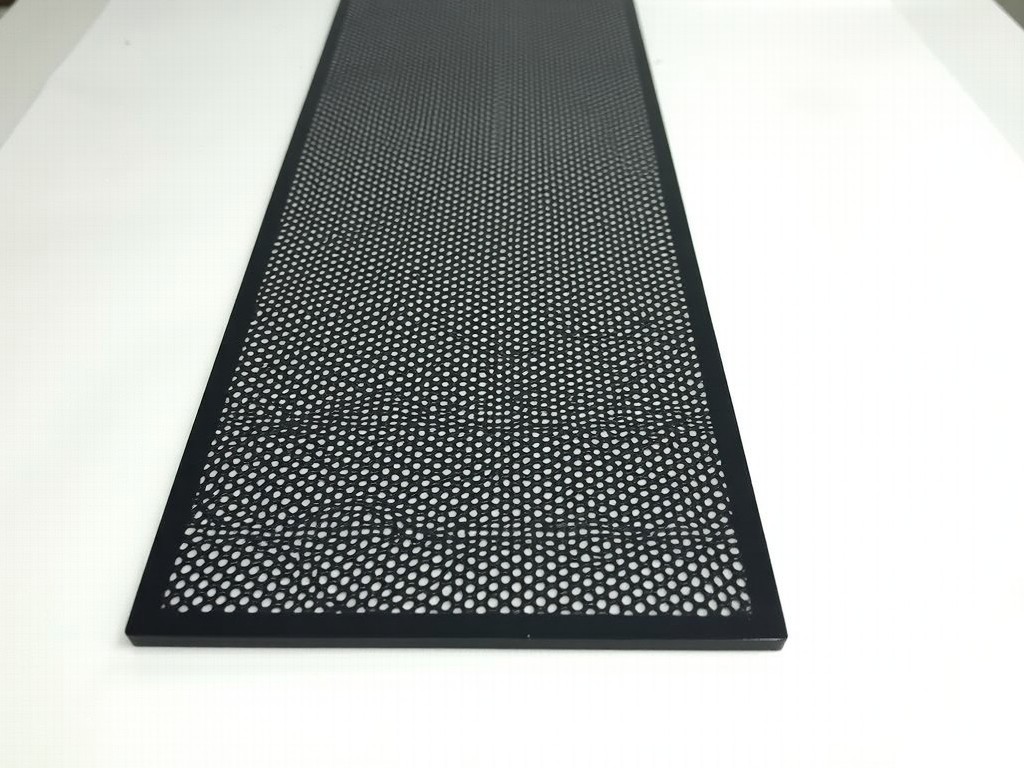
Black perforated metal screen panels are engineered components designed for controlled light transmission, airflow management, and visual screening in industrial, architectural, and mechanical
Black Perforated Metal Screen Panels Suppliers
Black perforated metal screen panels are engineered components designed for controlled light transmission, airflow management, and visual screening in industrial, architectural, and mechanical systems. Suppliers offering these panels typically provide precision laser- or punch-perforated sheets made from carbon steel, stainless steel, or aluminum, finished with a durable black coating such as powder coating or anodizing to enhance corrosion resistance and reduce glare. The perforations—available in round, square, slotted, or custom patterns—are engineered to meet specific open area percentages, hole sizes, and spacing requirements dictated by functional needs such as acoustic damping, debris filtration, or radiant heat management. Selecting a supplier involves evaluating not just product availability but also their capability to maintain tight tolerances, apply consistent coatings, and deliver panels that integrate seamlessly into existing assemblies without requiring field modification.
Material Selection and Coating Performance
The base material significantly influences the panel’s structural integrity, environmental resistance, and long-term performance under load. Carbon steel is commonly selected for indoor or semi-protected applications due to its high strength-to-weight ratio and cost-effectiveness, though it requires a robust barrier coating to prevent oxidation. Stainless steel grades like 304 or 316 are preferred in humid, chemical-exposed, or outdoor environments where corrosion resistance is critical, eliminating the need for additional protective layers in many cases. Aluminum offers a lightweight alternative with inherent corrosion resistance, suitable for ceiling systems or movable partitions where dead load is a concern. The black finish—typically applied via electrostatic powder coating cured at 180–200°C—provides a uniform, UV-stable layer that minimizes visual reflection and enhances durability against abrasion and fading, with coating thickness typically ranging from 60 to 120 microns depending on the specification.
Perforation Design and Functional Engineering
The perforation pattern is not merely aesthetic; it directly governs the panel’s functional performance in terms of open area, pressure drop, acoustic absorption, and light diffusion. Round holes are the most common due to ease of fabrication and predictable flow characteristics, while slotted or square patterns may be chosen to align with directional airflow or to achieve specific visual effects. Open area percentage—calculated as the ratio of hole area to total panel area—typically ranges from 15% to 60%, with higher values increasing airflow and light transmission but reducing structural stiffness and impact resistance. Hole diameter and pitch (center-to-center spacing) are critical parameters: smaller holes with tight pitches increase screening efficiency for fine particles but elevate pressure drop in HVAC applications, whereas larger holes reduce resistance but may compromise privacy or debris suppression. Suppliers often provide computational fluid dynamics (CFD) or acoustic simulation data upon request to validate performance against design intent.
Dimensional Tolerances and Fabrication Constraints
Industrial buyers must account for fabrication limitations when specifying panel dimensions and perforation layouts. Laser cutting enables complex patterns and tight tolerances—typically ±0.1 mm for hole position and ±0.2 mm for overall dimensions—but may induce thermal distortion in thin gauges (<1.0 mm) if not properly managed. Punch pressing offers higher throughput for repetitive patterns but is constrained by tooling limits, minimum hole sizes (usually ≥ material thickness), and edge distortion near the panel perimeter. Maximum panel size is often dictated by material coil width or press bed dimensions, commonly ranging from 1000 mm to 1500 mm in width and up to 3000 mm in length, though larger assemblies can be fabricated by joining multiple panels with concealed fasteners or overlapping flanges. Edge treatments such as bending, flanging, or framing are frequently required to ensure rigidity and safe handling, and these features must be specified early to avoid redesign delays.
Typical Specifications and Customization Options
| Parameter | Typical Range / Options | Notes |
|---|---|---|
| Base Material | Carbon steel (SPCC, A36), Stainless steel (304, 316), Aluminum (5052, 6063) | Selected based on environment and load requirements |
| Thickness | 0.8 mm – 3.0 mm | Thinner gauges for screening; thicker for structural or impact resistance |
| Hole Diameter | 1.0 mm – 12.0 mm | Smaller holes increase filtration efficiency; larger holes improve flow |
| Pitch (Center-to-Center) | 2.0 mm – 25.0 mm | Determines open area and structural continuity |
| Open Area Percentage | 15% – 60% | Balances function with rigidity; custom values available |
| Coating Type | Electrostatic powder coating (epoxy, polyester, hybrid) | Black RAL 9005 or 9011; UV-stable, 60–120 µm thickness |
| Maximum Panel Size | 1500 mm (W) × 3000 mm (L) | Larger sizes via modular joining; consult supplier for tooling limits |
Quality Control and Inspection Protocols
Reliable suppliers implement multi-stage inspection to ensure dimensional accuracy, coating integrity, and perforation consistency across batches. Initial material verification includes mill test certificates to confirm grade and thickness, followed by incoming inspection for surface defects or coil set. During fabrication, hole position and diameter are monitored via statistical process control (SPC) using vision systems or manual gauges, with acceptable deviation typically limited to ±0.15 mm for location and ±0.1 mm for diameter. Coating thickness is measured using magnetic or eddy current probes at multiple points per panel, with adhesion tested via cross-hatch (ASTM D3359) and impact resistance (ASTM D2794) verified on samples. Final inspection includes visual assessment for color uniformity, gloss level (typically 10–20 GU for matte black), and edge quality, with dimensional checks performed on a sampling basis per AQL 1.0 standards. Documentation such as inspection reports and material traceability logs are commonly provided upon request for auditable supply chains.
Applications Across Industrial Sectors
Black perforated metal screen panels serve distinct functional roles depending on the industry, with selection driven by performance criteria rather than generic availability. In HVAC systems, they are used as return air grilles or diffuser backs where the perforation pattern is engineered to minimize pressure drop while preventing visual access to ductwork—black finish reduces glare in occupied spaces and conceals internal components. In industrial machinery, panels act as chip guards or ventilation screens on CNC machines and gearboxes, where the hole size is selected to contain metal swarf (<5 mm) while allowing adequate coolant vapor escape and heat dissipation. Architectural applications include facade cladding or sun shading devices, where the black coating minimizes solar reflectance and the perforation pattern creates a dynamic visual effect that varies with viewing angle and daylight conditions. In acoustic environments, such as generator enclosures or studio walls, panels are backed with absorbent material and perforated to allow sound transmission while blocking line of sight, with open area and hole depth tuned to target mid-frequency absorption.
Supplier Evaluation Criteria for Procurement Teams
When assessing black perforated metal screen panel suppliers, procurement engineers should prioritize technical capability over price alone, focusing on the supplier’s ability to translate functional requirements into manufacturable specifications. Key evaluation points include in-house tooling capacity for custom perforation patterns, experience with coating adhesion on perforated substrates (where edge exposure increases corrosion risk), and provision of engineering support such as CFD airflow modeling or acoustic performance prediction. Request samples that represent the actual perforation pattern and coating finish—not just flat blanks—to evaluate visual consistency and edge quality. Inquire about lead times for tooling development, which can range from 2–4 weeks for new patterns, and confirm whether the supplier offers design for manufacturability (DFM) feedback to avoid costly revisions. Suppliers who maintain traceability from raw coil to finished panel and offer third-party test reports demonstrate higher reliability for long-term or safety-critical applications.
For technical inquiries, custom quotes, or sample requests regarding black perforated metal screen panels, contact our engineering team to discuss your project’s specific perforation pattern, material, and coating requirements.
Contact Us for Specification Support
Product Categories


Send Inquiry
If you are interested in our products, leave your information here and we will be in touch shortly.