Hexagonal Perforated Metal Sheet Panels
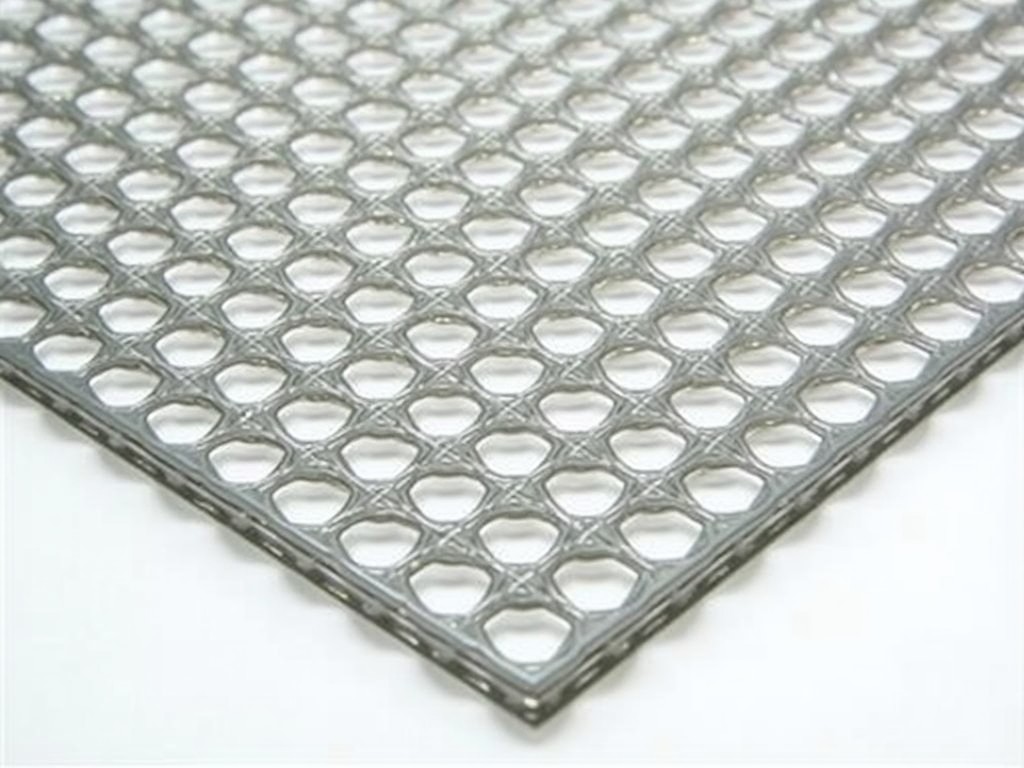
Hexagonal perforated metal sheet panels are engineered components featuring a repeating pattern of hexagonal holes punched through a metal substrate. This geometry provides a high open area ratio
Hexagonal Perforated Metal Sheet Panels
Hexagonal perforated metal sheet panels are engineered components featuring a repeating pattern of hexagonal holes punched through a metal substrate. This geometry provides a high open area ratio with structural integrity superior to circular or square perforation patterns under equivalent open area conditions. The hexagonal arrangement distributes stress more evenly across the sheet, reducing localized deformation and improving load-bearing capacity in applications requiring both filtration and mechanical strength.
The manufacturing process typically involves CNC punch presses or laser cutting systems that achieve precise hole placement and consistent edge quality. Hole sizes commonly range from 3 mm to 25 mm across flats, with pitch (center-to-center distance) varying from 4 mm to 30 mm depending on material thickness and application requirements. Material thickness selections generally fall between 0.5 mm and 6.0 mm, though thicker gauges are feasible for structural roles using specialized tooling.
Material Selection and Properties
Material choice directly influences corrosion resistance, strength-to-weight ratio, thermal conductivity, and suitability for specific environments. Carbon steel offers high tensile strength and cost-effectiveness but requires surface treatment for outdoor use. Stainless steel grades (304, 316) provide excellent oxidation resistance and are preferred in chemical processing, food handling, and marine applications. Aluminum alloys deliver lightweight performance with natural corrosion resistance, while copper and brass variants are selected for antimicrobial properties or electrical conductivity in specialized systems.
Mechanical properties such as yield strength, elongation, and hardness vary significantly by material and temper. For example, 304 stainless steel in annealed condition typically exhibits a yield strength of 215 MPa and elongation of 40%, whereas hard-tempered aluminum 5052-H32 may reach 190 MPa yield strength with 12% elongation. These values inform deflection calculations and fatigue life predictions in dynamic loading scenarios.
Open Area and Flow Characteristics
Open area percentage is a critical design parameter affecting airflow, light transmission, and fluid dynamics. For hexagonal perforations, open area can be calculated using the formula: (π × √3 × hole diameter²) / (2 × pitch²) × 100%. Typical open area ranges from 20% to 50%, depending on hole size and pitch. Higher open area reduces pressure drop in ventilation systems but decreases effective load-bearing cross-section.
Flow coefficients (Cd) for hexagonal perforated sheets generally range from 0.60 to 0.75 under turbulent flow conditions, influenced by Reynolds number and hole edge geometry. Sharp-edged perforations promote flow separation and higher pressure loss, while radiused or chamfered edges improve flow efficiency. These characteristics are validated through empirical testing per AMCA 500 or ISO 5801 standards when used in fan inlet or exhaust applications.
Structural Performance and Load Capacity
The hexagonal geometry enhances stiffness compared to other perforation patterns due to the interlocking nature of six-sided cells, which resist shear deformation more effectively. Finite element analysis shows that under uniform pressure, hexagonal perforated sheets exhibit up to 15% less deflection than circular perforated equivalents at the same open area and material thickness. This makes them suitable for walkway gratings, machine guards, and protective barriers where both visibility and strength are required.
Buckling resistance improves with smaller pitch-to-thickness ratios. For instance, a 1.5 mm thick aluminum panel with 6 mm hole size and 8 mm pitch demonstrates significantly higher critical buckling load than a similar panel with 12 mm pitch. Edge support conditions (clamped, simply supported, or free) dramatically influence load capacity and must be specified during design.
Surface Treatments and Finishes
Post-perforation treatments enhance durability, appearance, and functionality. Common options include powder coating (epoxy, polyester, or polyurethane-based), anodizing (for aluminum), galvanizing (hot-dip or electrogalvanizing for steel), and passivation (for stainless steel). Powder coating thickness typically ranges from 60 to 120 μm, providing UV resistance and color stability for outdoor architectural use.
For applications requiring electrical grounding or solderability, conductive finishes such as nickel plating or tin-leaf coating may be applied. In hygienic environments, electropolishing reduces surface roughness to below 0.4 μm Ra, minimizing particle adhesion and facilitating cleaning. These finishes are selected based on exposure conditions, maintenance requirements, and regulatory standards (e.g., FDA, ISO 14644 for cleanrooms).
Typical Industrial Applications
Hexagonal perforated panels are widely used in HVAC systems as diffuser faces and return air grilles, where the pattern promotes uniform airflow distribution and reduces noise generation compared to louvered designs. In acoustical engineering, they serve as protective facings for sound-absorbing materials, allowing sound transmission while shielding the absorber from mechanical damage and dust accumulation.
In industrial filtration, they function as support screens for catalyst beds, filter media, or separator elements in chemical reactors and oil/gas processing units. The hexagonal pattern minimizes pressure drop while maintaining structural integrity under differential pressure. Architectural applications include sunshades, facade cladding, and interior partitions, where the pattern provides shading, visual interest, and ventilation without compromising safety.
Additional uses include conveyor guards, machine tool enclosures, battery venting panels in energy storage systems, and electromagnetic shielding housings where conductivity and aperture control are essential. Each application leverages the balance of open area, strength, and manufacturability inherent to the hexagonal perforation geometry.
Customization Options
Panels can be customized in dimensions, hole size, pitch, material thickness, and edge treatment to meet specific project requirements. Standard sheet sizes typically range from 1000×2000 mm to 1500×3000 mm, but custom lengths up to 6000 mm are feasible with proper handling and transportation logistics. Width limitations are often dictated by material coil size and press bed capacity.
Secondary operations include bending, rolling, notching, and welding to create three-dimensional shapes such as cylinders, cones, or complex enclosures. Corner radii, flange additions, and mounting hole patterns are routinely added during fabrication. Tolerances for hole position and size generally adhere to ±0.1 mm for CNC-punched parts and ±0.2 mm for laser-cut features, depending on material and thickness.
For large-scale projects, nesting optimization minimizes material waste during perforation. Engineers can provide DXF or STEP files for customer review prior to production, ensuring alignment with assembly requirements. Surface marking, part numbering, and protective film application are available upon request to prevent scratching during transit and installation.
Quality Control and Inspection
Quality assurance begins with material verification via mill test certificates (MTCs) confirming chemical composition and mechanical properties. During production, in-process checks monitor hole diameter, pitch consistency, and burr height using optical comparators or coordinate measuring machines (CMMs). Edge quality is assessed per ANSI B93.19 standards for perforation quality.
Final inspection includes dimensional verification, flatness measurement (typically <0.5% of span), and surface defect analysis. For critical applications, non-destructive testing such as dye penetrant or ultrasonic inspection may be specified to detect subsurface flaws. Packaging involves interleaving sheets with polyethylene film or kraft paper and securing on wooden pallets with steel strapping to prevent shifting and moisture exposure during transport.
Typical values for key parameters are provided below for reference, though actual specifications are determined by project requirements and material selection.
| Parameter | Typical Range | Notes |
|---|---|---|
| Material Thickness | 0.5 mm – 6.0 mm | Thicker gauges available for structural roles |
| Hole Size (Flats) | 3 mm – 25 mm | Custom sizes possible with tooling |
| Pitch (Center-to-Center) | 4 mm – 30 mm | Determined by open area and strength needs |
| Open Area | 20% – 50% | Calculated from hole size and pitch |
| Standard Sheet Size | 1000×2000 mm to 1500×3000 mm | Custom lengths up to 6000 mm feasible |
| Flatness Tolerance | <0.5% of span | Measured under no-load conditions |
Product Categories


Send Inquiry
If you are interested in our products, leave your information here and we will be in touch shortly.