Stainless Steel Welded Wire Fabric Suppliers
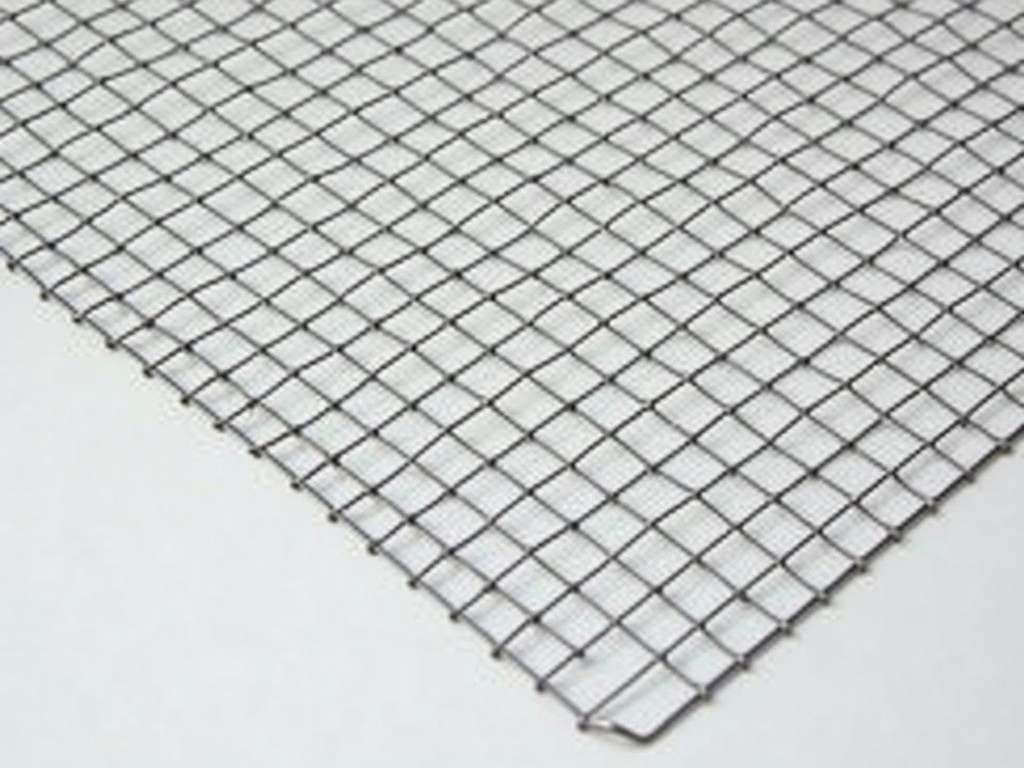
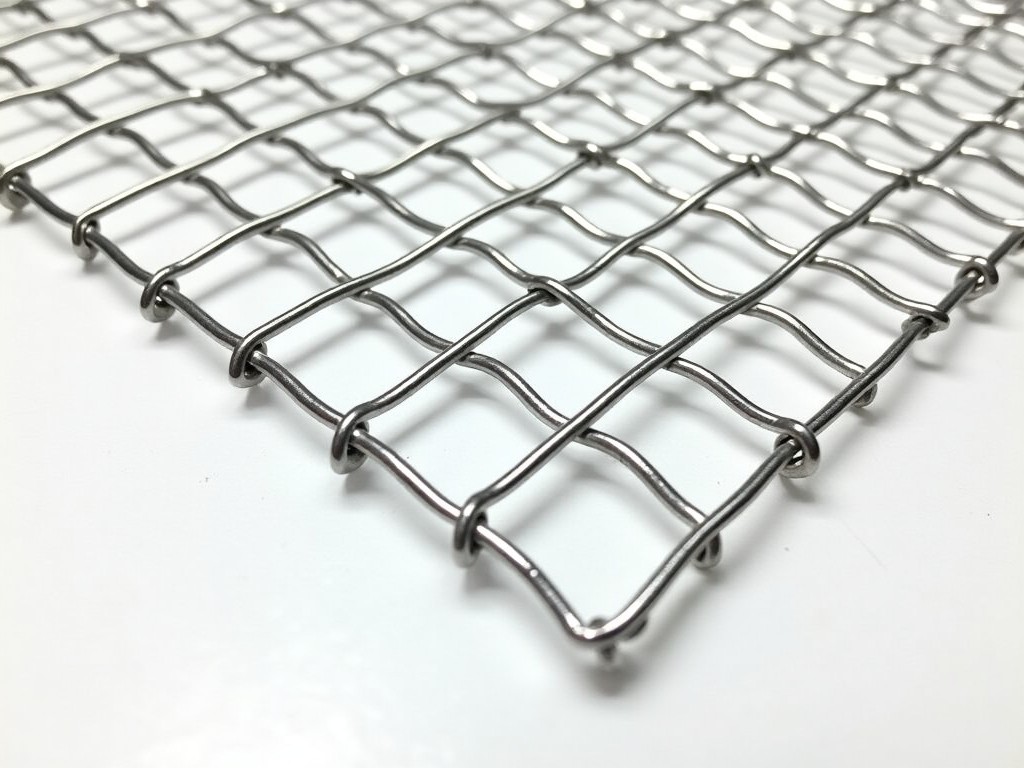
Stainless steel welded wire fabric (WWF) is a structural reinforcement material made by intersecting longitudinal and transverse wires that are electrically resistance-welded at each crossing point.
Stainless Steel Welded Wire Fabric Suppliers
Stainless steel welded wire fabric (WWF) is a structural reinforcement material made by intersecting longitudinal and transverse wires that are electrically resistance-welded at each crossing point. The base material consists of austenitic stainless steel grades, primarily AISI 304 or 316, selected for their corrosion resistance in humid, chemical, or marine environments. Wire diameters typically range from 2 mm to 12 mm, with aperture sizes from 25 mm x 25 mm up to 200 mm x 200 mm, depending on load requirements and installation constraints.
The welding process ensures dimensional stability and load distribution across the panel, eliminating the need for on-site tying. Unlike rebar cages, WWF provides uniform reinforcement in two directions, reducing cracking in concrete slabs, walls, and precast elements. Suppliers produce WWF in flat rolls or flat panels, with edge wires often included to facilitate handling and prevent unrolling during transport and placement.
Material Selection and Corrosion Resistance
Austenitic stainless steel grades 304 and 316L are the most common choices for welded wire fabric due to their balanced mechanical properties and resistance to environmental degradation. Grade 304 contains approximately 18% chromium and 8% nickel, providing adequate protection against atmospheric corrosion and mild chemical exposure. Grade 316L adds 2-3% molybdenum, significantly improving resistance to chlorides, making it suitable for coastal structures, wastewater treatment plants, and chemical processing facilities.
The choice between grades depends on the expected service environment. In freshwater or indoor applications, 304 is often sufficient and more cost-effective. For submerged structures, deicing salt exposure, or industrial effluents containing sulfates, 316L is specified to prevent pitting and crevice corrosion over decades of service. Suppliers typically provide mill test reports (MTRs) verifying chemical composition and mechanical properties for each heat of wire used.
Manufacturing Process and Quality Control
Production begins with drawing stainless steel wire to precise diameters, followed by straightening and cutting to length for longitudinal and transverse wires. These wires are fed into automated welding machines where cross-points are joined using electrical resistance welding. The process applies controlled pressure and current for a specific duration, creating a fused metallurgical bond without melting the base wire. This minimizes heat-affected zone degradation and preserves the corrosion-resistant properties of the stainless steel.
Quality control includes dimensional verification of aperture size and wire diameter, tensile testing of welds to ensure minimum shear strength (typically >90% of parent wire strength), and visual inspection for missed welds or deformation. Suppliers may also conduct salt spray testing (ASTM B117) on sample panels to validate corrosion resistance claims. Traceability is maintained from raw material coil to finished roll or panel, allowing full material history retrieval.
Standard and Custom Configurations
Standard welded wire fabric is specified by wire size, aperture dimensions, and panel or roll dimensions. Common designations follow ASTM A1064 or EN 10223-2, such as 6x6 - W2.9 x W2.9 (indicating 6-inch spacing with W2.9 wire on both axes) or metric equivalents like 150x150 - MW5.0 x MW5.0. Roll widths typically range from 0.5 m to 2.4 m, with lengths up to 50 m for ease of handling and minimal lap joints during installation.
Customization options include non-standard apertures (e.g., 50x100 mm for directional reinforcement), mixed wire sizes (heavier longitudinal wires for beam-style loading), and fabricated shapes such as L-panels, U-channels, or circular cages for columns. Edge wires can be increased in diameter for added rigidity during placement. Suppliers work with engineers to translate structural drawings into production-ready WWF layouts, minimizing waste and ensuring compliance with placement tolerances.
Applications in Structural and Environmental Engineering
In concrete construction, stainless steel WWF controls shrinkage and temperature cracking in slabs-on-grade, basement walls, and tunnel linings where corrosion resistance is critical. Unlike carbon steel reinforcement, it does not require concrete cover thickness to be increased for corrosion allowance, allowing for thinner sections or reduced concrete volume in aggressive environments. This is particularly valuable in potable water tanks where metallic contamination must be avoided.
Architectural applications include cladding support systems, facade reinforcement, and security barriers where aesthetic longevity and minimal maintenance are required. In wastewater treatment, WWF is used in aeration tank walls and clarifier bases exposed to alternating wet/dry cycles and hydrogen sulfide. Marine applications encompass seawalls, pile caps, and offshore platform decks where splash zone corrosion would rapidly degrade conventional steel reinforcement.
Prefabricated concrete manufacturers use WWF in wall panels, hollow core slabs, and architectural elements to improve handling strength and reduce cracking during stripping and transport. The dimensional stability of pre-welded fabric allows for precise positioning in automated production lines, reducing labor and improving product consistency.
Comparison with Alternative Reinforcement
| Characteristic | Stainless Steel WWF | Carbon Steel WWF | Rebar Cage |
|---|---|---|---|
| Corrosion Resistance | High (304/316L grades) | Low (requires coating or cover) | Low (requires epoxy or cathodic protection) |
| Installation Labor | Low (pre-welded, roll/panel form) | Low (pre-welded) | High (on-site assembly) |
| Crack Control Uniformity | High (two-way reinforcement) | High (two-way reinforcement) | Variable (depends on bar spacing) |
| Typical Use Environment | Marine, chemical, wastewater | Indoor, dry, temporary | Structural, all environments |
| Initial Cost Factor | 1.8–2.5x carbon steel | 1.0x (baseline) | 1.2–1.5x (labor included) |
Values are typical ranges; actual selection depends on design life, exposure class, and project budget.
Supply Chain and Logistics Considerations
Stainless steel welded wire fabric is typically supplied in protective wrapping to prevent surface contamination during transit. Rolls are secured with steel or polyester strapping and placed on pallets with corner protectors to avoid edge damage. Panels are stacked flat with interleaving sheets or foam to prevent abrasion. Suppliers provide material certification, including wire grade, tensile strength, weld shear values, and dimensions, often aligned with EN 10204 3.1 or ASTM A1064 requirements.
Lead times depend on raw material availability and customization complexity. Standard rolls from stock may ship within 5–7 business days, while custom apertures, fabricated shapes, or special wire grades can extend lead time to 3–4 weeks. For international shipments, suppliers use fumigated wooden pallets or plastic alternatives to comply with ISPM 15 regulations, and include desiccant packs in humid climates to prevent surface staining during long transit.
Technical support includes assistance with lap length calculations, bending schedules for fabricated shapes, and compatibility checks with concrete admixtures or formwork systems. Some suppliers offer on-site training for proper handling and placement to avoid damage to the welds or contamination of the stainless surface.
Environmental and Lifecycle Factors
Stainless steel welded wire fabric contributes to sustainable construction through extended service life and minimal maintenance. In corrosive environments where carbon steel would require replacement or cathodic protection within 15–25 years, 316L WWF can exceed 50 years of service with no protective measures. This reduces lifecycle costs associated with repairs, downtime, and material replacement.
The material is 100% recyclable at end-of-life, with scrap value recovering a significant portion of initial cost. Unlike coated or galvanized alternatives, stainless steel does not produce hazardous waste during recycling. Its high chromium and nickel content makes it desirable in steel mills, ensuring efficient closed-loop recycling. Suppliers often provide recycled content documentation upon request, supporting LEED or BREEAM certification efforts.
Energy intensity in production is higher than carbon steel due to alloying elements, but this is offset by the avoidance of maintenance interventions over decades. Life cycle assessment (LCA) studies show that in marine or wastewater applications, the global warming potential of stainless steel WWF is lower than carbon steel when maintenance and replacement cycles are factored in over a 60-year design life.
For technical specifications, custom fabrication requests, or project-specific guidance on stainless steel welded wire fabric selection, contact our engineering team to discuss your requirements.
Request Technical Consultation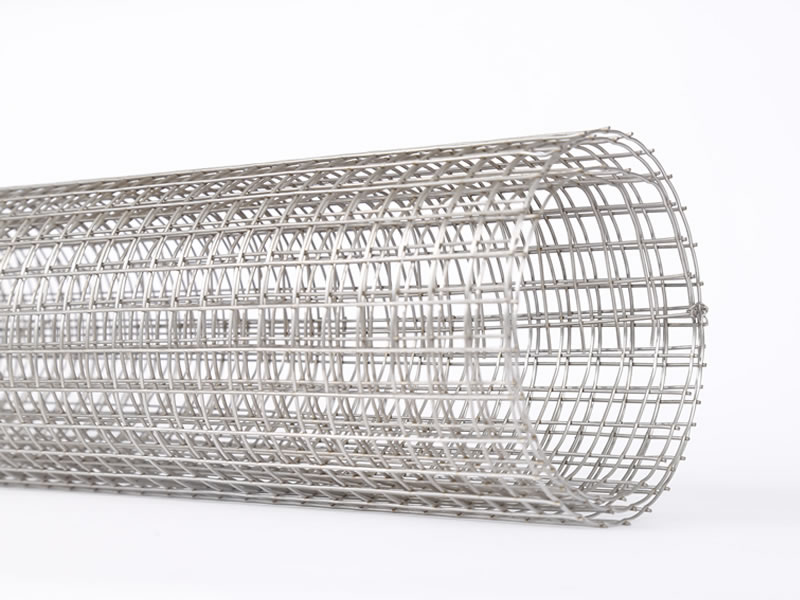
Product Categories


Send Inquiry
If you are interested in our products, leave your information here and we will be in touch shortly.