Perforated Aluminium Sheet Suppliers
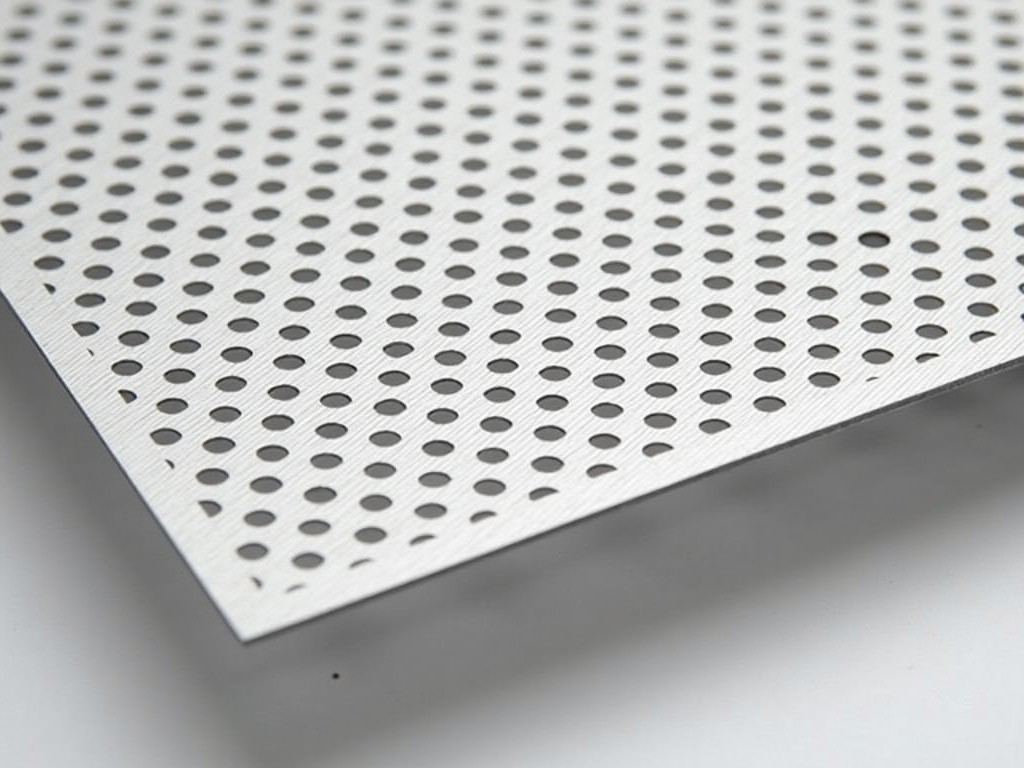
Perforated aluminium sheets are manufactured by punching a regular pattern of holes through aluminium alloy stock, creating a material with controlled open area, structural integrity, and functional
Perforated Aluminium Sheet Suppliers: Technical Selection Guide
Understanding Perforated Aluminium Sheet Specifications
Perforated aluminium sheets are manufactured by punching a regular pattern of holes through aluminium alloy stock, creating a material with controlled open area, structural integrity, and functional properties. The perforation process alters the base material’s mechanical behavior, requiring careful consideration of hole geometry, pitch, and alloy selection to maintain performance under load.
Key technical parameters include hole shape (round, square, slotted, hexagonal), hole diameter, center-to-center pitch (spacing), and open area percentage—calculated as the ratio of hole area to total sheet area. These factors directly influence airflow, light transmission, sound attenuation, and load-bearing capacity. For example, a 3mm round hole on a 6mm pitch yields approximately 25% open area, while a 5mm hole on a 10mm pitch results in 19.6% open area due to the square relationship between diameter and area.
Material thickness typically ranges from 0.5mm to 6.0mm, with thicker gauges required for structural applications such as walkways or machine guards. Thinner sheets (0.5–1.5mm) are common in architectural cladding or filtration where flexibility and weight savings are prioritized. The aluminium alloy—most frequently 3003-H14 or 5052-H32—determines corrosion resistance, formability, and tensile strength, with 5052 offering superior marine-grade performance due to higher magnesium content.
Manufacturing Considerations for Perforated Aluminium
The perforation process introduces localized stress concentrations around hole edges, which can lead to cracking or deformation if not properly managed. Tooling wear, punch clearance, and sheet feed consistency are critical process variables affecting hole quality and dimensional tolerance. Suppliers must maintain tight control over punch sharpness (typically <0.05mm edge radius) and lubrication to prevent burring or tearing, especially in thinner gauges.
Sheet flatness after perforation is a common concern, as uneven hole distribution or asymmetric punching can induce curl or twist. To mitigate this, suppliers often employ balanced perforation patterns—such as staggered or straight rows with symmetrical margin zones—or use post-perforation leveling rollers. For applications requiring tight tolerances (e.g., precision filtration or acoustic panels), laser perforation may be preferred over mechanical punching, offering micron-level hole accuracy without mechanical deformation, though at higher cost.
Edge treatment is another often-overlooked factor. Raw perforated edges can be sharp and pose safety hazards; suppliers typically offer deburring, rounding, or framing options (e.g., hemmed, flanged, or channel-bound edges) depending on end-use. In food processing or pharmaceutical environments, edge finish must meet hygiene standards, necessitating smooth, crevice-free profiles.
Material Selection and Performance Characteristics
Aluminium alloys used in perforated sheets are selected based on environmental exposure, mechanical demands, and fabrication requirements. Alloy 3003-H14, with approximately 1.2% manganese, provides good formability and moderate strength (tensile strength ~140 MPa, yield ~115 MPa), making it suitable for indoor architectural panels, HVAC grilles, and general-purpose filtration where corrosion exposure is mild.
For outdoor, marine, or chemical-exposed environments, 5052-H32 is preferred due to its 2.2–2.8% magnesium content, which enhances resistance to saltwater corrosion and industrial atmospheres. Its tensile strength (~220 MPa) and yield strength (~150 MPa) exceed those of 3003, allowing thinner gauges to carry equivalent loads. However, 5052 is less formable than 3003 and requires higher bending forces, impacting fabrication complexity.
Surface treatments such as anodizing (clear or colored), powder coating, or PVDF fluoropolymer finishes are frequently applied to perforated sheets to improve UV stability, color retention, or chemical resistance. Anodizing creates a porous alumina layer that can be dyed and sealed, offering abrasion resistance comparable to hardened steel while maintaining electrical insulation. Powder coating provides thicker, more impact-resistant films suitable for high-abrasion zones, though it may fill small perforations if not applied with precise electrostatic control.
Application-Driven Design Logic
In acoustic applications, perforated aluminium sheets function as part of a Helmholtz resonator system when backed by an air cavity and absorptive material. The hole diameter and spacing determine the resonant frequency, while open area affects sound absorption bandwidth. For example, 3mm holes on a 12mm pitch (≈6% open area) tuned with a 50mm cavity absorb mid-frequency noise (500–1000 Hz) effectively in ceiling baffles or enclosure liners.
For filtration and separation, hole size and open area must balance flow rate against particle retention. A 1mm hole diameter in a 3mm pitch pattern (≈11% open area) is common for liquid pre-filtration in cooling systems, whereas 0.5mm holes in a 1.5mm pitch (≈11% open area) may be used for fine particulate capture in air handling units. Chemical compatibility of the aluminium alloy with the process fluid must be verified—especially for acidic or alkaline environments where pH <4 or >9 can accelerate corrosion.
In architectural facades, perforated aluminium serves as a solar shading device where open area directly correlates with shading coefficient and daylight penetration. A 40% open area pattern typically reduces solar heat gain by 30–40% while maintaining visibility. Designers often vary perforation density across the facade to respond to solar orientation—higher density on south-facing elevations, lower on north—to optimize passive lighting and thermal performance without mechanical shading systems.
Quality Assurance and Inspection Protocols
Industrial buyers should verify that suppliers implement statistical process control (SPC) on hole diameter, pitch, and open area during production. Critical dimensions are typically measured using optical comparators or vision systems with ±0.02mm tolerance for hole size and ±0.1mm for pitch. Open area is validated via area calculation from scanned images or gravimetric methods (measuring mass loss after perforation) for high-precision applications.
Surface quality is assessed for burr height, roll marks, and coating adhesion. Burr height exceeding 0.05mm is generally unacceptable for fluid-handling or food-contact applications. Coating thickness is measured via magnetic induction (for ferrous substrates) or eddy current (for non-ferrous) and must meet specified mils (e.g., 60–80μm for powder coating, 15–25μm for anodizing). Adhesion is validated using ASTM D3359 tape test methods.
Flatness is quantified using a straightedge and feeler gauge or laser profilometer, with tolerances typically <3mm deviation over 1000mm length for architectural sheets and <1mm for precision filtration. Material certification (e.g., EN 573-3 for alloy composition, EN 485 for mechanical properties) should be available upon request. For regulated industries, suppliers may provide ISO 9001, ISO 14001, or AS9100 compliance documentation, though these are process certifications—not product performance guarantees.
Customization Options and Ordering Considerations
Perforated aluminium sheets are highly customizable, with standard options including hole shapes (round, square, slot, hexagonal, decorative patterns), sizes (0.5mm to 50mm diameter), pitches (1mm to 100mm), and open areas (5% to 80%). Non-standard patterns—such as variable density gradients, logos, or custom geometries—are achievable via CNC punching or laser cutting, though tooling costs may apply for low-volume runs.
Sheet dimensions are typically supplied in coils or cut-to-length blanks. Common widths range from 1000mm to 1500mm, with lengths up to 6000mm feasible for coiled stock. Thickness tolerance follows ISO 2768-m (e.g., ±0.08mm for 1.5mm sheet), though tighter tolerances (±0.03mm) are available for precision applications at additional cost. Edge treatments include mill edge, deburred, rounded (radius 0.5–2mm), hemmed (10–15mm fold), or flanged for frame insertion.
Lead time depends on pattern complexity, material availability, and finishing requirements. Standard round-hole patterns in 3003-H14 or 5052-H32 typically ship within 2–3 weeks. Custom patterns, anodizing, or PVDF coating may extend lead time to 4–6 weeks. Buyers should provide detailed specifications including: alloy, thickness, hole shape/size/pitch, open area target, sheet dimensions, edge finish, surface treatment, quantity, and any required certifications (e.g., REACH, RoHS, fire rating) to enable accurate quoting.
| Parameter | Typical Range | Notes |
|---|---|---|
| Alloy | 3003-H14, 5052-H32 | 3003 for general use; 5052 for marine/industrial |
| Thickness | 0.5mm – 6.0mm | Thinner for cladding/filter; thicker for structural |
| Hole Diameter | 0.5mm – 50mm | Round most common; slots/hex for directional flow |
| Pitch (Center-to-Center) | 1mm – 100mm | Determines open area with hole size |
| Open Area | 5% – 80% | Calculated from hole geometry and pitch |
| Standard Width | 1000mm – 1500mm | Custom widths available via slitting |
| Surface Finish | Mill, Anodized, Powder Coated, PVDF | Anodized for durability; PVDF for UV stability |
Technical Support and Procurement Guidance
When evaluating perforated aluminium sheet suppliers, prioritize those who can provide engineering support beyond basic quotation. A competent supplier will ask about the intended function—airflow, filtration, shielding, aesthetics—and recommend hole geometry, open area, and alloy based on performance calculations rather than simply offering a catalog. They should be able to explain trade-offs: for instance, increasing open area improves airflow but reduces structural stiffness, requiring thicker material or additional framing.
Request samples that represent the final perforation pattern, edge treatment, and surface finish—not just a plain sheet sample. Test the sample under simulated conditions: measure pressure drop across the perforated panel for HVAC applications, or conduct a salt spray test (ASTM B117) for outdoor durability verification. Reputable suppliers will accommodate such requests and provide test data or reference projects where applicable.
Finally, clarify logistics: whether sheets are delivered flat or coiled, protective packaging (e.g., interleaving paper, corner guards, shrink wrap), and labeling for traceability. For just-in-time manufacturing, confirm minimum order quantities, reorder points, and the supplier’s capacity to handle pattern changes or rush orders. Technical procurement succeeds not through price alone, but through reducing uncertainty in material performance, consistency, and supply chain reliability.
Inquiry and Technical Collaboration
To initiate a technical discussion, provide your application requirements: functional goal (e.g., airflow rate, sound attenuation level, particle retention size), environmental conditions (indoor/outdoor, chemical exposure, temperature range), dimensional constraints, and any regulatory or certification needs. Include sketches or CAD files if available, as perforation direction relative to grain or bend lines can affect formability and cracking risk.
We respond to detailed inquiries with engineering feedback, pattern simulations, and material recommendations within 2 business days. Samples are prepared upon receipt of final specifications and shipped via courier with protective packaging. There is no charge for standard sample preparation; custom pattern development may incur a nominal tooling fee, credited upon order placement.
For procurement teams seeking to reduce specification risk and ensure long-term performance, we recommend beginning with a technical consultation—not a price quote. Submit your requirements through the contact form to connect with our applications engineering team.
More Products

Send Inquiry
If you are interested in our products, leave your information here and we will be in touch shortly.