Perforated Aluminum Sheet Price
Perforated aluminum sheets are widely used in industrial applications requiring lightweight structural support, airflow management, or acoustic performance. Their price is influenced by multiple
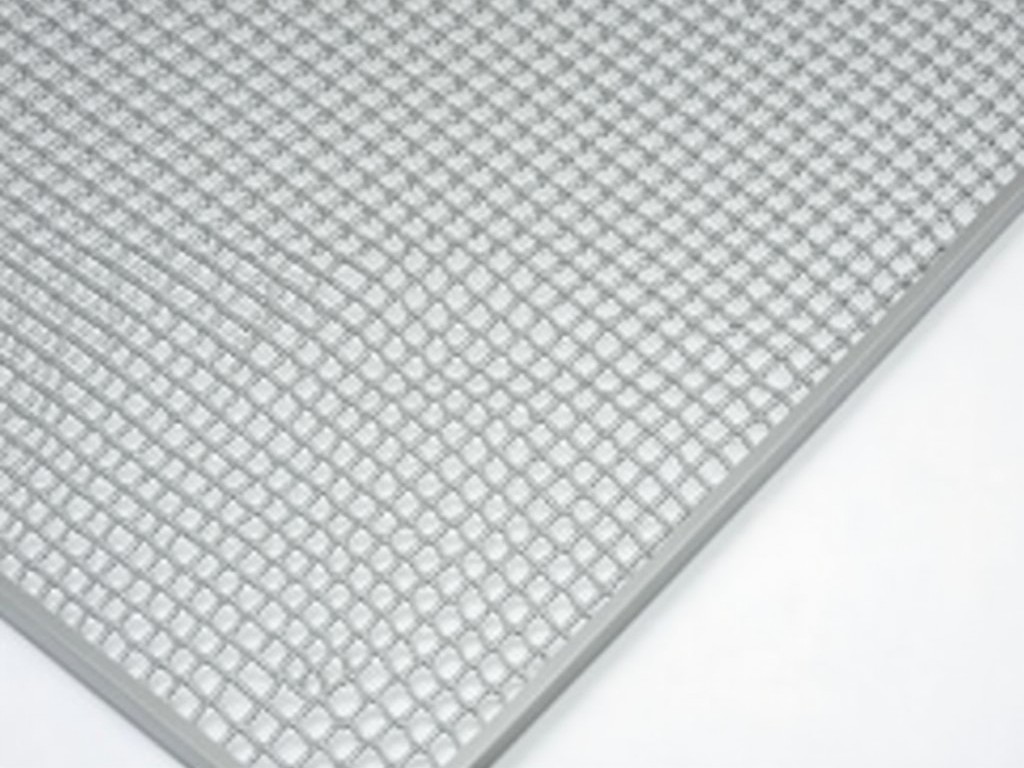
Perforated Aluminum Sheet: Price Factors and Technical Specifications
Perforated aluminum sheets are widely used in industrial applications requiring lightweight structural support, airflow management, or acoustic performance. Their price is influenced by multiple technical variables including alloy composition, hole geometry, sheet thickness, surface treatment, and order volume. Understanding these factors enables accurate cost estimation and informed procurement decisions.
Key Technical Variables Affecting Price
The base material cost begins with the aluminum alloy selection. Common grades include 3003-H14 for general purpose, 5052-H32 for marine or corrosive environments, and 6061-T6 for higher strength requirements. Each alloy carries a different raw material premium based on composition and processing demands. For example, 5052 contains magnesium for improved corrosion resistance, increasing cost versus 3003, while 6061-T6 requires heat treatment, adding processing expense.
Hole pattern and open area significantly impact both manufacturing time and material yield. Standard patterns such as round holes on 60-degree staggered centers are efficient to produce using CNC punch presses. Non-standard patterns — including square, slotted, or custom geometric arrangements — require specialized tooling, slower feed rates, and increased scrap, raising per-unit cost. Open area percentage directly correlates with material removal: a 40% open area sheet removes nearly half the blank, increasing scrap handling and machine wear.
Sheet thickness governs both material usage and punching force requirements. Thinner sheets (0.5–1.0 mm) deform less during punching but may require backup support to prevent tear-out. Thicker sheets (1.5–3.0 mm) demand higher tonnage equipment, slower cycle times, and increased tool wear. For instance, punching 2.0 mm 5052-H32 requires approximately double the force of 1.0 mm, affecting machine selection and energy consumption per part.
Surface Treatment and Finishing Options
Surface treatments add cost but enhance durability or aesthetics in specific environments. Mill finish is the default state after punching, showing minor tool marks and oxidation. Anodizing (typically Type II sulfuric) creates a hard, porous oxide layer that can be dyed and sealed, improving corrosion resistance and surface hardness — ideal for architectural or outdoor exposure. Powder coating applies a polymeric layer via electrostatic spray and curing, offering color variety and UV stability at a moderate premium. Chemical conversion coatings like Alodine provide corrosion protection with minimal thickness change, often used as a primer for paint adhesion.
Brushed or satin finishes involve mechanical abrasion to create uniform directional texture, masking minor imperfections but adding labor cost. These are selected when visual consistency is prioritized over maximum corrosion resistance. Each finish requires additional processing steps, handling, and quality inspection, contributing to the final price. For outdoor architectural panels, anodized 5052-H32 at 1.5 mm thickness with 30% open area round holes typically carries a 25–40% premium over mill finish equivalents due to processing and material handling.
Typical Price Ranges by Specification
| Alloy | Thickness (mm) | Hole Pattern | Open Area (%) | Finish | Price Range (USD/m²) |
|---|---|---|---|---|---|
| 3003-H14 | 0.8 | Round, 3mm stag 60° | 30 | Mill | 18–22 |
| 5052-H32 | 1.5 | Round, 4mm stag 60° | 40 | Anodized (Clear) | 35–45 |
| 6061-T6 | 2.0 | Square, 5mm stag 45° | 25 | Powder Coated (RAL 9005) | 48–60 |
| 3003-H14 | 1.0 | Slotted, 6x2mm stag 60° | 35 | Mill | 24–30 |
Price ranges reflect material cost, processing complexity, and finishing. Volume discounts apply: orders exceeding 50 m² typically reduce unit cost by 10–15%, while volumes over 200 m² may trigger further reductions based on nesting efficiency and setup amortization. Prototypes or short runs under 10 m² carry higher per-square-meter costs due to fixed setup, programming, and first-piece inspection overhead.
Applications Where Perforated Aluminum Delivers Value
In HVAC systems, perforated aluminum serves as diffuser faces or return air grilles where corrosion resistance and lightweight properties reduce duct load. The non-magnetic nature of aluminum avoids interference with nearby electronic sensors. For acoustic panels, hole size and spacing are tuned to target mid-frequency absorption; perforated backing protects absorbent material while allowing sound transmission. Open areas between 20–40% with hole diameters of 3–5 mm are common in these applications.
Architectural cladding and sunshades use perforated aluminum to control solar gain while maintaining visibility. The material’s natural oxide layer provides inherent corrosion resistance, and anodizing extends service life in coastal or industrial atmospheres. Compared to steel, aluminum’s lower density reduces substructure requirements — a 2.0 mm aluminum panel weighs approximately one-third of an equivalent steel panel, decreasing support costs and installation time.
Industrial equipment guards and machine covers benefit from aluminum’s non-sparking characteristic in hazardous environments. Unlike ferrous metals, it does not produce sparks when impacted, making it suitable for areas with flammable dust or vapors. Its conductivity also allows grounding without additional straps when properly bonded to frames. Food processing facilities favor aluminum for its non-toxic surface and ease of cleaning, particularly when sealed with clear anodize or food-grade powder coat.
Quotation Requirements and Lead Time Factors
Accurate pricing requires specific technical inputs: alloy grade, thickness (mm), hole shape and size (mm), pattern layout (staggered or straight), pitch (mm), sheet dimensions (width × length in mm), open area tolerance, and finish specification. Edge conditions — such as mill edge, deburred, or hemmed — also affect handling and safety. Providing a detailed drawing or DXF file eliminates ambiguity and prevents costly revisions during quoting.
Standard lead times for stock alloy sheets with common patterns range from 7–10 business days after drawing approval. Custom alloys, non-standard hole patterns, or special finishes (e.g., custom color powder coat, dual-side anodizing) extend lead time to 14–21 days due to material sourcing, tooling preparation, or batch processing. Expedited options are available for critical projects but may incur rush fees based on production schedule disruption.
Minimum order quantities vary by mill and service center. Sheet suppliers often require full-master coils for custom slitting, while fabricators may accept cut-to-size orders from inventory. For custom perforated runs, minimums typically start at 1–2 m² to justify setup, but pricing improves significantly above 5 m². Always confirm whether scrap recovery or return programs apply to offcuts, as this can influence net material cost.
Quality Control and Inspection Criteria
Dimensional inspection verifies hole location, pitch accuracy, and overall flatness. CNC punch presses typically achieve hole position tolerances of ±0.1 mm for standard patterns. Deviations beyond this may indicate tool wear, programming error, or material shifting. Flatness is measured using a straight edge and feeler gauge; acceptable deviation is usually <3 mm/m for architectural applications, tighter for precision mounting. Surface finish is visually inspected for scratches, dents, or coating uniformity under standardized lighting.
Open area is verified through either calculation (based on hole count and size) or physical measurement using flow tests or image analysis. For critical filtration or acoustics applications, actual open area may be tested to ensure performance consistency. Material certification (Mill Test Report) confirms alloy composition and temper, while finish compliance is validated via coating thickness gauges (for anodize or powder coat) or adhesion tape tests. All documentation should be traceable to the specific production lot.
Request a Technical Quotation
To receive a detailed, specification-driven quote for perforated aluminum sheet, provide your application requirements including alloy preference, thickness, hole pattern, dimensions, quantity, and finish. Our engineering team will review machinability, material yield, and finishing logistics to deliver a transparent cost breakdown. Submit your specifications for quotation.
More Products

Send Inquiry
If you are interested in our products, leave your information here and we will be in touch shortly.