Perforated Corrugated Metal Sheets
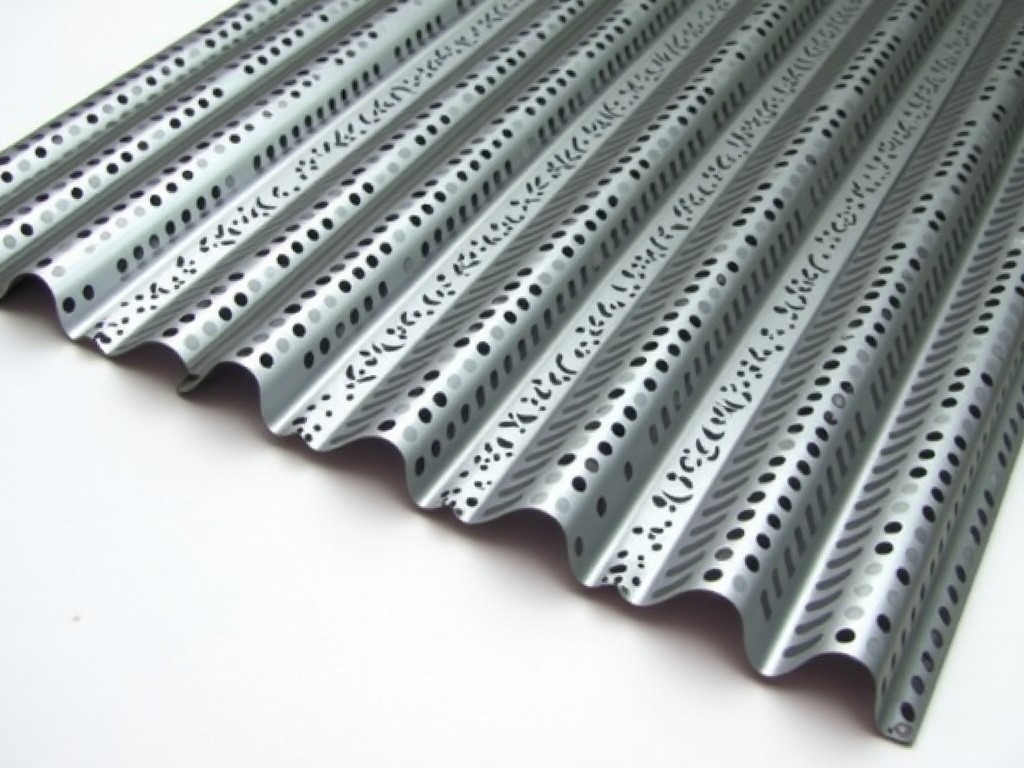
Perforated corrugated metal sheets combine structural rigidity from the corrugated profile with functional open area from precision perforations. This dual-geometry design enables controlled airflow,
Perforated Corrugated Metal Sheets
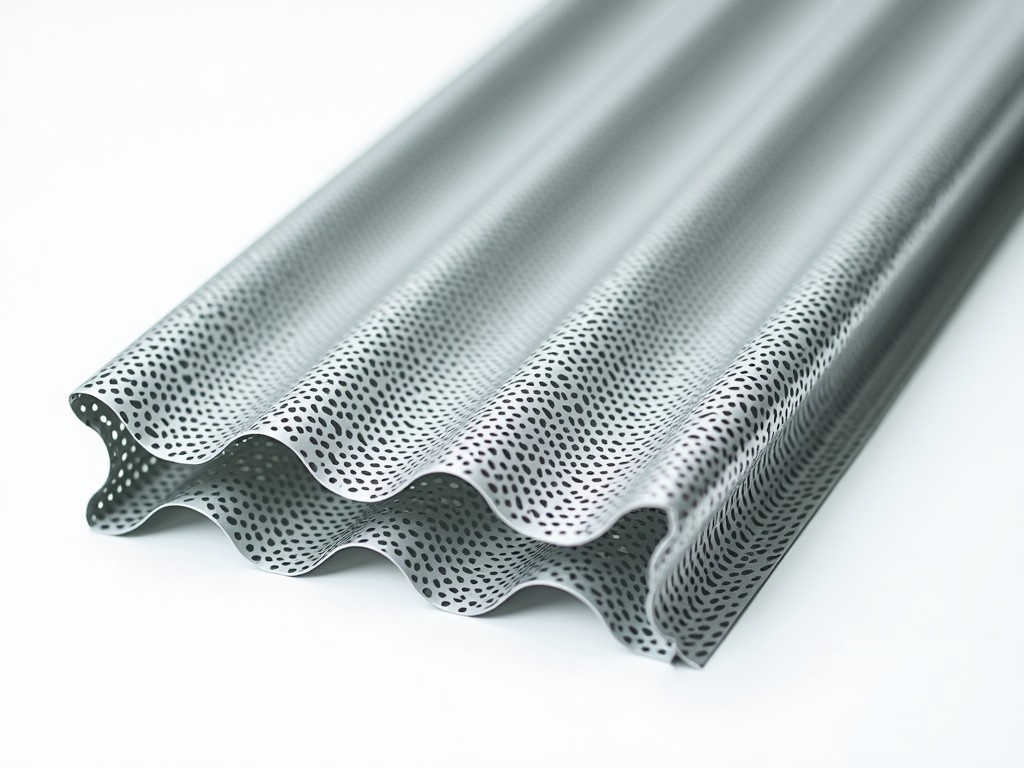
Perforated corrugated metal sheets combine structural rigidity from the corrugated profile with functional open area from precision perforations. This dual-geometry design enables controlled airflow, light transmission, drainage, and acoustic performance while maintaining load-bearing capacity in demanding industrial environments. The material is produced by cold-forming steel, aluminum, or stainless steel coils into a sinusoidal or trapezoidal profile, followed by punching standardized hole patterns across the sheet surface. Engineers select this product when mechanical strength must coexist with environmental interaction—such as in ventilation systems, protective barriers, or filtration housings—where solid panels would impede function and flat perforated sheets lack sufficient stiffness.
Structural and Functional Characteristics
The corrugation introduces bending resistance along the axis of the ribs, significantly increasing section modulus compared to flat perforated sheets of the same material thickness. For example, a 0.7 mm thick steel sheet with 25 mm pitch corrugation achieves approximately 3.5 times the flexural rigidity of its flat counterpart. Perforation patterns—typically round, slotted, or hexagonal—are engineered to preserve structural integrity by maintaining minimum ligament width between holes, usually not less than 1.5 times the material thickness to avoid tear-out under load. Open area ratios range from 15% to 45%, directly influencing airflow velocity, pressure drop, and acoustic absorption coefficients, which can be modeled using Darcy’s law or ISO 10534-2 standards for predictive design.
Material selection governs corrosion resistance, weight, and formability. Hot-dip galvanized steel (Z275 coating) provides cost-effective protection for indoor or mildly exposed outdoor applications, with a typical service life of 15–25 years in C3 environments per ISO 12944. Aluminum alloys (e.g., 3003-H14) offer natural oxide-layer protection and 1/3 the weight of steel, beneficial for ceiling systems or mobile equipment where dead load matters. Austenitic stainless steel (304/316) is chosen for chemical processing, marine, or food-grade zones due to its resistance to chlorides and acidic washdowns, though it requires higher forming forces during corrugation and perforation. Thickness options typically range from 0.5 mm to 1.2 mm, dictated by span length, support spacing, and expected dynamic loads such as wind or vibration.
Manufacturing Process and Tolerances
Production begins with slit coil fed into a roll former that shapes the corrugated profile using a series of matched rollers. Post-forming, the sheet enters a CNC turret punch or laser perforation station where hole patterns are applied with positional accuracy typically within ±0.15 mm. The sequence is critical: perforating before corrugation risks hole distortion during forming; perforating after ensures dimensional fidelity of the open area but requires tooling capable of penetrating the curved surface. Manufacturers compensate for springback in high-strength steels by adjusting roll gap settings and may apply lubricants to reduce galling during perforation, particularly in stainless steel. Edge conditions are either mill-edge or trimmed, with burr height controlled to less than 0.1 mm via secondary deburring to prevent injury during handling and ensure proper sealing in gasketed assemblies.
Tolerances follow industry norms unless otherwise specified. Length and width tolerances are generally ±3 mm or ±0.5% of dimension, whichever is greater. Corrugation pitch and height vary within ±1.5 mm due to roller wear and material thickness fluctuations. Perforation hole diameter tolerance is ±0.1 mm for punched holes and ±0.05 mm for laser-cut, with positional tolerance relative to sheet edges maintained within ±0.5 mm. Flatness is measured as deviation from a straight edge; typical values do not exceed 4 mm per meter for sheets under 1.0 mm thick, with stricter requirements (e.g., 2 mm/m) available upon request for precision mounting applications. All tolerances are verified using calibrated calipers, hole gauges, and optical comparators during first-article and in-process inspections.
Application-Specific Design Considerations
In ventilation ducts and plenums, perforated corrugated sheets serve as internal liners that attenuate noise via sound absorption in the cavity behind the sheet while allowing unimpeded airflow. The corrugation provides structural support to resist suction pressures during fan operation, preventing inward buckling. Open area is selected based on required noise reduction coefficient (NRC); for example, 30% open area with 5 mm round holes on 8 mm pitch typically yields NRC 0.6–0.75 in mid-frequency ranges when backed with 50 mm mineral wool. Engineers verify pressure drop using manufacturer-provided K-factors to ensure system static pressure remains within fan capacity.
As protective barriers in machinery guarding or perimeter fencing, the product balances visibility, impact resistance, and containment. Corrugation height (e.g., 18–25 mm) increases resistance to denting from thrown objects, while perforation size is limited to prevent limb or tool entry—commonly max 12 mm diameter per ISO 13857 safety distances. Surface treatments such as powder coating (60–80 µm thickness) enhance corrosion resistance and allow color coding for safety zones. In agricultural drying floors or screens, the sheets facilitate vertical and horizontal airflow through grain beds; hole size is chosen to prevent product loss (e.g., 3–5 mm for seeds) while minimizing clogging from dust or chaff, with self-cleaning angles often achieved by installing sheets at 10–15° inclination.
Material Options and Typical Specifications
| Parameter | Hot-Dip Galvanized Steel | Aluminum (3003-H14) | Stainless Steel (304) |
|---|---|---|---|
| Thickness Range (mm) | 0.5 – 1.2 | 0.5 – 1.0 | 0.5 – 1.2 |
| Typical Yield Strength (MPa) | 220 – 280 | 80 – 100 | 210 – 240 |
| Density (kg/m³) | 7850 | 2700 | 7900 |
| Corrosion Environment Suitability | C1–C3 (ISO 12944) | C1–C4 (non-marine) | C1–C5 (including marine) |
| Typical Open Area Range (%) | 15 – 45 | 15 – 45 | 15 – 45 |
Note: Values represent typical ranges for standard grades. Actual properties depend on mill certification, temper, and coating weight. Custom materials (e.g., galvannealed, pre-painted steel, 316 stainless) or thicknesses outside standard ranges are available upon request, subject to minimum order quantities and tooling constraints. Open area is customizable via hole size, shape, and pitch; common configurations include 3 mm round holes on 5 mm pitch (27% open area), 6 mm staggered on 10 mm pitch (32% open area), and 8 mm slotted on 12 mm pitch (38% open area). Designers should verify ligament strength and buckling resistance for high-open-area selections under load.
Quality Control and Testing
Quality assurance begins with incoming coil inspection, verifying thickness, coating weight (via XRF or gravimetric test), and mechanical properties against mill test reports. During production, first-article inspection includes dimensional validation of corrugation profile (using profile gauges), perforation accuracy (hole size, position, open area calculation), and edge condition. In-process checks monitor roller wear, punch tool integrity, and lubrication frequency to maintain consistency. Final inspection encompasses visual examination for defects (scratches, dents, coating holidays), dimensional audit of length/width/squareness, and adhesion testing (tape test) for coated surfaces where applicable.
Performance validation may include load-deflection testing per ASTM E72 for simply supported spans, air permeability testing per ISO 9237 to quantify airflow characteristics, and acoustic testing per ISO 354 for absorption coefficient measurement. Non-destructive methods such as dye penetrant inspection are used on weld-affected zones if applicable, though most corrugated-perforated sheets are supplied flat or with minimal bending. All test results are documented and available to customers upon request. Suppliers typically follow ISO 9001 quality management systems, with traceability maintained from coil number to finished sheet via batch or lot numbering.
Packaging and Handling
Sheets are stacked horizontally on pallets with intermediate layers of polyethylene or kraft paper to prevent surface abrasion. Edge protectors (plastic or metal angles) are applied to all four corners to guard against impact during forklift handling. Bundles are secured with polyester or steel strapping, typically at 300 mm intervals, and stretch-wrapped for moisture resistance. Standard pack weights range from 500 kg to 1,200 kg per pallet, depending on thickness and size, to ensure safe handling with standard warehouse equipment. Maximum stack height is usually limited to 2–3 pallets to prevent bottom-layer deformation.
For long sheets exceeding 3 meters, vertical packaging in A-frames or stillages may be used to reduce bending risk, with support points at 1/3 and 2/3 length to minimize deflection. Handling instructions recommend lifting via spreader bars or vacuum lifts for large formats to avoid point loading that could cause permanent deformation. Identification tags include material grade, thickness, dimensions, perforation pattern, heat number, and QR code linking to digital test certificates. Export packaging adheres to ISPM 15 for wood pallets and includes desiccant packs and humidity indicators for ocean transit to mitigate condensation-related staining.
More Products

Send Inquiry
If you are interested in our products, leave your information here and we will be in touch shortly.