Perforated Hard Plastic Sheets
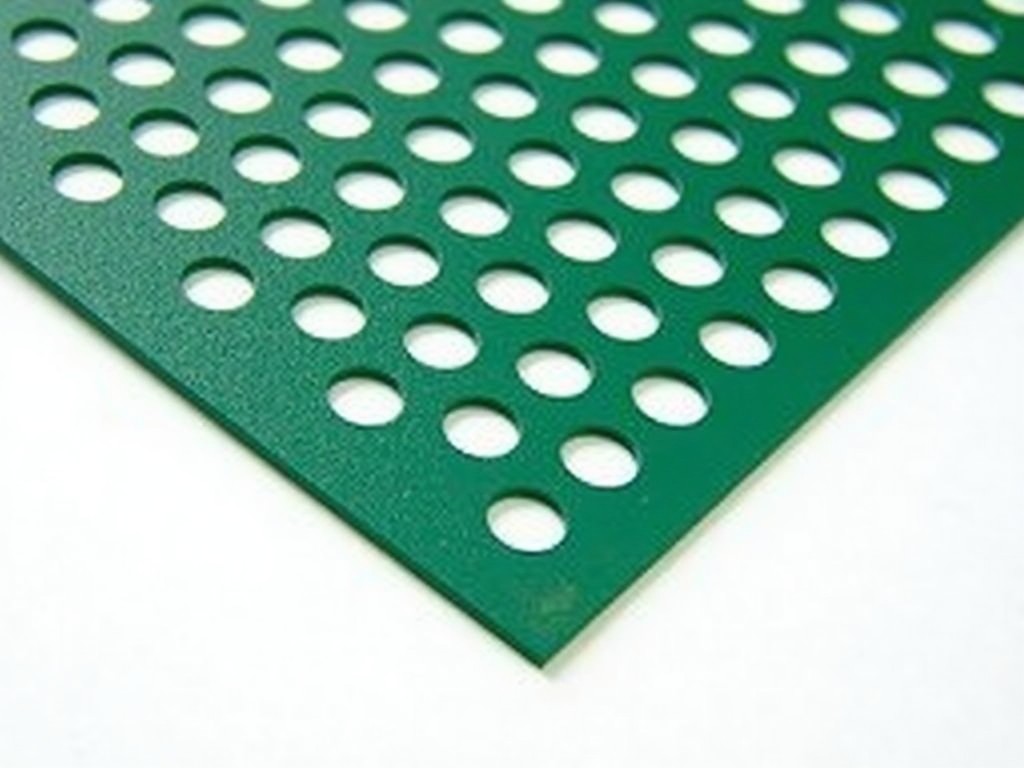
Perforated hard plastic sheets are engineered panels manufactured from rigid thermoplastic materials, featuring a regular pattern of holes punched or laser-drilled to meet specific functional
Perforated Hard Plastic Sheets
Perforated hard plastic sheets are engineered panels manufactured from rigid thermoplastic materials, featuring a regular pattern of holes punched or laser-drilled to meet specific functional requirements. These sheets combine the inherent properties of the base polymer—such as chemical resistance, impact strength, and dimensional stability—with controlled open area to enable airflow, fluid passage, light transmission, or acoustic management. Unlike woven meshes or metal perforated sheets, plastic variants offer corrosion immunity, lower weight, and non-conductive surfaces, making them suitable for environments where metal degradation or electrical interference poses a risk.
Material Selection and Polymer Properties
The performance of perforated hard plastic sheets depends critically on the base polymer selected, as each material exhibits distinct mechanical, thermal, and chemical characteristics. Commonly used materials include polypropylene (PP), high-density polyethylene (HDPE), polycarbonate (PC), and acrylonitrile butadiene styrene (ABS), each chosen based on the operational demands of the application. For instance, PP offers excellent chemical resistance and a low density of approximately 0.9 g/cm³, making it ideal for chemical processing environments where weight reduction is beneficial. HDPE provides superior impact strength at low temperatures and is frequently selected for outdoor ductwork or protective barriers exposed to UV radiation.
Polycarbonate stands out for its high impact resistance—exceeding 600 J/m in notched Izod tests—and optical clarity, allowing its use in safety guards or light diffusers where both strength and visibility are required. ABS combines good rigidity with ease of fabrication and is often selected for consumer-facing components or enclosures requiring a smooth finish. Material selection must account for continuous service temperature, as PP and HDPE typically operate up to 80–100°C, while PC and ABS can withstand higher temperatures, up to 120–130°C, before significant softening occurs. Additives such as UV stabilizers, flame retardants, or antistatic agents can be incorporated during extrusion to tailor the sheet to specific environmental or safety standards.
Perforation Patterns and Open Area Design
The perforation pattern directly influences the sheet’s functional performance, affecting airflow resistance, filtration efficiency, structural integrity, and aesthetic appearance. Patterns are defined by hole shape, size, pitch (center-to-center distance), and arrangement, with common configurations including round, slotted, square, and hexagonal holes. Round perforations are the most prevalent due to their ease of manufacturing and predictable flow characteristics, while slotted or elongated holes are used to increase open area in a single direction, enhancing directional airflow or drainage capacity.
Open area percentage—the ratio of hole area to total sheet area—is a critical design parameter, typically ranging from 15% to 60% depending on the application. For example, a 3 mm diameter hole on a 6 mm pitch in a staggered pattern yields approximately 22% open area, suitable for balanced airflow and structural support. Higher open areas, such as 40–50%, are achieved with larger holes or tighter pitches and are used in applications like cooling plenum covers or fluid distribution plates where minimal pressure drop is essential. However, increasing open area reduces the sheet’s load-bearing capacity and stiffness, requiring careful evaluation of span limits and support spacing to prevent deflection or buckling under load.
Hole edge quality also matters, particularly in applications involving fluid flow or particulate retention. Laser drilling produces clean, burr-free edges ideal for precision filtration or medical device components, whereas mechanical punching may leave minor burrs that can be removed via deburring or annealing if required. Tolerance control is maintained within ±0.1 mm for hole diameter and ±0.2 mm for pitch in standard production, with tighter tolerances available upon request for high-precision applications such as microfluidic platforms or optical gratings.
Typical Applications Across Industries
Perforated hard plastic sheets serve distinct functional roles across industrial sectors, selected not merely for their material composition but for how their combined properties address specific engineering challenges. In HVAC systems, these sheets are used as diffuser plates or return air grilles, where the perforation pattern ensures uniform air distribution while minimizing noise and pressure loss—plastic variants are preferred in corrosive environments such as swimming pool dehumidification units or chemical plant ventilation, where metal components would degrade over time.
In food and beverage processing, perforated HDPE or PP sheets function as drying trays, washing conveyor supports, or overflow guards in tank systems. Their chemical resistance to cleaning agents, tolerance to repeated thermal cycling, and ease of sanitation make them superior to alternatives that may harbor bacteria or corrode. The open area allows efficient water drainage and airflow during drying cycles, directly impacting process throughput and product quality. Similarly, in wastewater treatment, these sheets serve as media supports in trickling filters or aeration tanks, where the perforated structure provides surface area for biofilm growth while resisting chemical attack from effluents and maintaining hydraulic permeability over extended service life.
Industrial machinery manufacturers integrate perforated plastic sheets as protective guards, noise dampening panels, or coolant splash shields. For example, ABS or PC sheets with 30% open area are used around rotating equipment to allow visibility and airflow for motor cooling while containing debris. In electronics enclosures, perforated panels assist in thermal management by enabling convective cooling without compromising EMI shielding when combined with conductive coatings or gaskets. The non-conductive nature of the base polymer eliminates the risk of accidental short circuits, a critical consideration in high-voltage or sensitive control systems.
Customization Options and Manufacturing Considerations
Perforated hard plastic sheets are highly adaptable to project-specific requirements, with customization spanning material grade, sheet dimensions, perforation geometry, and post-processing treatments. Standard sheet widths typically range from 600 mm to 1250 mm, with lengths up to 3000 mm, though custom sizes can be produced to minimize waste and simplify installation. Thickness options vary from 1 mm to 12 mm, depending on the polymer and required rigidity; thinner sheets (1–3 mm) are common in lightweight ductwork or filter covers, while thicker sections (6–12 mm) are used in load-bearing platforms or machine guards where deflection under load must be limited.
Perforation parameters are tailored using either mechanical punch presses for high-volume production or laser systems for intricate patterns or low-volume prototyping. Hole diameters can range from 0.5 mm to over 20 mm, with pitches adjusted to achieve desired open area and structural performance. Pattern flexibility includes staggered, straight-line, or custom layouts—such as graduated density zones for airflow balancing or branded logos for architectural applications. Secondary operations like routing, bending, or welding (via hot gas or ultrasonic methods) allow the sheets to be formed into complex shapes, such as ducts, trays, or enclosures, without compromising the perforation integrity.
Surface treatments can be applied to enhance functionality: anti-static coatings for electronics handling, hydrophobic layers for improved drainage in wet environments, or textured finishes to reduce glare or improve grip. Edge finishing options include deburring, rounding, or the addition of flanges or lips for ease of assembly. All customization is governed by design-for-manufacturability principles, ensuring that the final product meets functional specs while remaining economically viable to produce at scale.
Quality Control and Inspection Protocols
Quality assurance for perforated hard plastic sheets involves systematic checks at multiple stages to ensure dimensional accuracy, material consistency, and perforation integrity. Incoming raw material is verified for melt flow index, density, and additive content to confirm compliance with grade specifications. During extrusion, thickness and width are monitored via laser gauges, with real-time adjustments to maintain tolerance within ±0.1 mm for thickness and ±2 mm for width. Post-extrusion, sheets are cooled under controlled conditions to minimize internal stress and prevent warping, which could affect perforation alignment.
Perforation quality is inspected using automated vision systems that scan each sheet for hole diameter, positional accuracy, and edge defects. Acceptance criteria typically require hole diameter tolerance of ±0.1 mm and positional deviation of no more than ±0.2 mm from the intended grid. Open area is verified through image analysis or direct measurement, with deviations limited to ±3% of the target value. For applications requiring high precision—such as optical filters or microfluidic plates—additional checks like light transmission uniformity or flow resistance testing may be performed.
Visual inspection identifies surface defects such as scratches, inclusions, or discoloration, with acceptance based on defined severity scales (e.g., no visible defects >0.5 mm within a 100 mm² area). Mechanical properties like tensile strength or impact resistance are tested on sample coupons per ASTM or ISO standards, though full batch testing is rare due to destructive nature; instead, process capability indices (CpK) are tracked to ensure consistent performance. Documentation, including material certificates and inspection reports, is provided upon request to support traceability and regulatory compliance in industries such as food processing or medical device manufacturing.
Comparison with Alternative Materials
When evaluating perforated sheets for industrial use, engineers often compare plastic variants against metal (e.g., stainless steel, aluminum) or fiber-reinforced alternatives based on environmental, mechanical, and lifecycle factors. Perforated hard plastic sheets excel in environments where corrosion resistance is paramount—such as marine applications, chemical processing, or outdoor exposure—where metals may require protective coatings or suffer from pitting and galvanic attack. Unlike metals, plastics do not conduct electricity, eliminating the need for insulation in electrical enclosures or reducing eddy current losses in proximity to magnetic fields.
Weight is another significant differentiator: a 6 mm thick perforated PP sheet weighs approximately 3.5 kg/m², compared to 8.5 kg/m² for equivalent stainless steel, reducing structural load and simplifying handling during installation. However, plastics generally have lower modulus of elasticity and heat deflection temperature than metals, limiting their use in high-load or high-temperature scenarios. For example, while aluminum retains strength up to 150°C, PP begins to soften above 100°C, necessitating material substitution or thermal management in such cases.
Fiber-reinforced plastics (e.g., fiberglass-reinforced polyester) offer higher stiffness and temperature resistance than unreinforced plastics but come at a higher cost and may present challenges in perforation due to delamination risks during drilling. Standard perforated hard plastic sheets provide a cost-effective middle ground for applications requiring moderate strength, chemical resistance, and ease of fabrication. The choice ultimately depends on balancing performance needs, environmental exposure, and total cost of ownership—where plastic perforated sheets often deliver optimal value in corrosive, lightweight, or electrically sensitive applications.
Technical Specification Table
| Property | Typical Range | Notes |
|---|---|---|
| Base Polymer | PP, HDPE, PC, ABS | Material selected per application requirements |
| Sheet Thickness | 1–12 mm | Custom thicknesses available |
| Standard Width | 600–1250 mm | Lengths up to 3000 mm |
| Hole Diameter | 0.5–20 mm | Laser or punch processed |
| Open Area | 15–60% | Dependent on hole size and pitch |
| Continuous Use Temp | 80–130°C | Material-dependent |
| Tolerance (Hole Dia) | ±0.1 mm | Standard production |
| Tolerance (Position) | ±0.2 mm | Pitch deviation |
For applications requiring values outside these ranges—such as extreme temperatures, specialized hole patterns, or certified materials—consultation with engineering support is recommended to evaluate feasibility and develop a tailored solution.
More Products

Send Inquiry
If you are interested in our products, leave your information here and we will be in touch shortly.