Perforated Metal Anti Slip Tread Plate
Perforated metal anti-slip tread plate combines structural rigidity with engineered surface texture to provide reliable traction in demanding industrial environments. Unlike solid tread plates, the
Perforated Metal Anti-Slip Tread Plate
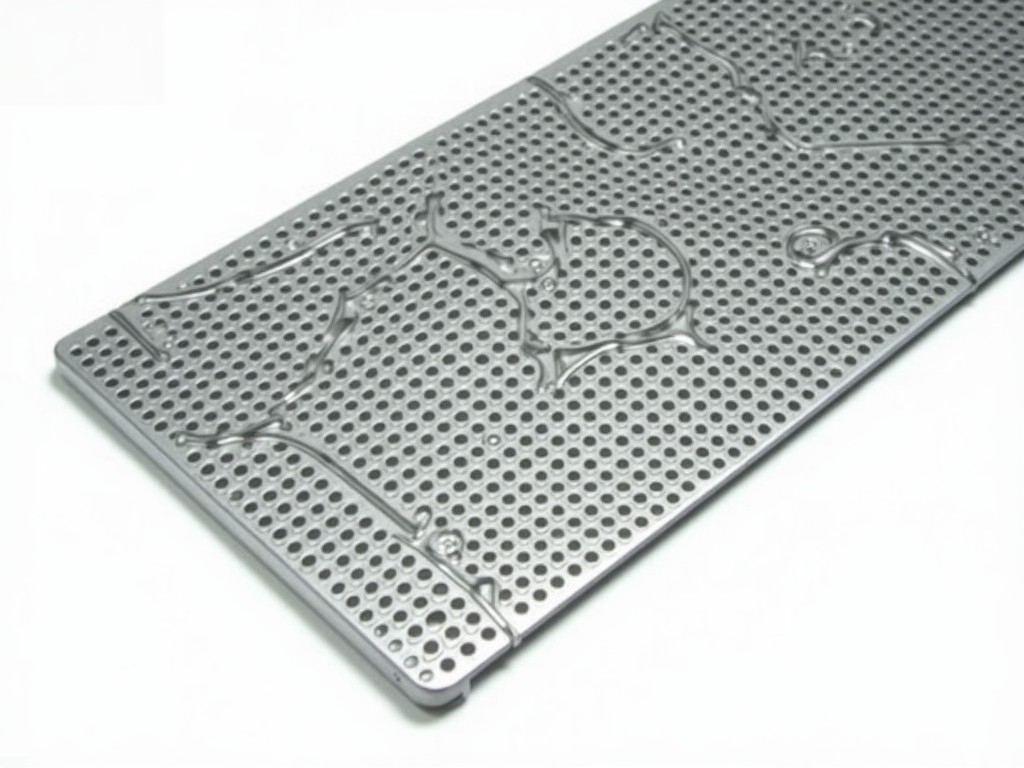
Perforated metal anti-slip tread plate combines structural rigidity with engineered surface texture to provide reliable traction in demanding industrial environments. Unlike solid tread plates, the perforated design allows drainage, debris shedding, and weight reduction while maintaining load-bearing capacity. This product is commonly specified for walkways, platforms, stair treads, and vehicle access points where slip resistance and environmental durability are critical.
Material Composition and Mechanical Properties
The base material is typically hot-rolled or cold-rolled carbon steel, stainless steel (grades 304 or 316), or aluminum alloy, selected based on corrosion exposure, load requirements, and weight constraints. Thickness ranges from 1.5 mm to 6.0 mm, with yield strength between 250 MPa and 550 MPa depending on material and temper. Perforation patterns are punched or laser-cut to maintain structural integrity, with open area typically between 15% and 35% to balance slip resistance with self-cleaning capability.
Surface Texture and Slip Resistance Performance
The anti-slip characteristic is achieved through a combination of raised lugs, embossed patterns, or embedded abrasive particles on the plate surface, often formed during the rolling or stamping process. These features create micro-abrasion points that increase the coefficient of friction, typically achieving R10 to R13 ratings under wet conditions per DIN 51130 or ASTM E303 standards. The perforations prevent liquid pooling and allow contaminants to fall through, reducing hydroplaning risk compared to solid-surfaced alternatives.
Standard and Customizable Dimensions
Standard stock widths range from 600 mm to 1250 mm, with lengths up to 6000 mm, though custom cutting to specific lengths is routine for site-specific installations. Hole diameters vary from 3 mm to 12 mm, arranged in staggered or staggered patterns to optimize strength and drainage. Edge treatments include mill edge, deburred, or safety-rolled edges to prevent handling injuries. Custom perforations, logos, or branding can be incorporated upon request for architectural or OEM applications.
Load Capacity and Structural Behavior
Load-bearing capacity depends on material thickness, perforation percentage, support spacing, and edge conditions. For example, a 3 mm thick steel plate with 25% open area, supported at 600 mm intervals, can safely sustain a uniform load of approximately 3.5 kN/m² with deflection under L/200. Finite analysis is recommended for critical applications involving dynamic loads, impact, or long spans. The perforated design reduces weight by up to 30% compared to solid plate of equivalent thickness, lowering structural demands on supporting frames.
Corrosion Protection and Surface Treatments
Carbon steel variants are commonly hot-dip galvanized to ISO 1461 or pre-galvanized for moderate environments. Stainless steel grades offer inherent resistance to chemical and atmospheric corrosion. Aluminum versions receive anodizing or powder coating for enhanced durability. In aggressive environments such as marine, chemical processing, or food production, passivation, electropolishing, or specialized coatings (e.g., epoxy, polyurethane) may be applied. Surface treatments do not compromise the anti-slip texture when applied correctly.
Typical Industrial Applications
- Industrial walkways and maintenance platforms in petrochemical plants, where oil resistance and drainage are essential.
- Stair treads in mining and quarry operations, providing traction under mud, dust, and heavy boot wear.
- Vehicle loading ramps and dock plates, reducing slip hazards during wet weather or fluid spillage.
- Food processing facility floors, allowing washdown water and particulates to drain while maintaining slip resistance.
- Architectural façades and sunshades, where perforated tread plate serves both functional and aesthetic purposes.
Quality Assurance and Inspection Criteria
Dimensional tolerances adhere to ASTM A1011 or EN 10029 for thickness and flatness, with hole placement accuracy within ±0.5 mm. Surface roughness is measured using profilometry to confirm anti-slip texture consistency. Visual inspection checks for burrs, deformation, or coating defects. Mechanical properties are verified via mill test reports, and corrosion resistance is validated through salt spray testing (ASTM B117) when required. All plates are deburred and inspected prior to packaging to ensure safe handling.
Packaging and Logistics Considerations
Plates are stacked horizontally on pallets with protective interleaving (paper or plastic) between layers to prevent surface abrasion. Edge protection uses cardboard or plastic corner guards. Securing is achieved with steel or polyester strapping. For export, moisture-barrier wrap and fumigated wooden pallets comply with ISPM 15 standards. Custom labeling, barcoding, or kit packaging for multi-component assemblies is available upon request. Typical pallet weight ranges from 800 kg to 1500 kg depending on material and dimensions.
Comparison with Alternative Tread Solutions
| Characteristic | Perforated Metal Tread Plate | Solid Metal Tread Plate | Fiberglass Grating | Wood-Composite Tread |
|---|---|---|---|---|
| Weight (kg/m²) | 15–25 | 20–35 | 8–12 | 10–18 |
| Drainage Efficiency | High | None | Very High | Low |
| Slip Resistance (Wet) | R11–R13 | R10–R12 | R11–R13 | R10–R12 |
| Impact Resistance | Excellent | Excellent | Good | Fair |
| Typical Lifespan (Industrial) | 15–25 years | 10–20 years | 10–15 years | 5–10 years |
Perforated metal tread plate offers a balanced solution where drainage, slip resistance, and structural durability are all required—outperforming solid plate in wet conditions and exceeding fiberglass in impact tolerance. Material selection allows optimization for weight, corrosion resistance, or cost based on project specifics.
Customization and Engineering Support
Manufacturers provide engineering consultation to determine optimal perforation pattern, material grade, and thickness based on load calculations, environmental exposure, and installation constraints. CAD files, load tables, and sample panels are available for evaluation. Custom punching for conduits, piping, or mounting holes can be integrated during production. Secondary operations such as bending, welding, or framing are offered to deliver ready-to-install components.
For technical specifications, quotation requests, or sample evaluation, contact our engineering team to discuss your project requirements.
More Products

Send Inquiry
If you are interested in our products, leave your information here and we will be in touch shortly.