Perforated Metal Mesh In Industrial Filtration Systems
Perforated metal mesh serves as a structural and functional component in industrial filtration systems, providing precise particle retention, flow distribution, and mechanical support for filter
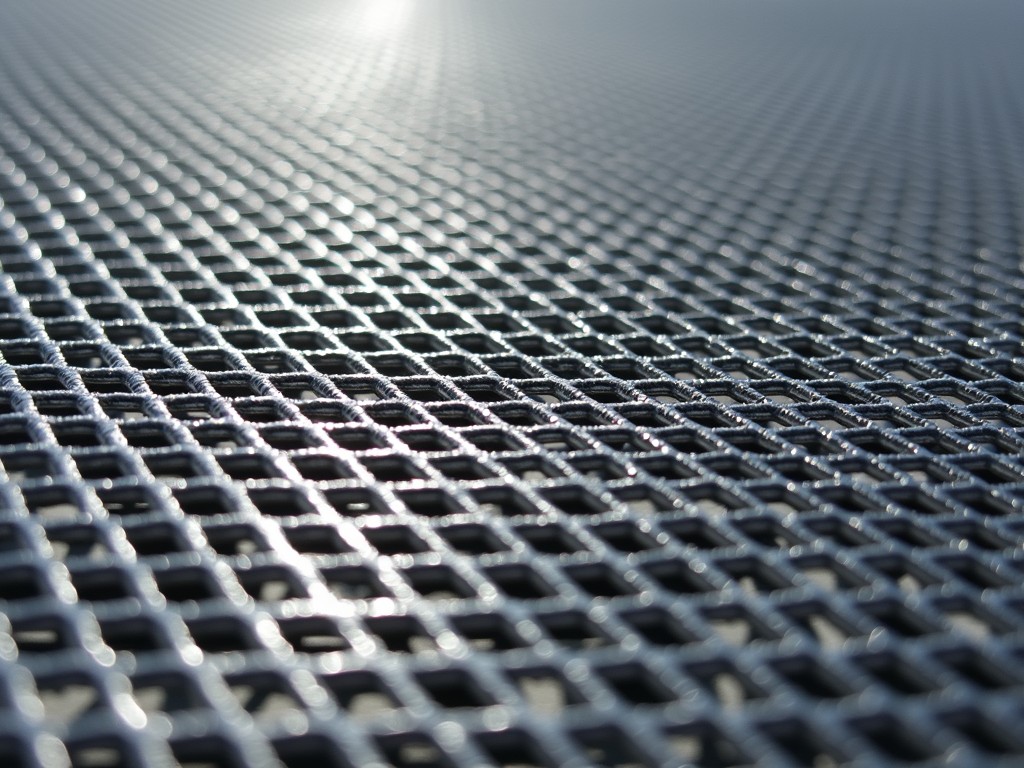
Perforated Metal Mesh for Industrial Filtration Systems
Perforated metal mesh serves as a structural and functional component in industrial filtration systems, providing precise particle retention, flow distribution, and mechanical support for filter media. Unlike woven wire mesh or synthetic alternatives, perforated metal offers uniform opening geometry, high open area control, and resistance to deformation under differential pressure. This makes it suitable for applications where consistent filtration performance and long-term dimensional stability are critical.
Material Selection and Mechanical Properties
The choice of base material directly affects corrosion resistance, temperature tolerance, and compatibility with process fluids. Common materials include stainless steel grades 304, 316L, and duplex alloys, selected based on chemical exposure and operating conditions. Carbon steel with protective coatings may be used in non-corrosive, high-temperature environments where cost is a primary factor. Material thickness typically ranges from 0.5 mm to 3.0 mm, influencing both structural rigidity and pressure drop characteristics.
Mechanical properties such as yield strength and elongation determine the mesh’s ability to withstand cleaning cycles, backwashing, and mechanical installation stresses. For example, 316L stainless steel perforated mesh maintains integrity at temperatures up to 800°C in intermittent service, while retaining sufficient ductility to avoid cracking during forming or welding. These properties are verified through mill test reports and lot-specific documentation.
Perforation Geometry and Flow Dynamics
The size, shape, and arrangement of perforations define the mesh’s filtration efficiency and hydraulic performance. Round holes are most common due to ease of fabrication and predictable flow behavior, but square, slotted, or hexagonal patterns may be specified to optimize particle capture or reduce clogging tendencies. Open area—the percentage of open surface relative to total area—typically ranges from 15% to 60%, directly affecting pressure drop and flow capacity.
Hole diameter and pitch (center-to-center spacing) are selected based on the target particle size and required flow rate. For instance, a 1.5 mm hole diameter with 3 mm pitch yields approximately 25% open area, suitable for pre-filtration in water treatment systems. Computational fluid dynamics (CFD) modeling is often used during design to predict velocity distribution and avoid localized high-pressure zones that could lead to media damage or uneven loading.
Typical Applications in Industrial Filtration
In liquid filtration systems, perforated metal mesh acts as a support layer for pleated filter cartridges, preventing media collapse under high differential pressure. It is also used in strainer baskets and pipeline filters where debris retention and cleanability are essential. The smooth surface facilitates backwashing and reduces fiber shedding compared to woven alternatives.
For gas-solid separation, such as in dust collection or pneumatic conveying systems, perforated plates distribute airflow evenly across filter bags or cartridges, improving pulse-cleaning effectiveness. In high-temperature environments like catalytic converters or incinerator pre-filters, heat-resistant alloys maintain perforation integrity without warping or oxidation-induced blockage.
In chemical processing, perforated mesh is used in catalyst retention screens and separator internals, where chemical compatibility and mechanical durability prevent fines migration and equipment damage. The ability to withstand frequent CIP (clean-in-place) cycles makes it suitable for pharmaceutical and food-grade applications when paired with appropriate surface finishes.
Customization and Design Considerations
Perforated metal mesh is routinely customized to match specific housing dimensions, flow requirements, and installation methods. Options include custom diameters, lengths, end configurations (flanged, flanged-and-grooved, or plain ends), and edge treatments such as rolling or welding to prevent sharp edges. For large-diameter vessels, segmented sections with overlapping joints or bolted flanges may be used to simplify installation and maintenance.
Surface finishes such as passivation, electropolishing, or PTFE coating are applied based on process needs. Passivation enhances corrosion resistance in stainless steel by removing free iron, while electropolishing reduces surface roughness to minimize particle adhesion. PTFE coatings may be used in sticky or viscous fluid applications to improve release properties during cleaning cycles.
Quality Control and Inspection Standards
Dimensional accuracy is verified using calibrated gauges and coordinate measuring machines (CMM) to ensure hole size, pitch, and overall dimensions meet tolerances—typically ±0.1 mm for hole diameter and ±0.25 mm for overall length. Visual inspection checks for burrs, deformation, or incomplete perforation, especially at edges and corners where tool wear may affect quality.
Material certification (e.g., EN 10204 3.1) is provided upon request to confirm alloy composition and mechanical properties. For critical applications, additional testing such as burst pressure testing, flow rate validation, or salt spray corrosion testing may be performed. All inspection records are retained for traceability and audit purposes.
Comparison with Alternative Filtration Supports
| Property | Perforated Metal Mesh | Woven Wire Mesh | Synthetic Mesh (PP/PET) |
|---|---|---|---|
| Temperature Resistance | Up to 800°C (316L SS) | Up to 400°C (SS) | Up to 150°C |
| Open Area Control | Precise, uniform | Limited by weave | Uniform but lower strength |
| Pressure Drop | Predictable, low turbulence | Higher due to flow disruption | Low, but deforms under load |
| Cleanability | Excellent, smooth surface | Good, but prone to trapping | Fair, may degrade with chemicals |
| Typical Use Case | High-pressure, high-temp, corrosive | General filtration, low cost | Disposable, low-temp filtration |
Ordering and Technical Support
To receive a quotation, provide the following details: material grade, thickness, hole diameter and pattern, open area requirement, overall dimensions (diameter × length or width × height), end configuration, and any required surface finish or certification. For complex geometries, a sketch or CAD file helps ensure accurate interpretation.
Lead times vary based on material availability and complexity, typically ranging from 2 to 4 weeks for standard configurations. Expedited options are available for critical maintenance shutdowns. Samples can be provided upon request for validation before full-scale production.
More Products

Send Inquiry
If you are interested in our products, leave your information here and we will be in touch shortly.