Perforated Metal Panel Railing Top Supplier
Selecting a railing top system requires more than aesthetic preference—it demands structural integrity, corrosion resistance, and long-term performance under environmental load. Perforated metal
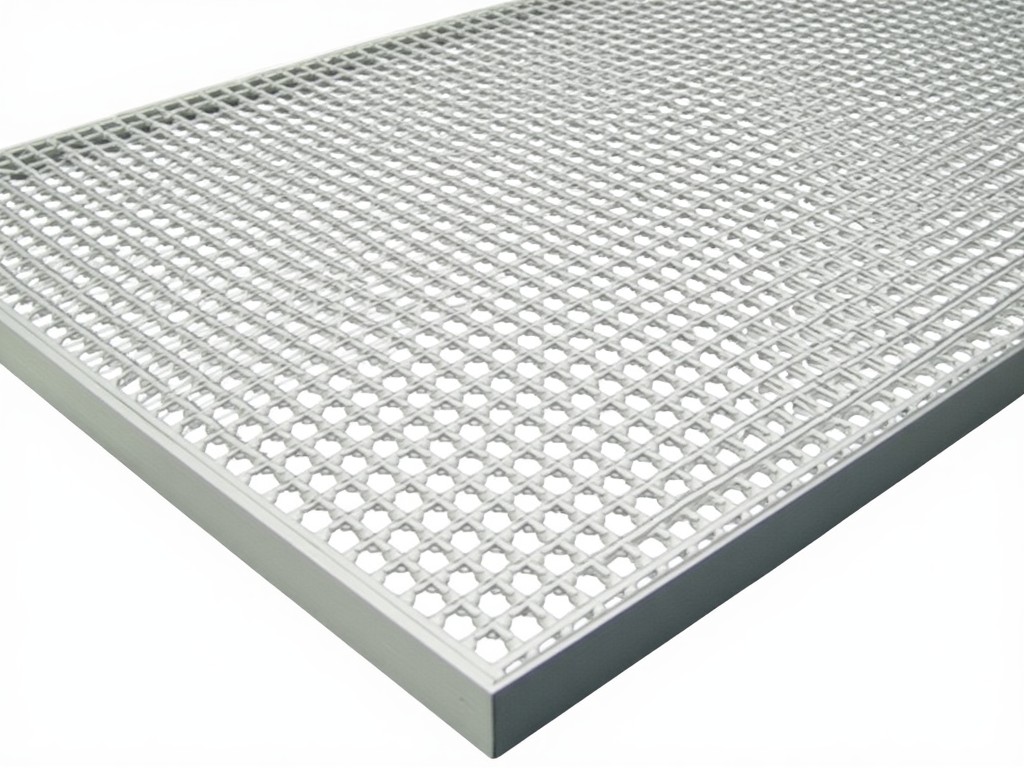
Perforated Metal Panel Railing Top Supplier
Selecting a railing top system requires more than aesthetic preference—it demands structural integrity, corrosion resistance, and long-term performance under environmental load. Perforated metal panel railing tops combine safety functionality with architectural expression, but their effectiveness depends entirely on precise engineering in hole pattern, material thickness, edge treatment, and attachment methodology. This page explains the technical considerations that distinguish a capable supplier from a generic fabricator, focusing on measurable characteristics that impact service life, maintenance frequency, and compliance with international safety standards.
Structural Performance Characteristics
The load-bearing capacity of a perforated railing top is not determined by the base material alone but by the net sectional area after perforation. A 1.5mm thick 304 stainless steel panel with 30% open area retains approximately 70% of its original bending strength, but stress concentration around hole edges can reduce fatigue resistance if hole diameter-to-pitch ratio exceeds 0.4. Reputable suppliers calculate effective moment of inertia using finite element analysis validated by physical testing, not nominal thickness. For guardrail applications meeting OSHA 1910.29 or EN 13374, the top rail must withstand a 200 lb concentrated load at any point with deflection limited to L/180, which requires verifying both material yield strength and connection stiffness.
Material Selection and Environmental Resistance
Material choice dictates service life in exposed environments. 304 stainless steel offers adequate resistance to urban atmospheric corrosion but is prone to pitting in chloride-rich zones (coastal, de-icing salt exposure) where 316L with 2-3% molybdenum content reduces corrosion rate by 5-10x. Aluminum alloys like 5052-H32 provide excellent weight-to-strength ratio and natural oxide layer protection but exhibit lower modulus of elasticity (69 GPa vs 193 GPa for steel), requiring thicker sections to limit deflection. Carbon steel with hot-dip galvanization (Z275 coating) provides cost-effective barrier protection but requires regular inspection for coating damage at welds and cut edges where sacrificial protection is compromised.
Perforation Pattern Engineering
Hole geometry influences both function and structural behavior. Round holes (most common) provide uniform stress distribution; square or slotted patterns increase open area but create stress risers at corners. Pitch (center-to-center distance) directly affects open area percentage: a 6mm diameter hole on 10mm pitch yields 28% open area, while the same hole on 14mm pitch drops to 14%. Edge distance—the margin between hole edge and panel border—must be ≥1.5x hole diameter to prevent tear-out during forming or loading. Suppliers offering custom perforation should provide CAD models showing hole layout relative to bending lines and connection points to avoid weakening critical zones.
Edge Treatment and Connection Design
Unfinished perforated edges are prone to stress cracking and corrosion initiation. Proper treatment includes deburring to remove burrs >0.1mm, followed by either radius rolling (typically 0.5-1.0mm radius) or welded edge straps matching base material. Connection to posts must accommodate thermal expansion (±1.2mm/m for steel, ±2.3mm/m for aluminum) while maintaining load path integrity. Slotted connections with oversized holes allow movement; fixed connections require flexibility via neoprene pads or spring washers. Welded attachments should use full-penetration butt joints or fillet welds sized to 0.7x material thickness, with post-weld passivation for stainless steel to restore chromium oxide layer.
Quality Control and Traceability
Consistent performance requires process control beyond visual inspection. Material test reports (MTRs) should verify chemical composition and mechanical properties per ASTM A240/A666 for stainless or ASTM B209 for aluminum. Perforation accuracy is validated via optical comparators or CMM checking hole diameter (±0.1mm), positional tolerance (±0.2mm), and burr height. Dimensional inspection of finished panels includes flatness (max 3mm deviation over 1m length), squareness (<0.5mm/m), and edge straightness. Suppliers serving regulated industries maintain lot traceability linking raw material coil to finished panel via unique identifiers, enabling root cause analysis if field performance deviates.
Applications Requiring Engineered Solutions
Perforated railing tops are selected not for generic use but for specific performance demands. In offshore platforms, 316L panels with 20% open area and welded edge straps reduce wind load while preventing tool drop hazards; the smooth, deburred surface minimizes snagging risks for personnel fall arrest systems. Architectural pedestrian bridges often specify powder-coated 5052-H32 aluminum with custom slotted patterns (achieving 35% open area) to balance visibility, weight reduction (<8kg/m²), and resistance to de-icing chemicals used in northern climates. Industrial mezzanines in food processing facilities require 304 stainless steel with electropolished finish (Ra <0.8μm) and 6mm diameter holes on 10mm pitch to facilitate cleaning while preventing harborage points for contaminants—here, the perforation pattern is designed to allow spray penetration without creating crevices that trap residue.
Customization Logic and Project Integration
True customization begins with understanding load paths, environmental exposure, and maintenance access—not simply hole size. A supplier should request structural calculations showing applied loads, environmental data (chloride levels, UV exposure, temperature cycling), and installation details (post spacing, connection type) before proposing a perforation pattern. For example, a coastal stair tower requiring 1.5kN/m lateral load resistance might need 1.8mm 316L with 25% open area and staggered hole layout to maximize moment of inertia, while an indoor parking garage rail prioritizing vandal resistance could use 1.5mm cold-rolled steel with powder coating and 4mm holes on 8mm pitch (20% open area) where aesthetics are secondary to impact resistance. The ability to justify hole pattern, material grade, and thickness with engineering rationale—not just catalog options—defines a technical supplier.
When evaluating a perforated metal panel railing top supplier, prioritize those who discuss net sectional area, stress concentration factors, and corrosion kinetics over those who emphasize finish appearance or generic durability claims. Request documentation showing how their perforation patterns are validated for structural performance, not just open area percentage. A supplier that can explain why a specific hole pitch was chosen for your load case, or how edge treatment prevents corrosion initiation at weld points, demonstrates the technical depth necessary to reduce long-term project risk. To initiate a technical discussion about your railing top requirements—including load specifications, environmental conditions, and connection details—submit your project parameters for review.
More Products

Send Inquiry
If you are interested in our products, leave your information here and we will be in touch shortly.