Perforated Metal Radiator Grilles
Perforated metal radiator grilles serve as protective and decorative covers for heat exchangers in HVAC systems, industrial machinery, and transportation equipment. Their primary function is to allow
Perforated Metal Radiator Grilles
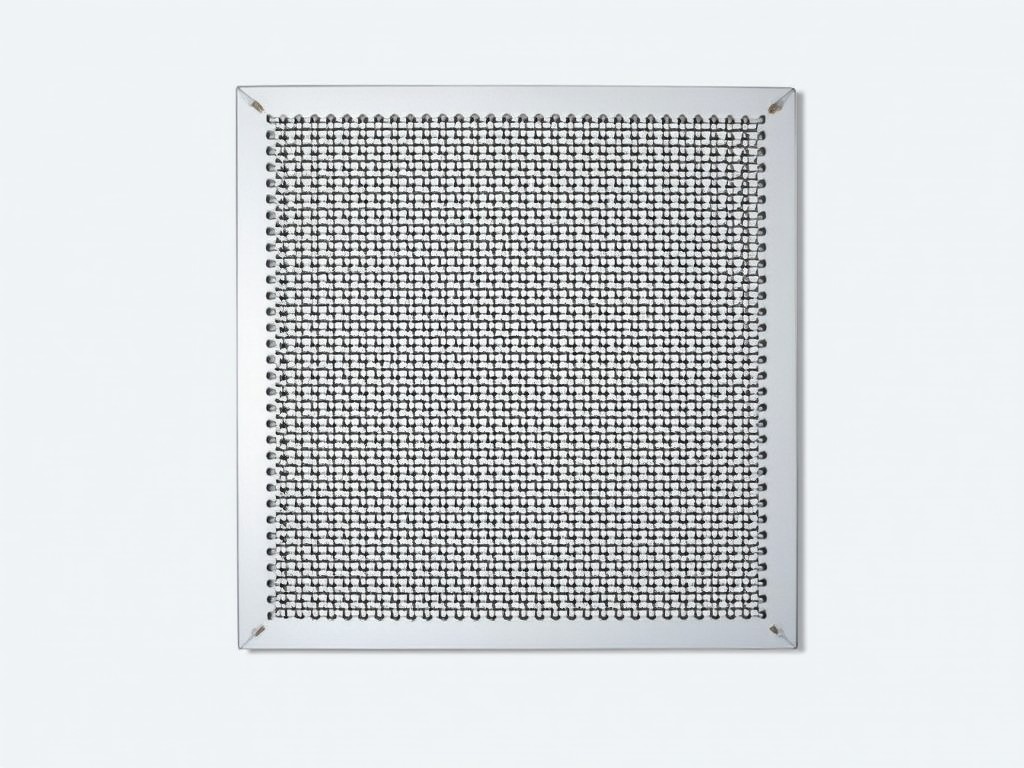
Perforated metal radiator grilles serve as protective and decorative covers for heat exchangers in HVAC systems, industrial machinery, and transportation equipment. Their primary function is to allow unimpeded airflow while shielding radiator fins from physical damage, debris ingress, and vandalism. Unlike solid covers, perforated designs maintain thermal efficiency by minimizing pressure drop across the core.
The perforation pattern—hole size, shape, spacing, and open area percentage—is engineered to balance structural integrity with hydraulic performance. Typical open area ranges from 30% to 60%, depending on application requirements. Material selection, thickness, and edge treatment are determined by environmental exposure, mechanical loads, and service life expectations.
Material Selection and Corrosion Resistance
Common materials include cold-rolled steel, hot-dip galvanized steel, stainless steel (grades 304 and 316), and aluminum alloys. Cold-rolled steel is suitable for indoor, dry environments when coated with powder paint or e-coat. Hot-dip galvanizing provides sacrificial protection for outdoor units in moderate climates. Stainless steel resists corrosion in coastal, chemical, or high-humidity settings without additional coatings.
Aluminum offers natural oxidation resistance and lower weight, beneficial for mobile equipment or where structural load is a concern. Material thickness typically ranges from 0.8 mm to 2.0 mm, selected based on panel size, unsupported span, and impact resistance needs. Thicker gauges prevent deflection under wind load or accidental impact, maintaining grille alignment over time.
Surface treatments such as powder coating, anodizing (for aluminum), or passivation (for stainless steel) enhance durability and appearance. Coating adhesion is critical; improper pretreatment leads to premature failure. Manufacturers should specify pretreatment standards (e.g., phosphate or zirconium-based) and coating thickness (e.g., 60–80 µm for powder coat) to ensure long-term performance.
Perforation Design and Airflow Characteristics
The perforation pattern directly affects airflow resistance and noise transmission. Round, square, slotted, and hexagonal holes are common, each with distinct flow coefficients. Round holes offer predictable performance and ease of manufacturing. Slotted perforations can align with fin direction to reduce turbulence. Open area percentage is calculated as the ratio of hole area to total panel area.
For example, a 2 mm diameter hole on a 5 mm staggered pitch yields approximately 40% open area. Increasing hole size or decreasing pitch raises open area but reduces structural strength. Engineers use pressure drop curves (ΔP vs. airflow rate) to validate that the grille does not exceed allowable resistance—typically less than 15 Pa at rated fan speed—for the associated heat exchanger.
Acoustic considerations may require specific patterns to attenuate fan noise. Perforated panels can act as Helmholtz resonators when backed by an air cavity, absorbing specific frequencies. Background noise reduction of 3–5 dB(A) is achievable in ductwork applications when cavity depth and perforation diameter are tuned to the dominant frequency.
Structural Design and Mounting Options
Grilles are fabricated as flat panels, curved sections, or custom frames to match radiator geometry. Edge treatments include folded flanges, rolled edges, or welded frames for rigidity. Flange height typically ranges from 10 mm to 25 mm, providing a mounting surface and preventing edge deformation. Mounting methods vary by application: screw fasteners, spring clips, magnetic retainers, or welded brackets.
For removable access, quick-release mechanisms such as toggle latches or quarter-turn fasteners are preferred. In high-vibration environments, isolators or rubber grommets prevent fatigue cracking at attachment points. Expansion gaps of 2–5 mm are recommended between grille and radiator headers to accommodate thermal expansion without inducing stress.
Wind load calculations are essential for outdoor installations. ASCE 7-22 standards provide pressure coefficients for perforated screens; solidity ratio (1 – open area) determines force coefficients. A grille with 50% solidity experiences approximately 70% of the wind load of a solid panel of the same size. Anchoring systems must resist both positive and negative pressure cycles to prevent detachment or oscillation.
Typical Applications Across Industries
In commercial HVAC, perforated grilles protect rooftop condensers and air-handling units from hail, bird strikes, and unauthorized access while maintaining serviceability. The open area is selected to match fan static pressure capabilities, ensuring no more than 10% reduction in airflow compared to an unobstructed unit. Coastal installations often specify 316 stainless steel with passive ventilation to prevent salt accumulation.
Power generation facilities use grilles on transformer radiators and engine charge air coolers. Here, resistance to industrial dust, sand, and chemical vapors is critical. Double-perforation layers or fine mesh backing may be added to block particulates without significantly increasing pressure drop. Aluminum is favored in generator enclosures due to its non-magnetic properties and light weight.
Transportation applications—rail, marine, and off-road vehicles—require grilles that withstand constant vibration, stone impact, and thermal cycling. Stainless steel or hardened steel with textured powder coat resists abrasion. Curved panels follow the contours of locomotive radiators or marine keel coolers. Magnetic mounting allows rapid removal for maintenance in confined spaces.
Quality Control and Testing Protocols
Dimensional accuracy is verified using calipers, coordinate measuring machines (CMM), or optical scanners. Hole registration tolerance is typically ±0.1 mm for patterned consistency. Flatness is measured across the panel surface; deviation should not exceed 1.5 mm per meter to ensure proper seating and avoid stress concentrations. Edge straightness is checked against a reference bar or laser guide.
Material thickness is confirmed via micrometer readings at multiple points. Coating thickness is tested with magnetic or eddy current gauges per ASTM D7091. Adhesion is assessed via cross-hatch tape test (ASTM D3359), requiring minimum 4B rating. For stainless steel, passivation validity is confirmed with copper sulfate or ferricyanide tests per ASTM A967.
Pressure drop testing is conducted in a controlled wind tunnel or flow bench. Airflow is measured with an anemometer or flow hood; pressure differential is recorded using a manometer. Results are compared against baseline (no grille) data to calculate resistance coefficient. Salt spray testing (ASTM B117) evaluates coating durability; 500 hours to white rust and 1000 hours to red rust are common benchmarks for galvanized and coated steel.
Customization and Engineering Support
Customization begins with application data: radiator dimensions, airflow rate, static pressure available, environmental conditions, and mounting constraints. Engineers use this input to model perforation patterns, select material thickness, and predict pressure drop. CAD files (STEP, DXF, DWG) are exchanged for geometry validation before tooling.
Tooling costs depend on pattern complexity and panel size. Standard round or square perforations use off-the-shelf punches; custom shapes (e.g., logo, louvers) require specialized dies. Prototyping via laser cutting or CNC punching allows design validation without hard tooling. For volumes over 50 units, stamping becomes economical.
Surface finish options include standard powder coat colors (RAL-matched), custom hues, textured finishes for glare reduction, or clear coats over brushed metal. Anodizing thickness for aluminum ranges from 10 µm (clear) to 25 µm (dyed). Silk screening or laser etching adds identification marks or safety warnings without compromising coating integrity.
Packaging and Logistics Considerations
Grilles are packaged to prevent surface damage during transit. Interleaving with polyethylene foam or kraft paper avoids scratching between panels. Corner protectors and edge guards mitigate impact damage. Flat panels are stacked on pallets with maximum height of 1.2 m to ensure stability. Curved or nested sections use custom cradles to maintain shape.
For export, moisture-barrier bags and desiccant packs prevent condensation-induced corrosion. Packaging markings include part number, quantity, material specification, and handling instructions (e.g., “Keep Dry”, “Do Not Stack”). Pallets are secured with stretch wrap and strapping. Weight per pallet typically ranges from 200 kg to 800 kg, depending on material and size.
Lead time depends on material availability, tooling requirements, and finishing processes. Standard materials with existing tooling ship in 2–3 weeks. Custom perforation or coating adds 1–2 weeks. Expedited options are available for critical spares. Shipping terms (EXW, FOB, CIF) are defined at quotation; customers should confirm import regulations for coated metals in their jurisdiction.
Comparison of Common Materials
| Property | Cold-Rolled Steel (Painted) | Hot-Dip Galvanized Steel | Stainless Steel 304 | Stainless Steel 316 | Aluminum Alloy (5052) |
|---|---|---|---|---|---|
| Typical Thickness Range | 0.8–2.0 mm | 0.8–2.0 mm | 0.8–2.0 mm | 0.8–2.0 mm | 1.0–2.5 mm |
| Base Corrosion Resistance | Low (requires coating) | Moderate (zinc sacrificial) | High (passive Cr oxide) | Very High (Mo-enhanced) | Medium (self-healing Al oxide) |
| Typical Coating | Powder coat (60–80 µm) | None (zinc layer) | Passivation or clear coat | Passivation or clear coat | Anodizing or powder coat |
| Relative Cost (Index) | 1.0 | 1.2 | 2.5 | 3.0 | 1.8 |
| Weight (kg/m² at 1.5 mm) | 11.8 | 11.8 | 11.8 | 11.8 | 4.1 |
| Max Service Temp (Continuous) | 250°C (coating limit) | 250°C (coating limit) | 400°C | 400°C | 250°C |
*Note: Values are typical ranges. Actual performance depends on specific alloy, coating system, and environmental exposure. Confirm suitability with material data sheets and application testing.*
For technical consultation, quotation, or sample requests, please provide your radiator dimensions, required airflow, environmental conditions, and mounting preferences. Our engineering team will return a detailed proposal including perforation analysis, material recommendation, and lead time within one business day.
Request Technical Quote
More Products

Send Inquiry
If you are interested in our products, leave your information here and we will be in touch shortly.