Perforated Metal Sheet 4X8
A 4x8 perforated metal sheet refers to a standard panel measuring 4 feet in width and 8 feet in length, manufactured by creating a pattern of holes through a metal substrate using precision punching
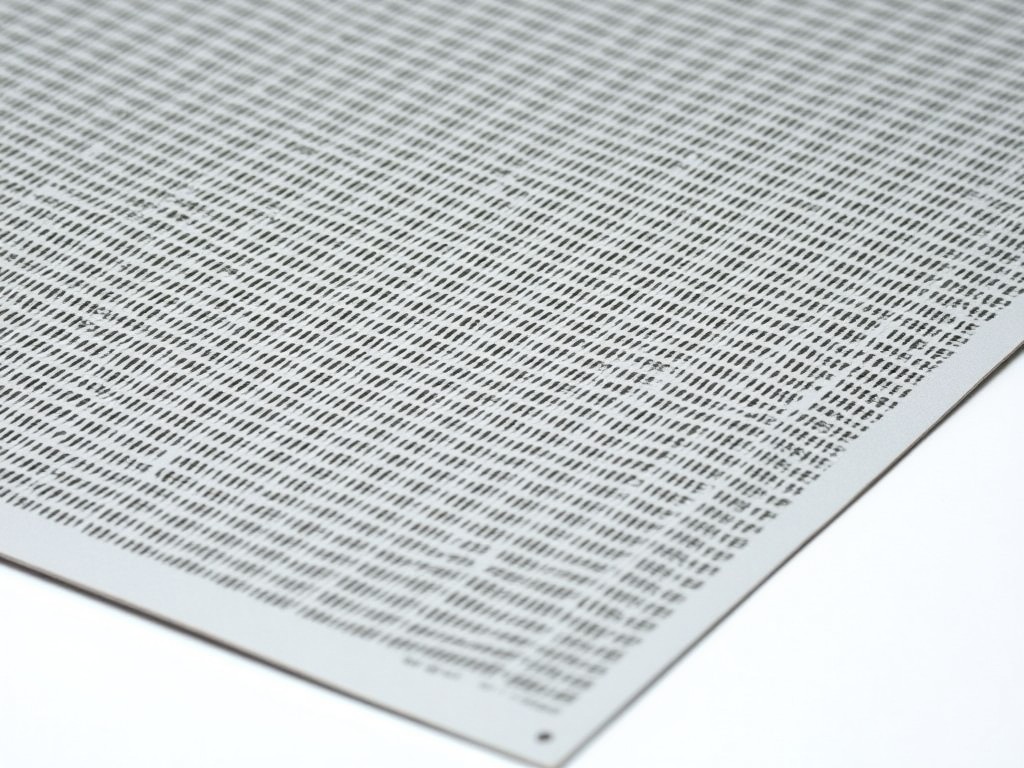
Perforated Metal Sheet 4x8
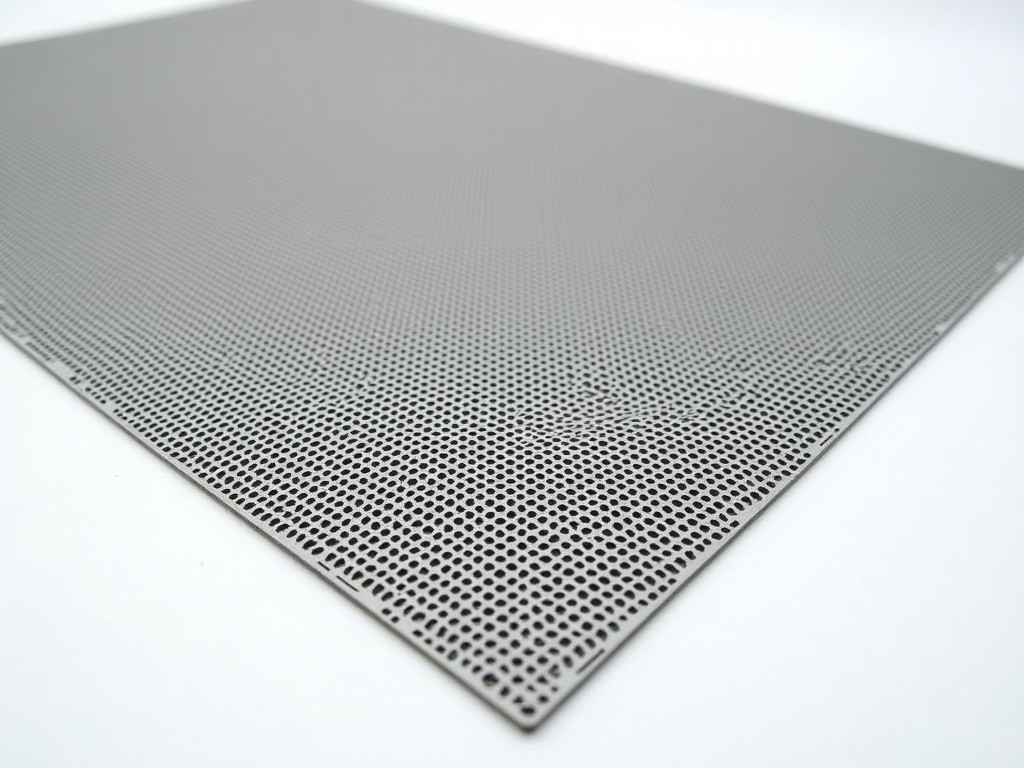
A 4x8 perforated metal sheet refers to a standard panel measuring 4 feet in width and 8 feet in length, manufactured by creating a pattern of holes through a metal substrate using precision punching or laser perforation techniques. This format aligns with common structural and architectural panel dimensions used across North American industrial facilities, enabling efficient material utilization and reducing on-site cutting requirements. The perforations serve functional purposes beyond aesthetics, including airflow management, light diffusion, sound attenuation, and particulate filtration, depending on hole size, pattern, and open area percentage.
Material selection for 4x8 perforated sheets depends on environmental exposure, load requirements, and corrosion resistance needs. Common substrates include cold-rolled steel (CRS), hot-rolled steel (HRS), galvanized steel (G90 or Z275 coating), stainless steel (grades 304, 316L), and aluminum alloys (3003-H14, 5052-H32). Thickness typically ranges from 0.020 inch (0.5 mm) for lightweight screening to 0.250 inch (6.35 mm) for structural walkways or machine guards, with tolerances adhering to ASTM A1008/A1018 for steel and ASTM B209 for aluminum.
Open area—the percentage of the sheet surface occupied by holes—directly influences performance characteristics. For example, a 40% open area with 1/8-inch round holes on 3/16-inch staggered centers provides balanced airflow and structural integrity, suitable for HVAC plenum covers. Higher open areas (60%+) are used in dryer screens or acoustic panels where airflow or sound transmission is prioritized, while lower open areas (<20%) serve as protective guards or decorative screens where visibility restriction is desired. Hole shapes include round, square, slotted, hexagonal, and custom geometries, each affecting flow dynamics, stress distribution, and cleaning accessibility.
Technical Specifications and Performance Factors
Dimensional accuracy is critical for interchangeability in modular systems. Standard 4x8 sheets are manufactured to nominal dimensions of 48.000" x 96.000", with length and width tolerances typically held to ±0.0625 inch (1.6 mm) for sheared edges and ±0.125 inch (3.2 mm) for mill edges. Hole placement follows ISO 9001-controlled tooling, with positional tolerance of ±0.010 inch (0.25 mm) from true position for round holes, ensuring consistent pattern repeatability across batches. Edge conditions—mill edge, slit edge, or deburred edge—are specified per application; deburred edges reduce handling hazards in frequently accessed areas like machinery guards.
Structural performance under load depends on material thickness, hole pattern, and unsupported span. A 16-gauge (0.060 inch) CRS sheet with 40% open area round holes on 3/16-inch staggered centers can safely support a uniform load of approximately 25 psf over a 24-inch span when simply supported at ends, based on effective section modulus calculations accounting for material removed by perforations. For dynamic loads or vibration environments, such as conveyor guards or machine enclosures, natural frequency analysis is recommended to avoid resonance; perforated sheets typically exhibit 15-30% lower stiffness than solid counterparts of equivalent thickness due to reduced moment of inertia.
Corrosion resistance varies significantly by material and finish. Uncoated CRS requires painting or powder coating for outdoor use, while G90 galvanized steel provides sacrificial protection suitable for indoor industrial environments with moderate humidity. Stainless steel 304 resists atmospheric corrosion and mild chemical exposure, whereas 316L adds molybdenum for enhanced resistance to chlorides and acids—common in food processing or marine settings. Aluminum naturally forms a protective oxide layer; anodizing or clear coat finishes further enhance durability in architectural applications where appearance longevity is critical.
Applications Across Industrial Sectors
In HVAC systems, 4x8 perforated sheets function as diffuser panels in raised access floors or return air plenums, where the open area percentage is engineered to match required cfm per square foot while minimizing pressure drop. A 50% open area with 3/32-inch holes on 1/8-inch staggered centers delivers low noise and even airflow distribution in computer room air conditioning (CRAC) units, reducing turbulence that can contribute to particulate entrainment. The standard 4x8 size allows seamless integration with standard floor tile grids (24"x24"), minimizing cutting waste during installation.
Machine guarding applications prioritize operator safety and visibility without compromising structural integrity. A 14-gauge (0.075 inch) perforated stainless steel sheet with 1/4-inch square holes on 3/8-inch centers provides 30% open area, allowing clear sightlines to moving parts while meeting OSHA 1910.212 requirements for point-of-operation guarding. The hole size prevents penetration by fingers or tools (<1/4 inch per ISO 13857), and the 4x8 format enables full-height enclosure panels for common machine footprints like CNC lathes or hydraulic presses, reducing joint count and potential failure points.
Acoustic panels in manufacturing facilities use perforated metal as a protective face over sound-absorbing substrates like mineral wool or foam. The perforation pattern acts as an impedance-matching layer; for mid-frequency noise control (500–2000 Hz), a 20% open area with 1/16-inch holes on 3/16-inch centers allows sound waves to penetrate the absorber while reflecting higher frequencies. The 4x8 dimension matches common wall and ceiling stud spacing (16" or 24" on center), enabling direct attachment to furring channels without intermediate framing, reducing labor and material costs in retrofit projects.
Material Comparison Table
| Material | Typical Thickness Range | Corrosion Resistance | Relative Cost Index | |
|---|---|---|---|---|
| Cold-Rolled Steel (CRS) | 0.020" - 0.250" | Low (requires coating) | 1.0 (baseline) | |
| Galvanized Steel (G90) | 0.020" - 0.188" | Moderate (indoor/sheltered) | 1.2 | |
| Stainless Steel 304 | 0.018" - 0.125" | Good (urban/industrial) | 2.5 | |
| Stainless Steel 316L | 0.018" - 0.125" | Excellent (marine/chemical) | 3.2 | |
| Aluminum 3003-H14 | 0.025" - 0.125" | Good (natural oxide) | 1.8 | |
Note: Cost index is relative to CRS = 1.0; actual pricing varies with market conditions, volume, and finish. Thickness limits reflect practical perforability constraints; thinner gauges may tear during punching, thicker gauges require higher tonnage or laser processing.
Customization and Ordering Considerations
Beyond standard 4x8 dimensions, custom lengths and widths are available to minimize scrap in specific installations. For example, a 48" x 120" sheet reduces end joints in long ductwork runs, while a 24" x 96" strip suits narrow conveyor side guards. Hole patterns can be varied across the sheet—such as graduated open area for balanced airflow in plenum systems—or localized for mounting holes, tabs, or forming reliefs. Secondary operations like bending, rolling, or welding are performed post-perforation to avoid hole distortion; minimum bend radius increases with material thickness and hole proximity to the bend line, typically requiring 2x thickness for CRS and 2.5x for stainless to prevent cracking.
Surface treatments enhance durability and appearance. Powder coating provides uniform color and UV resistance for outdoor architectural screens, with standard RAL colors available and custom matches upon request. Anodized aluminum offers clear, bronze, or black finishes with enhanced abrasion resistance. For food-grade or pharmaceutical applications, electropolished stainless steel (Ra < 16 µin) ensures cleanability and resists bacterial adhesion. All finishes are applied after perforation to maintain coating integrity over hole edges, which are otherwise vulnerable to corrosion initiation.
Quotation requires specific inputs: base material and grade, thickness, hole size and pattern (or open area target), edge condition, quantity, and any secondary operations or finishes. Drawings or sketches clarifying hole layout relative to sheet edges help avoid misinterpretation, especially for non-symmetrical patterns. Tolerance expectations should be communicated—general commercial tolerances (±0.0625" on dimensions, ±0.010" hole position) suffice for most applications, while tighter tolerances (±0.031", ±0.005") are available for precision fixtures at additional cost. Lead time typically ranges from 2–4 weeks for stock materials with standard perforation, extending to 6–8 weeks for exotic alloys, custom tooling, or post-processing.
For technical consultation on material selection, hole pattern optimization, or integration into your specific equipment or facility design, contact our engineering team to discuss your project requirements.
More Products

Send Inquiry
If you are interested in our products, leave your information here and we will be in touch shortly.