Perforated Metal Sheet Facade
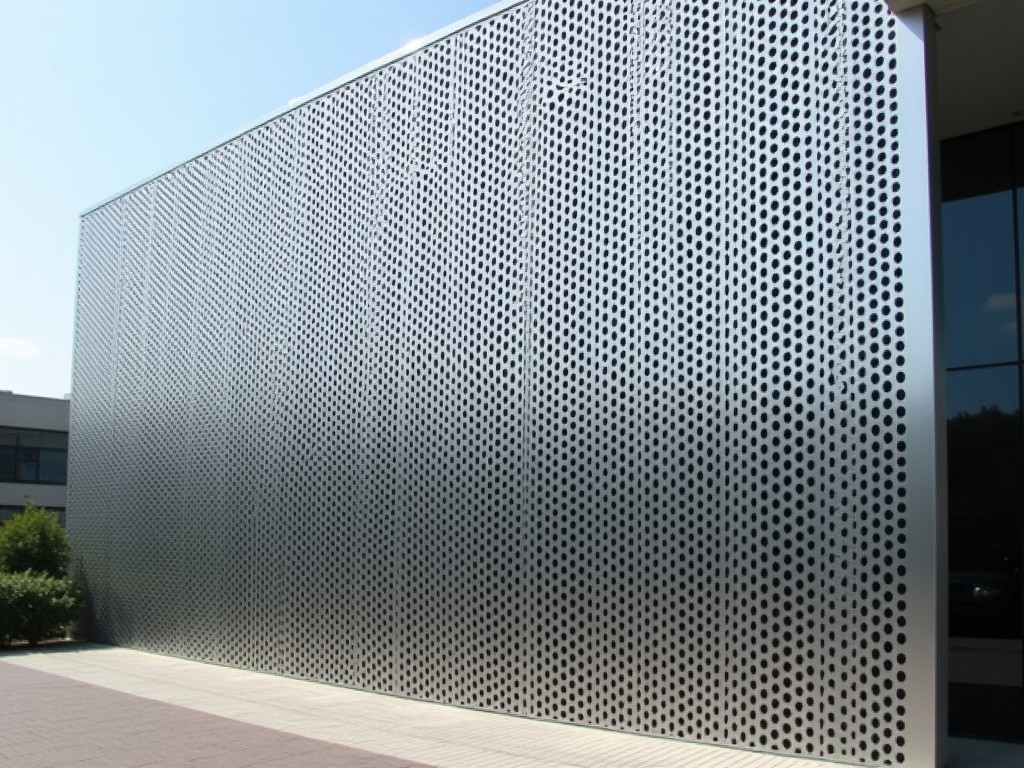
Perforated metal sheet facades serve as exterior cladding systems that manage solar gain, provide ventilation, and contribute to building aesthetics through controlled light transmission and shadow
Perforated Metal Sheet Facade
Architectural Function and Performance
Perforated metal sheet facades serve as exterior cladding systems that manage solar gain, provide ventilation, and contribute to building aesthetics through controlled light transmission and shadow patterning. The perforations allow airflow while maintaining structural integrity, reducing wind load compared to solid panels. Engineers select hole size, pattern, and open area percentage based on specific environmental conditions and design intent. This balance of function and form makes perforated facades suitable for high-rise offices, transit stations, cultural institutions, and industrial buildings where both performance and visual impact are critical.
Material Selection and Properties
Common materials include aluminum alloys (3003, 5052), stainless steel (304, 316), galvanized steel, and corten steel, each chosen for corrosion resistance, strength-to-weight ratio, and finish durability. Aluminum offers lightweight properties ideal for retrofits, while stainless steel provides longevity in coastal or industrial environments. Material thickness typically ranges from 0.8 mm to 3.0 mm depending on span, load requirements, and perforation density. Surface treatments such as anodizing, powder coating, or PVDF finishing enhance UV resistance and color stability over decades of exposure.
Perforation Patterns and Open Area
The open area percentage—calculated as the ratio of hole area to total panel area—directly influences airflow, light diffusion, and acoustic performance. Standard patterns include round, square, slot, and hexagonal holes, arranged in staggered or straight grids. Typical open area ranges from 15% to 40%, with higher percentages used for ventilation screens and lower percentages for solar shading. Hole diameter and spacing are engineered to prevent localized stress concentrations while achieving desired visual effects. Custom patterns, including logos or gradients, are achievable through CNC punching or laser cutting.
Structural Considerations and Installation
Facade panels are typically installed as part of a rainscreen system, mounted onto aluminum or steel subframes with standoff brackets to create a ventilated cavity. This design allows drainage, reduces thermal bridging, and accommodates differential movement. Panel edges are often folded or flanged for rigidity and to conceal fasteners. Wind load calculations must account for reduced solidity due to perforations, often resulting in lower pressure coefficients compared to solid cladding. Deflection limits are governed by local building codes, with typical allowable span-to-deflection ratios of L/180 to L/240.
Comparison of Common Configurations
| Parameter | Perforated Aluminum | Perforated Stainless Steel | Perforated Corten Steel |
|---|---|---|---|
| Typical Thickness | 1.0–2.0 mm | 1.2–2.5 mm | 1.5–3.0 mm |
| Weight (kg/m²) | 2.7–5.4 | 3.0–6.8 | 4.0–8.1 |
| Corrosion Resistance | Good (with coating) | Excellent | Forms protective patina |
| Common Open Area | 20–35% | 15–30% | 20–40% |
| Typical Use Case | Commercial retrofits, lightweight frames | High-exposure, coastal, industrial | Architectural accents, rustic aesthetics |
Customization and Fabrication Options
Beyond standard perforation, facades can be customized with variable hole sizes to create image gradients, integrated lighting channels, or acoustic backing materials. Panels can be curved, bent, or formed into complex geometries using CNC press brakes or roll forming, subject to material elongation limits. Edge treatments include hemmed, flanged, or returned edges for safety and rigidity. Fastening methods range from exposed screws with decorative caps to concealed clip systems that maintain a seamless appearance. All fabrication follows ISO 9001-aligned processes with dimensional tolerances typically held to ±0.5 mm on hole position and ±1.0 mm on overall dimensions.
Quality Control and Testing
Each production batch undergoes incoming material verification, including mill test reports for alloy composition and mechanical properties. During fabrication, hole alignment and pattern consistency are checked using optical gauges or laser scanners. Finished panels are inspected for coating adhesion (per ASTM D3359), flatness, and dimensional accuracy. For projects requiring performance validation, air flow resistance and sound transmission loss can be tested in accordance with AMCA 500-L and ASTM E90, respectively. Traceability is maintained from raw material to final shipment, supporting project documentation and warranty claims.
Applications in Modern Construction
Perforated metal facades are selected for parking structures where ventilation and security are both required, allowing airflow while preventing unauthorized access. In educational buildings, they reduce solar heat gain on glazing while maintaining daylight visibility, lowering HVAC loads. Cultural venues use patterned perforations to create dynamic light effects that change with sun angle, enhancing occupant experience. Industrial facilities apply them as machine enclosures or ventilation screens that resist corrosion and facilitate maintenance access. The adaptability of perforation design enables architects to address functional needs without compromising aesthetic intent.
For project-specific configurations, including material selection, perforation pattern development, structural calculations, and finish options, contact our technical team to discuss requirements. We provide engineering support from concept through fabrication to ensure performance, compliance, and design intent are met.
Request Technical Consultation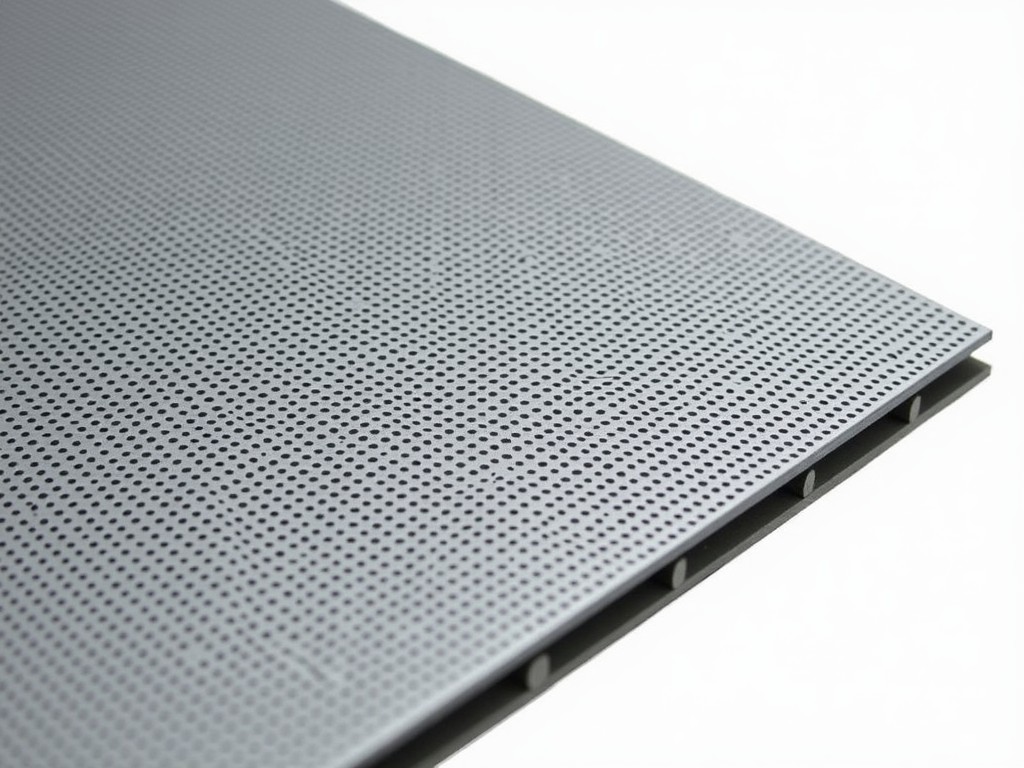
More Products

Send Inquiry
If you are interested in our products, leave your information here and we will be in touch shortly.