Perforated Metal Sheet For Sale
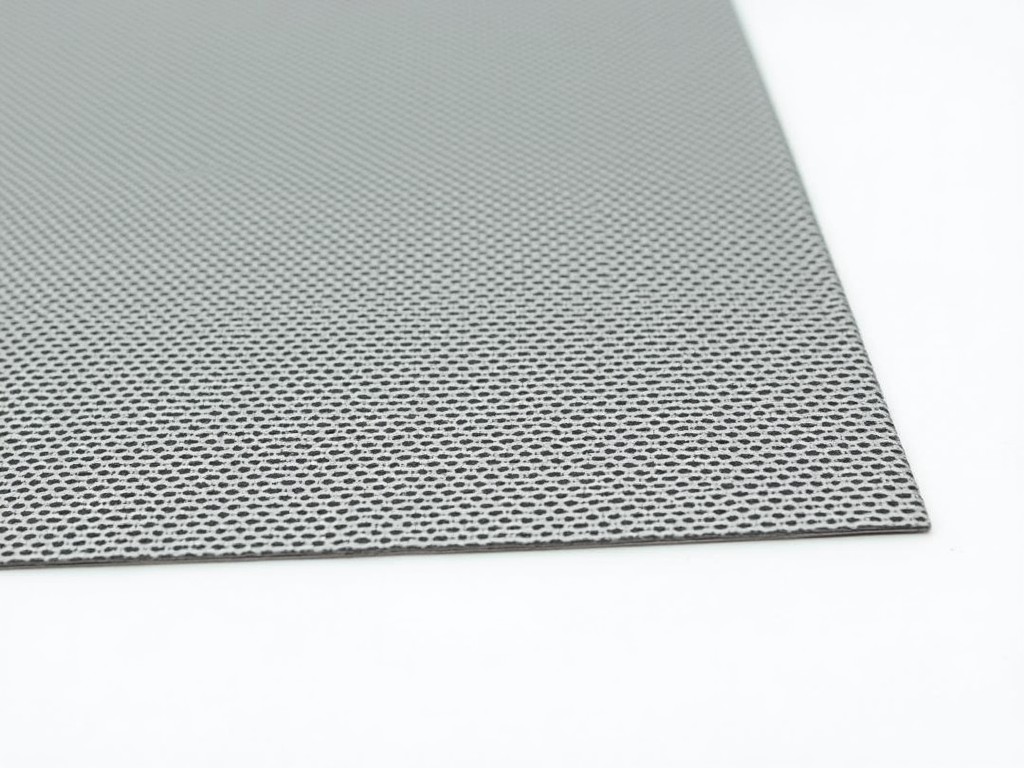
Perforated metal sheets are manufactured by creating a regular pattern of holes through metal substrates using precision punching or laser drilling. The resulting material combines structural
Perforated Metal Sheet for Sale
Perforated metal sheets are manufactured by creating a regular pattern of holes through metal substrates using precision punching or laser drilling. The resulting material combines structural integrity with controlled openness, enabling functions such as fluid flow, sound attenuation, light diffusion, and particulate separation. Selection depends on hole geometry, open area percentage, material thickness, and edge treatment—all of which influence mechanical performance and application suitability.
Material Options and Mechanical Properties
Common base materials include cold-rolled steel, galvanized steel, stainless steel (grades 304 and 316), aluminum, and copper. Each material offers distinct corrosion resistance, strength-to-weight ratios, and formability. For example, 304 stainless steel provides excellent resistance to atmospheric corrosion and maintains tensile strength above 500 MPa, while aluminum alloys like 5052-H32 offer lightweight alternatives with tensile strength near 230 MPa and good marine environment tolerance.
Hole Patterns and Open Area Calculations
Standard hole shapes include round, square, slot, and hexagonal, arranged in staggered or straight-line patterns. Open area—the percentage of sheet surface occupied by holes—directly impacts airflow, visibility, and filtration efficiency. A 60% open area round hole pattern on 3mm thick steel typically yields a pressure drop of approximately 15 Pa at 2 m/s air velocity, whereas a 40% open area slot pattern may reduce drop to 8 Pa under identical conditions due to directional flow advantages.
| Hole Shape | Typical Open Area Range | Common Applications |
|---|---|---|
| Round | 20%–60% | HVAC grilles, speaker covers, filtration screens |
| Square | 25%–50% | Machine guards, architectural panels, bulk material sieves |
| Slot | 30%–65% | Conveyor belts, drying trays, magnetic separators |
| Hexagonal | 35%–55% | Acoustic panels, catalyst supports, decorative screens |
Thickness Tolerances and Flatness Standards
Sheet thickness typically ranges from 0.5 mm to 6.0 mm, with tolerances governed by ASTM A1011 for steel and ASTM B209 for aluminum. For instance, 2.0 mm cold-rolled steel may vary between 1.85 mm and 2.15 mm after perforating due to localized thinning around hole edges. Flatness is measured in I-units; commercially acceptable perforated sheets generally maintain deviation under 5 mm per meter for architectural use, while precision filtration applications may require flattening to under 2 mm per meter via roller leveling.
Edge Treatments and Secondary Processing
Raw perforated edges often exhibit burrs that can compromise safety or sealing performance. Deburring methods include vibratory tumbling, brushing, or electrochemical smoothing, selected based on material thickness and hole density. Additional treatments such as powder coating, anodizing (for aluminum), or passivation (for stainless steel) enhance corrosion resistance and surface durability. Custom punching of mounting holes, notches, or perforated gradients is available to match installation requirements.
Industrial Applications and Functional Benefits
In chemical processing, perforated plates serve as distributor trays in distillation columns, where uniform vapor-liquid contact depends on precise hole distribution and open area consistency. In automotive manufacturing, they function as heat shields and brake dust guards, requiring thermal stability and resistance to vibratory fatigue. Architectural facades utilize perforated metal for solar shading, where hole pattern density modulates daylight transmission while maintaining visibility—quantified by the shading coefficient, which can range from 0.2 to 0.8 depending on design.
Quality Control and Inspection Protocols
Dimensional verification includes hole diameter measurement via optical comparators (±0.02 mm tolerance), open area validation through image analysis, and thickness verification using micrometers at multiple points. Visual inspection checks for edge deformation, coating adhesion, and surface defects under 500 lux lighting. For critical applications, leak testing may be performed using air pressure differentials to confirm barrier integrity where fluid containment is required.
Customization and Ordering Considerations
Buyers should provide hole shape, size, pitch, open area target, material grade, thickness, sheet dimensions, and edge condition when requesting a quotation. Tolerances for hole placement typically range from ±0.1 mm to ±0.5 mm depending on pattern complexity and material thickness. Lead times vary from 2–4 weeks for standard patterns to 6–8 weeks for fully custom designs involving tooling preparation. Samples are available upon request to validate fit and function before full production.
Request a quotation or technical consultation to discuss material selection, hole pattern optimization, or compliance with industry-specific standards such as ASME, ISO 9001, or DIN 24041.
More Products

Send Inquiry
If you are interested in our products, leave your information here and we will be in touch shortly.