Powder Coated Perforated Metal Sheet
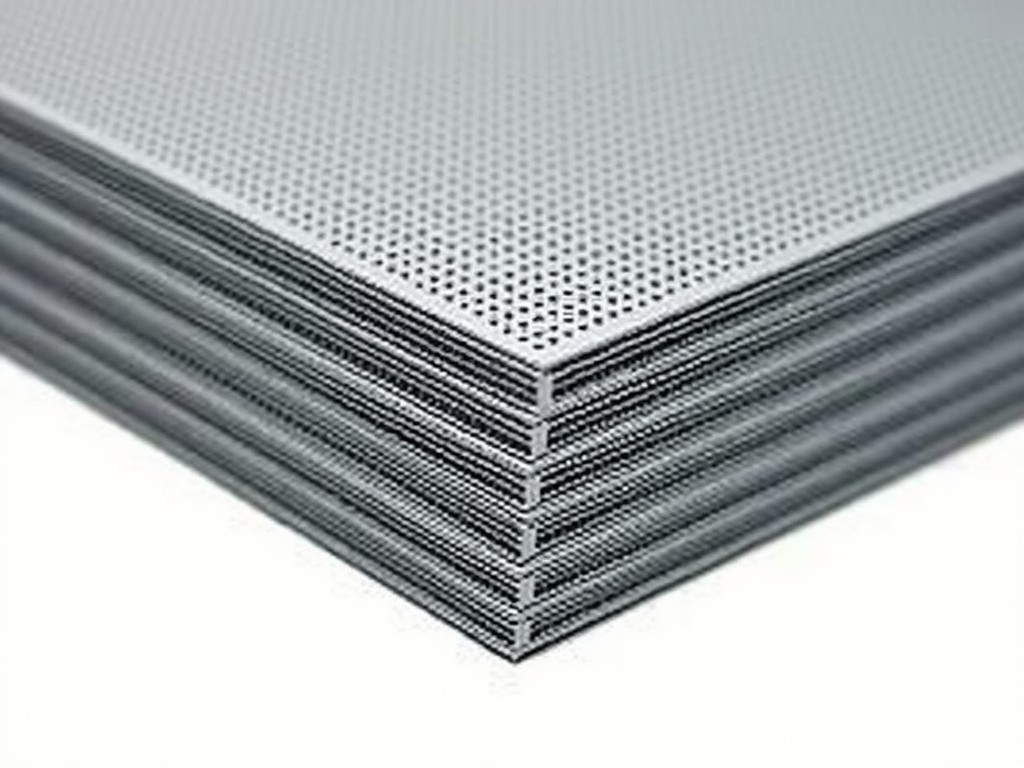
Powder coated perforated metal sheet combines the structural integrity of metal with precision-engineered hole patterns and a durable, uniform finish. This product is selected when both functional
Powder Coated Perforated Metal Sheet
Powder coated perforated metal sheet combines the structural integrity of metal with precision-engineered hole patterns and a durable, uniform finish. This product is selected when both functional performance and surface protection are required in demanding environments.
The perforation pattern is manufactured using CNC turret presses or laser systems to achieve consistent hole size, spacing, and open area. Following perforation, the sheet undergoes pretreatment, electrostatic powder application, and thermal curing to form a bonded coating that resists chipping, fading, and corrosion.
This integration of perforation and coating allows the material to serve dual purposes: enabling airflow, light transmission, or filtration while providing a protected surface suitable for interior and exterior applications.
Material Selection and Substrate Properties
Base materials are selected based on mechanical requirements, environmental exposure, and fabrication needs. Common substrates include cold-rolled steel, hot-dip galvanized steel, stainless steel (grades 304 and 316), and aluminum alloys.
Cold-rolled steel offers high tensile strength and cost efficiency for indoor use. Galvanized steel provides sacrificial zinc protection for moderate outdoor exposure. Stainless steel resists oxidation in humid, chemical, or marine environments. Aluminum delivers lightweight performance with inherent corrosion resistance.
Sheet thickness typically ranges from 0.8 mm to 3.0 mm, depending on load-bearing requirements and perforation density. Thinner gauges are used for decorative or low-stress applications; thicker gauges support structural loads in walkways, machine guards, or equipment enclosures.
Perforation Patterns and Open Area Characteristics
Perforation geometry directly influences airflow, light diffusion, sound attenuation, and visual transparency. Standard patterns include round, square, slotted, and hexagonal holes, arranged in staggered or straight alignments.
Round holes are the most common due to efficient tooling and predictable flow characteristics. Square and slotted patterns offer higher open area for ventilation or filtration. Decorative patterns may combine multiple shapes for architectural applications.
Open area—the percentage of void space relative to total surface—typically ranges from 15% to 60%, depending on hole diameter, pitch, and pattern. This value is critical for HVAC grille design, acoustic panel performance, and machine guarding compliance.
Powder Coating Process and Performance Attributes
The powder coating process begins with alkaline cleaning and phosphate conversion coating to ensure adhesion. Electrostatic spray applies thermoplastic or thermoset powder uniformly across both faces and edges. The coated sheet is then cured at 180–200°C to form a continuous polymer film.
Coating thickness averages 60–80 microns, measured via magnetic or eddy current gauges. This thickness provides sufficient barrier protection without obscuring perforation details or interfering with mating components.
Performance properties include UV stability (depending on resin type), chemical resistance to oils and solvents, and impact resistance exceeding 150 in-lbs (Gardner impact test). Epoxy powders offer superior corrosion resistance; polyesters provide better outdoor durability; hybrids balance cost and performance.
Typical Applications Across Industries
In architectural design, powder coated perforated metal is used for facade panels, sunshades, and interior partitions where controlled light transmission and aesthetic durability are required. The coating prevents staining and allows color matching to building envelopes.
Industrial facilities install these sheets as machine guards, conveyor covers, and ventilation panels. The perforation enables airflow and visibility while the coating withstands lubricants, cleaning agents, and periodic washdowns.
Transportation applications include trailer skirts, bus ventilation grilles, and rail interior panels. Lightweight aluminum substrates with powder coating reduce mass without sacrificing corrosion resistance in variable climates.
Acoustic applications utilize perforated sheets as facings for sound-absorbing cores. The hole pattern allows sound penetration while the coated surface resists dust accumulation and facilitates cleaning in HVAC plenums or auditorium walls.
Customization Options and Engineering Considerations
Hole diameter, pitch, and pattern can be tailored to meet specific open area, structural, or flow requirements. Custom tooling is available for non-standard shapes or variable density designs.
Edge treatments include hemmed, folded, or flanged configurations to improve rigidity and safety. Post-forming operations such as bending, rolling, or framing are performed after coating to avoid damage to the finish.
Color selection follows RAL, Pantone, or custom matching systems. Textured finishes (e.g., matte, wrinkle, metallic) are available to reduce glare or hide surface imperfections. Gloss levels are specified per project, typically ranging from 10% to 80%.
Secondary operations such as silk-screen printing, laser etching, or adhesive backing application can be integrated post-coating for branding, identification, or installation efficiency.
Quality Control and Inspection Protocol
Dimensional accuracy is verified using calibrated calipers and optical comparators. Hole registration is checked against CAD templates to ensure pattern consistency across batches.
Coating adhesion is tested via cross-hatch (ASTM D3359) and pull-off (ASTM D4541) methods. Thickness is measured at multiple points using non-destructive gauges. Visual inspection under standardized lighting identifies pinholes, orange peel, or uneven coverage.
Corrosion resistance is evaluated through salt spray testing (ASTM B117) for coated steel substrates, with typical results exceeding 500 hours for epoxy and 1000 hours for polyester coatings. UV exposure testing (ASTM G154) assesses color stability for outdoor grades.
Flatness is measured using straight edge and feeler gauge methods to detect warping from perforation stress or curing distortion. Acceptable deviation is typically <1.5 mm per meter for architectural applications.
| Property | Typical Range / Value | Test Standard |
|---|---|---|
| Base Material Thickness | 0.8 mm – 3.0 mm | ASTM E18 |
| Coating Thickness | 60 – 80 µm | ASTM D7091 |
| Open Area | 15% – 60% | Calculated from hole geometry |
| Adhesion (Cross-Hatch) | 4B – 5B | ASTM D3359 |
| Salt Spray Resistance (Steel) | >500 hours (epoxy) | ASTM B117 |
| Impact Resistance | >150 in-lbs | ASTM D2794 |
Ordering Information and Technical Support
To receive a quotation, provide the following: base material type and thickness, perforation pattern (hole size, pitch, layout), overall dimensions, required open area, edge treatment, color specification (RAL or custom), and intended use environment.
Drawings or sketches are recommended for complex geometries or multi-stage fabrication. Our engineering team reviews submissions for manufacturability, coating coverage, and structural feasibility.
Samples are available upon request to validate coating appearance, perforation accuracy, and material suitability. Lead time typically ranges from 10 to 25 days, depending on material availability and coating complexity.
Packaging includes interleaving paper or plastic sheets between layers to prevent abrasion. Palletized shipments use corner protectors and stretch wrapping for transit stability. Export packaging complies with ISPM 15 standards when required.
Ready to specify your solution?
Submit your technical requirements for a detailed quotation and lead time confirmation.
More Products

Send Inquiry
If you are interested in our products, leave your information here and we will be in touch shortly.