Stainless Steel Pre Rinse Basket
A stainless steel pre rinse basket is a perforated container designed to hold tableware, utensils, or small components during the initial rinse stage of commercial washing systems. It facilitates
Stainless Steel Pre Rinse Basket
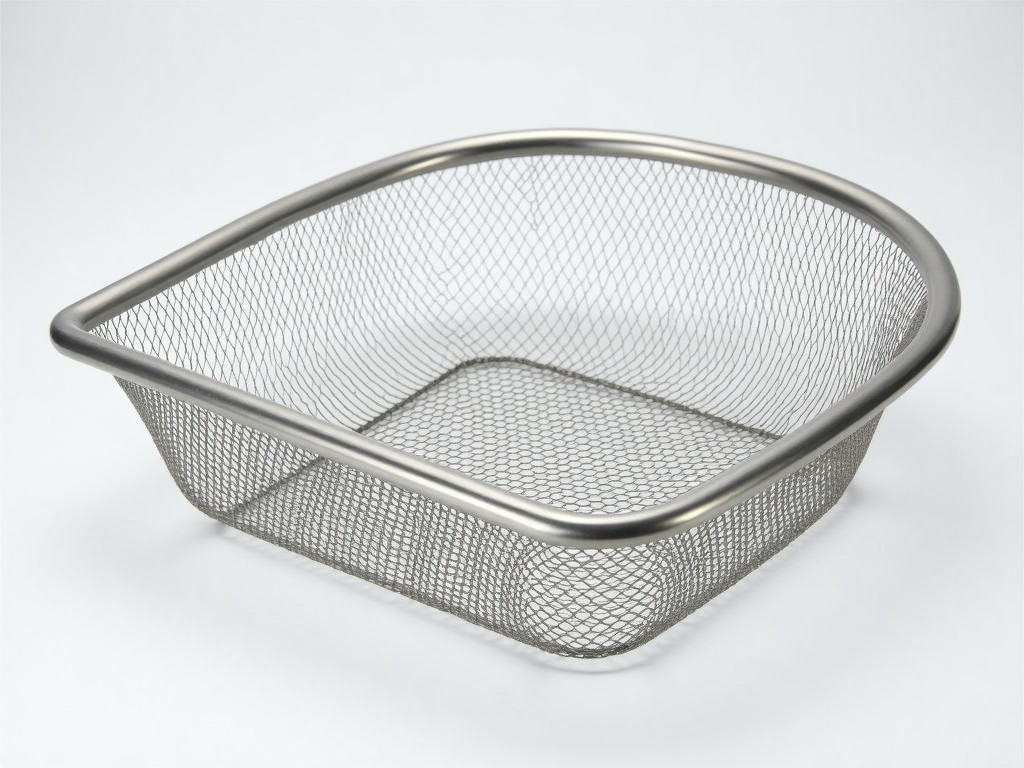
A stainless steel pre rinse basket is a perforated container designed to hold tableware, utensils, or small components during the initial rinse stage of commercial washing systems. It facilitates efficient water flow and debris removal while protecting items from direct spray impact and mechanical damage. These baskets are commonly integrated into dishwashing lines in food service, healthcare, and industrial cleaning environments where hygiene and throughput are critical.
The primary function is to pre-rinse soiled items before they enter the main wash cycle, reducing organic load and preventing filter clogging in downstream equipment. By containing items in a structured, open-frame design, the basket ensures uniform exposure to rinse water while minimizing handling labor and breakage risk. Material selection and geometric design directly influence corrosion resistance, drainage efficiency, and compatibility with high-temperature, high-pressure wash cycles.
Material Composition and Grade Selection
Stainless steel pre rinse baskets are typically fabricated from austenitic grades such as 304 or 316, chosen for their resistance to chlorides, detergents, and thermal cycling. Grade 304 offers sufficient corrosion resistance for most indoor food service applications with exposure to mild acids and alkaline cleaners. Grade 316, containing molybdenum, provides enhanced pitting resistance in environments with higher chloride content, such as seafood processing or frequent use of chlorine-based sanitizers.
The material is typically supplied in sheet or wire form, with thickness ranging from 0.8mm to 1.5mm depending on load requirements and expected service life. Wire diameter in woven or welded mesh configurations affects both open area percentage and structural rigidity. Surface finishes are usually mill finish or lightly polished to minimize crevices where contaminants can accumulate, supporting ease of cleaning and compliance with hygiene standards.
Design Characteristics and Hydraulic Performance
The basket’s open area ratio—typically between 40% and 60%—directly influences water flow velocity and pressure drop across the unit. Higher open area improves rinse efficiency but may reduce mechanical stability; lower open area increases debris retention but risks creating flow dead zones. Optimal design balances these factors based on intended use: lighter loads (e.g., glassware) favor higher perforation density, while heavier items (e.g., trays, utensil baskets) require thicker wires or larger apertures to prevent sagging.
Edge reinforcement is commonly applied via rolled or welded flanges to increase torsional stiffness and prevent deformation under load. Handle integration—whether fixed, foldable, or removable—is designed to align with conveyor systems or manual transfer points, minimizing operator strain. Corner radii are maintained at minimum 2mm to eliminate stress concentration points and facilitate drainage, reducing the likelihood of microbial harborage in accordance with NSF/ANSI 3 standards.
Dimensional Customization and System Integration
Standard footprint dimensions align with common commercial dishwasher rack sizes, such as 500mm x 500mm or 600mm x 400mm, to ensure compatibility with existing conveyors, loaders, and unloaders. Height typically ranges from 100mm to 200mm, determined by the vertical space available in the pre-rinse zone and the need to prevent item overflow during turbulent flow. Custom lengths, widths, and depths are available to match non-standard equipment layouts or specialized processing lines.
Mounting interfaces—such as side guides, bottom skids, or latch mechanisms—are engineered to suit specific racking systems, reducing misalignment and vibration during automated handling. Perforation patterns can be customized (e.g., square, round, slotted) to target specific debris sizes or optimize flow dynamics for viscous residues. All dimensional tolerances are held to ±1.5mm to ensure repeatable fit in high-speed automated environments.
Surface Treatment and Hygienic Design
Surface roughness is maintained below 0.8μm Ra to minimize adhesion sites for biofilms and facilitate effective cleaning-in-place (CIP) procedures. Electropolishing is available upon request for applications requiring superior passivation and reduced particulate retention, particularly in pharmaceutical or ready-to-eat food processing. All welds are fully penetrated and ground smooth to eliminate crevices, with post-weld passivation treatment to restore the chromium oxide layer compromised during fabrication.
Design avoids horizontal ledges, pockets, or overlapping seams where wash water can stagnate. Drainage slopes of 2–5 degrees are incorporated into the base where permitted by structural constraints to promote self-draining and reduce drying time. These features support compliance with FDA 21 CFR Part 117, EHEDG guidelines, and ISO 14159 for cleanability of food processing equipment.
Quality Assurance and Testing Protocols
Each batch undergoes dimensional verification using calibrated calipers and coordinate measuring machines (CMM) to confirm critical dimensions and squareness. Material grade is validated via positive material identification (PMI) using X-ray fluorescence (XRF) to prevent grade mix-ups that could compromise corrosion resistance. Visual inspection under 10x magnification checks for surface defects, weld consistency, and edge integrity.
Hydrostatic pressure testing at 1.5x operating pressure (typically up to 10 bar) validates structural integrity under cyclic load conditions. Open area percentage is verified through image analysis of perforated sections to ensure design specifications are met. Salt spray testing (ASTM B117) for 200 hours is conducted on 316-grade samples to confirm resistance to chloride-induced pitting, with acceptance criteria of less than 5% red rust occurrence.
Applications Across Industries
In commercial kitchens, these baskets handle high volumes of soiled plates, trays, and cutlery during peak meal periods, where rapid turnover and minimal breakage are essential to operational efficiency. Their open design allows high-velocity rinse jets to dislodge dried food particles without trapping debris, reducing the load on scrapers and pre-wash stations. Hospitals and laboratories use them to pre-rinse reusable instruments and glassware before sterilization, where consistent cleaning prevents biofilm formation that could interfere with autoclave efficacy.
Industrial parts washers in automotive or aerospace maintenance employ stainless steel pre rinse baskets to contain small fasteners, fittings, or machined components during aqueous cleaning cycles. The corrosion-resistant construction withstands exposure to alkaline degreasers and rinse additives, while the open structure allows effective impingement of cleaning agents on complex geometries. In all cases, the basket’s role is to improve process reliability by ensuring consistent pre-treatment before primary washing or disinfection stages.
Comparison of Common Configurations
| Attribute | Standard 304 Basket | Enhanced 316 Basket | Heavy-Duty Reinforced |
|---|---|---|---|
| Material Grade | AISI 304 | AISI 316 | AISI 304 |
| Wire Diameter (mm) | 1.0 | 1.0 | 1.5 |
| Open Area (%) | 50 | 50 | 40 |
| Max Operating Temp (°C) | 90 | 90 | 90 |
| Chloride Resistance | Moderate | High | Moderate |
| Typical Use Case | Standard dishwashing | Seafood, pharma | High-load trays |
For technical specifications, customization options, or to request a quotation based on your specific washing system requirements, please contact our engineering team. We provide detailed dimensional drawings, material certifications, and compliance documentation upon request to support your procurement and validation processes.
Visit our contact page to initiate a discussion about integrating stainless steel pre rinse baskets into your cleaning line.
Request Technical Consultation
More Products

Send Inquiry
If you are interested in our products, leave your information here and we will be in touch shortly.