Stainless Steel Round Wire Basket
A stainless steel round wire basket is a precision-engineered component used for containment, filtration, and transport in demanding industrial environments. Constructed from corrosion-resistant
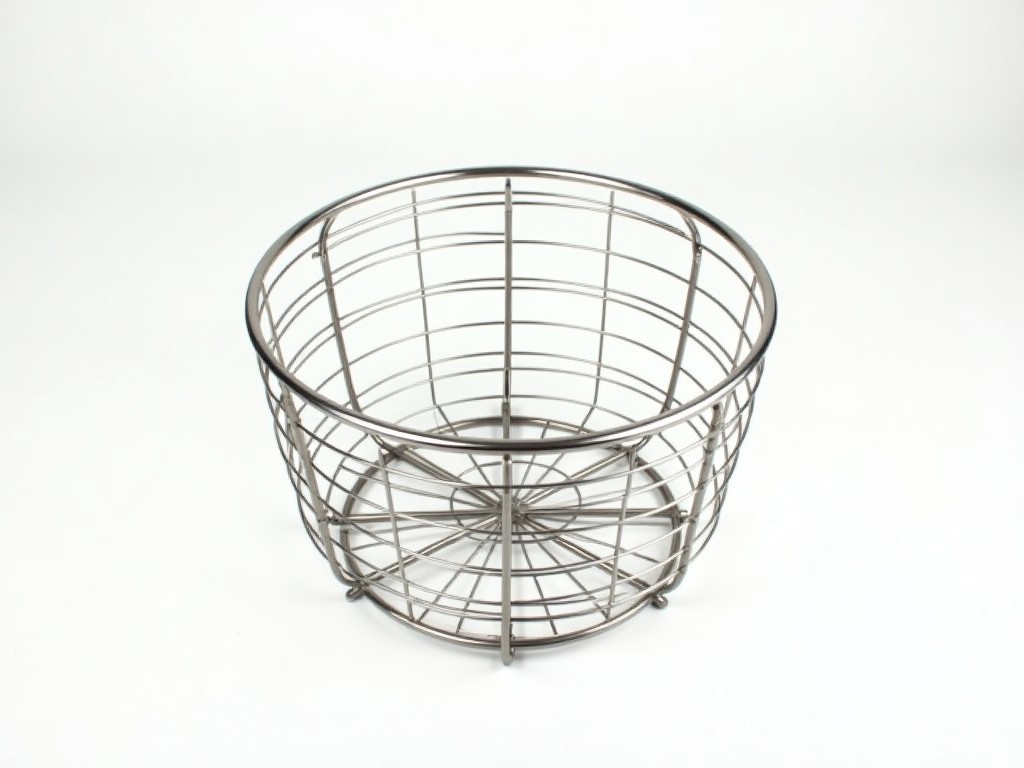
Stainless Steel Round Wire Basket
A stainless steel round wire basket is a precision-engineered component used for containment, filtration, and transport in demanding industrial environments. Constructed from corrosion-resistant alloys formed into circular wire mesh or welded wire configurations, these baskets provide structural integrity while allowing fluid or particulate flow. Their geometry optimizes strength-to-weight ratio and ensures consistent performance under thermal, mechanical, or chemical stress.
Selection depends on wire diameter, mesh opening, alloy grade, and finish—each influencing load capacity, chemical resistance, and service life. Unlike molded or stamped alternatives, wire baskets offer inherent drainage, visibility, and adaptability to custom dimensions without tooling costs. Engineers specify them when process reliability, cleanability, and long-term uptime are critical.
This page details the technical attributes, material options, and application considerations that inform procurement decisions for stainless steel round wire baskets in manufacturing, processing, and logistics operations.
Material Composition and Corrosion Resistance
The base material determines environmental suitability. Common grades include 304 stainless steel for general indoor use and 316L for chloride-exposed or sanitary applications. 304 contains 18% chromium and 8% nickel, resisting oxidation in atmospheric and mild chemical environments. 316L adds 2–3% molybdenum, significantly improving resistance to pitting and crevice corrosion in marine, food processing, or pharmaceutical settings.
Wire diameter typically ranges from 0.8 mm to 6.0 mm, affecting both open area and structural stiffness. Thicker wires increase load-bearing capacity but reduce flow area; finer wires enhance filtration precision at the cost of durability under impact. Mesh opening size—defined as the clear distance between adjacent wires—directly influences particle retention and pressure drop across the basket.
Surface finish options such as electropolishing or passivation further enhance corrosion resistance by removing surface impurities and promoting a stable oxide layer. Electropolished 316L achieves surface roughness below 0.4 µm Ra, minimizing adhesion points for contaminants in clean-in-place (CIP) systems.
Design Parameters and Structural Performance
The round geometry provides uniform stress distribution under radial and axial loads, reducing stress concentrations common in angular designs. Diameter-to-height ratio affects stability; baskets with height exceeding 1.5× diameter may require external support or reinforced rims to prevent deformation under load. Wire spacing and weld density influence torsional rigidity and resistance to ovaling.
Reinforced rims—formed by folding over a wire rod or adding a solid wire ring—increase edge durability and facilitate handling. Bottom configurations vary: flat wire mesh for even support, raised feet for drainage, or conical slopes for gravity discharge. Lifting options include integrated lugs, swing handles, or pull tabs engineered to withstand rated working loads without yield.
Open area percentage, calculated as the ratio of void space to total surface area, typically ranges from 40% to 70% depending on mesh count and wire size. This metric is critical for predicting fluid velocity, pressure loss, and drying efficiency in wash, rinse, or thermal processing cycles.
Typical Applications by Industry
In food processing, round wire baskets convey products through blanching, cooling, or freezing tunnels where sanitation and drainage are paramount. The open design prevents water pooling and allows rapid heat transfer, reducing cycle times and microbial growth risk. 316L construction with electropolished finish meets FDA and 3-A Sanitary Standards for direct food contact.
Automotive manufacturers use these baskets in degreasing, phosphating, and e-coat lines to hold small components like fasteners, brackets, or sensor housings. Resistance to alkaline cleaners and phosphate solutions ensures dimensional stability over thousands of cycles. Custom mesh sizes retain parts while allowing chemical penetration and rinse drainage.
Pharmaceutical and laboratory settings employ them for cleaning glassware, holding filters, or containing media during sterilization. Compatibility with steam autoclaves (121–134°C) and hydrogen peroxide vapor requires low-carbon alloys to prevent sensitization. Smooth, crevice-free surfaces validated through swab testing support compliance with ISO 14644 and GMP Annex 1.
Logistics and warehousing operations specify coated or bare stainless baskets for bulk handling of irregular parts, reducing reliance on disposable containers. Magnetic grades (e.g., 430) may be used in conveyor systems requiring ferrous responsiveness, though austenitic grades remain preferred for corrosion resistance in washdown zones.
Customization Options and Engineering Support
Dimensional flexibility is a key advantage: diameters from 50 mm to 1000 mm and heights from 30 mm to 800 mm are routinely produced without hard tooling. Wire diameter, mesh pattern (square, Dutch twill, or hexagonal), and edge treatment can be adjusted independently to meet flow, strength, or retention requirements. Prototypes are often fabricated from flat stock for validation before full-scale production.
Additional features include internal dividers for part segregation, lid attachments for containment during transport, and magnetic inserts for ferrous part retrieval. Surface treatments such as nylon coating or PTFE lining may be applied to reduce abrasion or prevent product adhesion in sensitive processes. All modifications are documented with material traceability and dimensional inspection records.
Engineering collaboration typically begins with a review of process parameters: operating temperature, chemical exposure, mechanical load, cycle frequency, and cleaning method. This data informs alloy selection, wire sizing, and structural reinforcement to achieve target service life—often defined as minimum 500 cycles under specified conditions without deformation or failure.
Quality Control and Testing Protocols
Dimensional verification includes diameter, height, wire diameter, and mesh opening tolerance, typically held to ±0.5 mm for critical features using calibrated calipers and optical comparators. Visual inspection under 10x magnification identifies weld defects, wire breaks, or surface contamination. Mechanical testing may involve tensile strength validation of wire samples or load-deflection testing of finished baskets.
Corrosion resistance is assessed through salt spray (ASTM B117) or humidity cycling for grades exposed to chlorides. Passivation effectiveness is verified via copper sulfate test or ferroxyl testing per ASTM A967. For sanitary applications, surface roughness is measured with profilometers, and cleanability is validated through residual soil testing after CIP cycles.
Each batch includes material test reports (MTRs) confirming alloy composition and mechanical properties. Traceability is maintained via laser etching or tags linking finished goods to raw material lots. Non-conforming items are segregated and analyzed to prevent recurrence, supporting a quality management system aligned with ISO 9001 principles.
Comparison of Common Configurations
| Attribute | Light-Duty (e.g., 304, 1.2mm wire, 6mm mesh) | Heavy-Duty (e.g., 316L, 3.0mm wire, 3mm mesh) | Sanitary Grade (e.g., 316L electropolished, 1.5mm wire, 2mm mesh) |
|---|---|---|---|
| Typical Use Case | Part sorting, dry storage, light washing | Chemical processing, heat treatment, abrasive media | Food contact, pharmaceutical, CIP systems |
| Open Area (%) | 65–75 | 40–50 | 50–60 |
| Max Operating Temp (°C) | 400 | 800 | 800 |
| Corrosion Resistance (Chloride) | Low | High | Very High |
| Surface Finish (Ra) | 1.6–3.2 µm | 1.6 µm | <0.4 µm |
*Values represent typical ranges; actual performance depends on specific design, wire condition, and environmental factors. Custom configurations available upon request.
Ordering Information and Lead Times
To request a quotation, provide: required diameter and height, wire diameter and mesh opening, material grade (e.g., 304, 316L), edge finish, quantity, and any special features (e.g., handles, lids, coating). Drawings or sketches are helpful but not mandatory; our engineering team can generate specifications from verbal descriptions.
Standard lead time for stock wire and common configurations is 2–3 weeks. Custom diameters, special alloys, or secondary operations (electropolishing, coating) may extend delivery to 4–6 weeks. Expedited options are available for critical projects subject to material availability.
Samples are available for validation—typically one unit at no cost for standard configurations; custom samples may incur a setup fee refundable upon first production order. All shipments include protective packaging to prevent deformation during transit, with optional corrosion-inhibiting vapors for long-term storage.
For technical consultation or to submit a specification, contact our engineering team.
Request Quote or Specification Review
More Products

Send Inquiry
If you are interested in our products, leave your information here and we will be in touch shortly.