Stainless Steel Sink Drain Basket
Stainless steel sink drain baskets are typically manufactured from AISI 304 or AISI 316 grade alloys, selected based on the chemical exposure environment. Grade 304 provides adequate resistance to
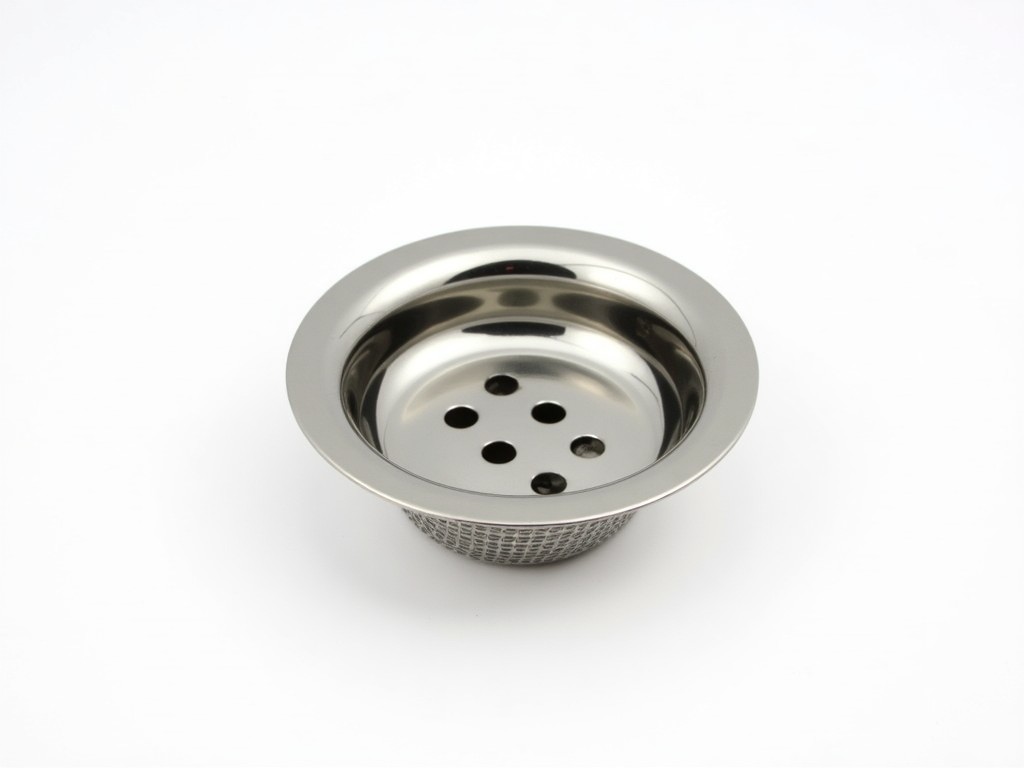
Stainless Steel Sink Drain Basket
Material Composition and Corrosion Resistance
Stainless steel sink drain baskets are typically manufactured from AISI 304 or AISI 316 grade alloys, selected based on the chemical exposure environment. Grade 304 provides adequate resistance to freshwater, mild detergents, and typical kitchen wastewater, while grade 316 incorporates molybdenum to enhance resistance to chlorides, acids, and prolonged exposure to harsh cleaning agents commonly found in industrial or commercial settings. The passive chromium oxide layer formed on the surface self-repairs when exposed to oxygen, maintaining integrity even after minor surface abrasion. Material thickness ranges from 0.8 mm to 1.5 mm, balancing structural rigidity with drainage efficiency. Surface finishes include brushed (No. 4) for hide scratches or mirror-polished (No. 8) for ease of cleaning in hygienic zones.
Perforation Design and Hydraulic Performance
The drainage effectiveness of a sink basket depends on open area ratio, hole geometry, and flow dynamics. Standard configurations feature 3 mm to 5 mm diameter perforations arranged in staggered or radial patterns, achieving open area ratios between 25% and 40%. This range prevents clogging from food particulates while maintaining flow rates exceeding 95% of an unobstructed drain under gravity-fed conditions. Hole edges are deburred to prevent snagging of fibrous materials and reduce stress concentration points. Some models incorporate a tapered frustum shape to increase effective surface area and promote self-cleaning action during flow surges. Computational fluid dynamics modeling confirms that radial hole distribution minimizes vortex formation and standing water zones compared to aligned perforation layouts.
Structural Integration and Mounting Systems
Drain baskets interface with sink outlets through either threaded or compression-fit mechanisms, depending on the drain assembly standard. Threaded versions use 1.5-inch or 2-inch NPSM (National Pipe Straight Mechanical) threads with rubber or EPDM gaskets to ensure watertight seals without over-torquing. Compression-fit designs rely on radial flexibility of the basket flange and a silicone O-ring seated in a machined groove, allowing for thermal expansion compensation and tool-free installation. Load-bearing capacity is validated through static testing: baskets withstand 150 N vertical load without permanent deformation, simulating the weight of stacked utensils or frozen food blocks. Deflection under load remains below 0.5 mm, ensuring consistent alignment with the drainpipe and preventing leakage paths.
Applications in Industrial and Commercial Environments
Stainless steel sink drain baskets serve critical functions beyond basic debris containment. In food processing facilities, they prevent particulate ingress into wastewater treatment systems, reducing pump clogging and maintenance frequency. Laboratories use them to capture glass fragments or hazardous material residues before entry into drainage networks, supporting chemical hygiene protocols. Commercial kitchens benefit from their ability to retain cooking oils and fats during disposal, facilitating separate collection for recycling or rendering. In pharmaceutical manufacturing, baskets made from electropolished 316L stainless steel meet ISO 14644-1 cleanroom standards by minimizing particle shedding and enabling sterilization via autoclave or SIP (Steam-in-Place) cycles. Their non-magnetic properties also suit environments requiring MRI compatibility or sensitive electronic equipment protection.
Customization Parameters and Engineering Considerations
Design adaptation begins with sink geometry verification—outlet diameter, flange thickness, and sink depth determine basket height and flange angle. Perforation size and pattern are adjusted based on expected debris load: finer perforations (2 mm) for pharmaceutical rinsing, larger openings (6 mm) for vegetable washing lines. Flange options include flat, beveled, or recessed profiles to match sink contour and prevent edge lifting. Material selection guidance: 304 for municipal water exposure, 316 for coastal or chemical-intensive processes, 316L for welded assemblies requiring post-weld corrosion resistance. Surface treatments such as passivation (ASTM A967) or electropolishing (ISO 21534) are available upon request to enhance corrosion resistance or reduce microbial adhesion. Dimensional tolerances adhere to ISO 2768-m for general machining and ISO 1101 for geometric specifications.
Quality Assurance and Inspection Protocol
Each batch undergoes dimensional verification using calibrated CMM (Coordinate Measuring Machine) equipment to confirm critical dimensions: flange diameter (±0.2 mm), height (±0.3 mm), and hole position (±0.15 mm). Material certification (EN 10204 3.1) is provided for all stainless steel grades, confirming chemical composition and mechanical properties. Visual inspection follows ASTM A480/A480M for surface defects, ensuring no scratches >0.05 mm depth or contamination visible under 10x magnification. Passivation effectiveness is validated via copper sulfate test (ASTM A380) or ferricyloxy test for 316 grades. Flow rate testing is performed per ASME A112.18.1 using standardized water pressure (10 kPa) to confirm drainage efficiency >90% of theoretical maximum. Packaging includes individual LDPE wrapping and corrugated dividers to prevent surface contact damage during transit.
Technical Specification Table
| Parameter | Typical Value / Range | Notes |
|---|---|---|
| Material Grade | AISI 304, 316, 316L | Selected per environmental exposure |
| Thickness | 0.8 mm – 1.5 mm | Balances rigidity and flow |
| Perforation Diameter | 2 mm – 6 mm | Customizable per debris size |
| Open Area Ratio | 25% – 40% | Optimized for clog resistance |
| Connection Type | Threaded (NPSM) or Compression-fit | Gasket material: EPDM or silicone |
| Operating Temperature | -40°C to +200°C | Limited by gasket material |
| Finish Options | Brushed (No. 4), Mirror (No. 8), Electropolished | Passivation available per ASTM A967 |
Inquiry and Technical Support
To initiate a quotation or request engineering support, provide the sink outlet diameter, sink depth, expected wastewater composition, and required flow rate. Our technical team will evaluate material grade suitability, perforation configuration, and mounting compatibility based on your operational parameters. Samples are available for functional validation upon request, including flow rate certification and material test reports. Lead times typically range from 2 to 4 weeks for standard configurations, with expedited options available for critical projects. All inquiries receive a detailed response within one business day, including dimensional drawings and compliance documentation.
Contact our engineering team to discuss your specific drainage requirements.
More Products

Send Inquiry
If you are interested in our products, leave your information here and we will be in touch shortly.