Stainless Steel Sink Drainer Basket
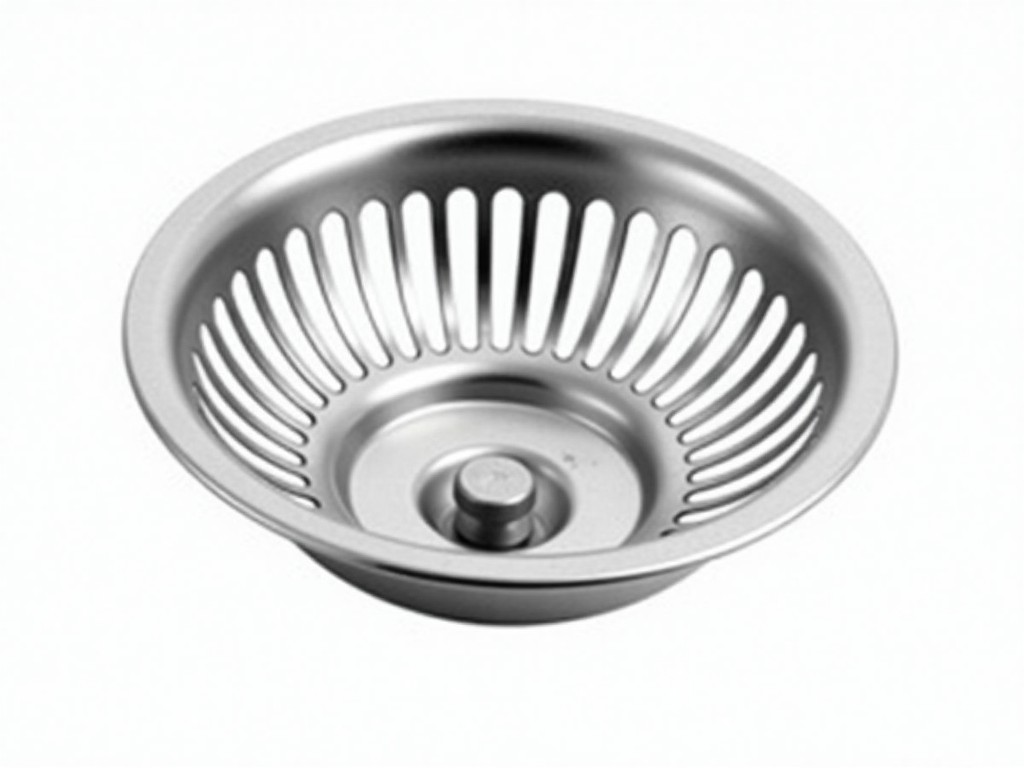
A stainless steel sink drainer basket is a perforated container designed to hold dishes, utensils, or food items above the sink basin while allowing water to drain freely. It functions as a secondary
Stainless Steel Sink Drainer Basket
A stainless steel sink drainer basket is a perforated container designed to hold dishes, utensils, or food items above the sink basin while allowing water to drain freely. It functions as a secondary work surface within the sink, preventing direct contact between items and the sink bottom, which reduces scratching, improves hygiene, and enhances workflow efficiency in food preparation and cleaning areas.
These baskets are engineered for environments where durability, corrosion resistance, and sanitation are critical—such as commercial kitchens, food processing facilities, laboratories, and healthcare institutions. Unlike plastic or coated alternatives, stainless steel drainer baskets maintain structural integrity under repeated thermal cycling, exposure to detergents, and mechanical load without degradation or leaching.
The primary value lies in risk reduction: minimizing cross-contamination, extending sink lifespan by preventing abrasion, and supporting ergonomic workflows. Selection should be based on dimensional compatibility with the sink, load-bearing requirements, and ease of cleaning—factors that directly impact operational uptime and long-term cost of ownership.
Material and Construction Specifications
Standard construction uses austenitic stainless steel grades, primarily AISI 304 (18-8) or AISI 316 for enhanced chloride resistance. The wire diameter typically ranges from 2.0 mm to 3.5 mm, depending on load requirements, with mesh openings between 6 mm and 12 mm to balance drainage efficiency and item retention. Frame structures are formed from 1.2 mm to 2.0 mm sheet steel, welded or bent to create a rigid perimeter that resists deformation under load.
All joints are resistance-welded or TIG-welded to ensure full penetration and eliminate crevices where contaminants can accumulate. Surfaces undergo passivation treatment post-welding to restore the chromium oxide layer, which is essential for maintaining corrosion resistance in aggressive environments. Edges are deburred and rounded to a radius of at least 0.5 mm to prevent injury during handling and to facilitate cleaning.
Load capacity is determined by material thickness, wire spacing, and support geometry. A typical 304 stainless steel basket with 3.0 mm wire and 10 mm mesh can safely support 15–25 kg of distributed load without permanent deflection. For higher loads, reinforced frames or increased wire diameter are specified, with deflection limits kept under 2 mm under maximum rated load to ensure functional integrity.
Dimensional Design and Sink Compatibility
Drainer baskets are designed to sit either on the sink ledge (overhang type) or within the basin using integrated supports (in-set type). Overhang models require a minimum ledge width of 25 mm to ensure stability, while in-set models depend on precise internal sink dimensions to avoid binding or rattling. Depth is typically 50–100 mm, sufficient to hold items without submerging them in standing water.
Length and width are customized to match sink bowl geometry—common configurations include single-bowl (300–500 mm width), double-bowl (600–900 mm total width), and corner sinks. Tolerances are held to ±1.5 mm on linear dimensions to ensure proper fit without forcing or gaps that could trap debris. Height above sink bottom is critical: too low restricts drainage; too high reduces usability. Optimal clearance is 20–40 mm to allow unimpeded water flow beneath the basket.
Customization options include adjustable height legs, removable dividers, and tapered profiles for corner sinks. For non-standard sinks, manufacturers require a template or detailed drawing with sink radius, ledge depth, and overflow hole location to ensure accurate fabrication. Dimensional accuracy directly affects usability—poor fit leads to instability, water pooling, or interference with faucet operation.
Functional Design Features
Mesh pattern selection influences both drainage rate and item stability. Square or rectangular meshes with 6–10 mm openings provide optimal balance for most kitchenware—allowing rapid water runoff while preventing small items like cutlery or food particles from falling through. Hexagonal or offset patterns increase open area by up to 15% but may reduce lateral support for elongated items.
Handles are integrated into the frame design, typically formed as upward bends of the side or end wires, with a minimum grip height of 20 mm above the basket plane to enable secure handling with gloves. Some models include folding or removable handles to reduce profile when stored. Load distribution is enhanced by peripheral support wires that prevent sagging under uneven loads, such as a stack of plates concentrated on one side.
Anti-slip features may include rubber or silicone feet (for overhang types) or raised dimples on the basket base (for in-set types) to minimize movement during use. These are selected based on sink material—stainless steel sinks benefit from non-marring polymer feet, while ceramic or composite sinks may require broader contact surfaces. All additives must be food-grade and resistant to temperatures up to 80°C and repeated washing cycles.
Applications in Industrial and Commercial Settings
In commercial kitchens, drainer baskets are stationed adjacent to prep sinks for holding washed vegetables, fruits, or blanched items before further processing. Their use reduces cross-contamination risk by isolating clean produce from dirty surfaces and allows continuous workflow—staff can wash in one basket while another drains, eliminating bottlenecks. The open structure promotes air circulation, accelerating surface drying and inhibiting microbial growth compared to solid trays.
Food processing plants use larger, heavy-duty baskets for draining washed raw materials such as seafood, poultry cuts, or blanched vegetables prior to packaging or freezing. The 316L variant is often specified here due to exposure to salt brines, acidic marinades, or high-pressure washdowns. Baskets are designed for easy integration into conveyor systems or wash lines, with standardized mounting points and smooth surfaces that resist biofilm formation.
Laboratories and healthcare facilities utilize smaller, precision-grade baskets for rinsing glassware, instruments, or small components. Here, electropolished finishes (Ra < 0.4 μm) are common to minimize particle adhesion and facilitate validation cleaning. Baskets may be designed to fit specific ultrasonic cleaners or autoclave racks, with dimensions validated for sterilization cycle compatibility. In all cases, the material’s inertness ensures no leaching that could compromise test results or product safety.
Quality Control and Manufacturing Considerations
Dimensional verification is performed using calibrated calipers and coordinate measuring machines (CMM) on first-off samples, with critical features like wire diameter, mesh opening, and overall dimensions checked against tolerance stacks. Visual inspection under 10x magnification ensures weld integrity, absence of sharp edges, and surface continuity. Passivation effectiveness is validated via copper sulfate test or ferroglycerin method to confirm absence of free iron on the surface.
Load testing applies a distributed weight equivalent to 1.5 times the rated capacity for 1 minute, measuring residual deflection after removal. Baskets must return to within 10% of original dimensions to pass. Cycle testing simulates 5,000 wet/dry transitions with exposure to alkaline detergents (pH 11) and chloride solutions (500 ppm NaCl) to assess long-term corrosion resistance and mechanical fatigue. Any signs of pitting, cracking, or permanent deformation trigger design review.
Material traceability is maintained through mill certificates for all stainless steel stock, linking each batch to chemical composition (Cr, Ni, Mo, C content) and heat treatment records. For 316L applications, molybdenum content is verified to be ≥2.0% to ensure pitting resistance equivalence number (PREN) > 25. Manufacturing processes follow ISO 9001 protocols, with documented work instructions for welding, forming, and finishing to ensure repeatability across production lots.
Customization Options and Ordering Information
Standard configurations are available in common sink sizes, but custom fabrication is routine for OEMs and facility planners. Required inputs include: sink internal dimensions (length, width, depth), ledge width and depth (for overhang types), overflow hole position and diameter, drain location, and any internal obstructions such as protrusions or slopes. A sketch or DXF file is sufficient for initial quoting; final approval requires a signed dimensional drawing.
Material choice is guided by environment: 304 for general indoor use with mild detergents, 316L for coastal areas, chemical exposure, or high-chloride cleaning agents. Finish options include mill finish (standard), brushed (Ra 0.8–1.2 μm), or electropolished (Ra < 0.4 μm) for hygienic zones. Wire diameter and mesh size are selected based on load and drainage needs—finer mesh for small items, coarser for rapid drainage of bulky produce.
Additional features such as fold-down handles, stacking lugs, or custom dividers can be integrated without compromising structural integrity. Lead time for standard models is typically 2–3 weeks; custom orders range from 4–6 weeks depending on complexity and material availability. Samples are provided upon request for validation, with shipping costs borne by the requester. All units are packaged in recyclable cardboard with corner protection and moisture barriers to prevent transit damage.
| Parameter | Typical Range | Notes |
|---|---|---|
| Wire Diameter | 2.0–3.5 mm | Selected based on load and mesh size |
| Mesh Opening | 6–12 mm | Balances drainage and retention |
| Frame Thickness | 1.2–2.0 mm | Prevents flex under load |
| Load Capacity | 15–25 kg | Distributed, 304 SS, 3.0 mm wire |
| Height Above Sink | 20–40 mm | Optimal for drainage and usability |
| Passivation Standard | ASTM A967 | Ensures corrosion resistance post-weld |
More Products

Send Inquiry
If you are interested in our products, leave your information here and we will be in touch shortly.