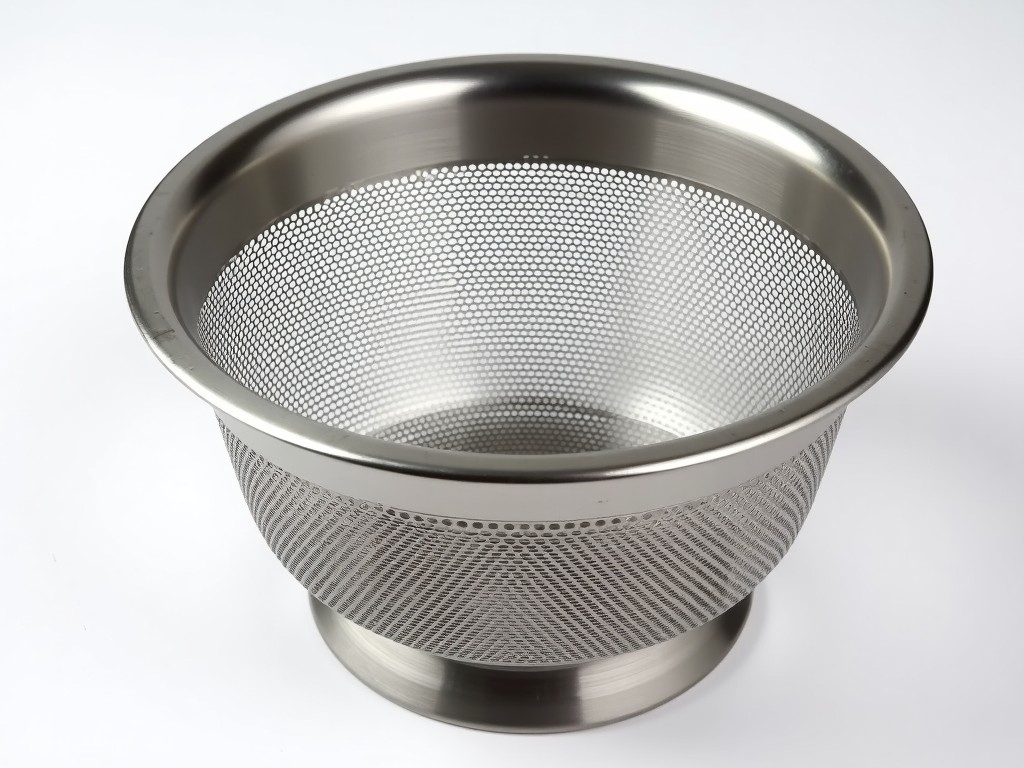
Stainless Steel Strainer Basket Industrial
Industrial strainer baskets are critical components in fluid handling systems where particulate removal protects downstream equipment such as pumps, valves, heat exchangers, and nozzles. Their
Stainless Steel Strainer Basket Industrial
Industrial strainer baskets are critical components in fluid handling systems where particulate removal protects downstream equipment such as pumps, valves, heat exchangers, and nozzles. Their function is to intercept suspended solids before they cause abrasion, clogging, or corrosion. Performance depends on precise engineering of mesh geometry, open area ratio, structural integrity, and material compatibility with the process fluid. Selection requires evaluating not just particle size retention but also pressure drop, cleaning frequency, and service life under operating conditions.
Material Selection and Corrosion Resistance
Stainless steel is selected for strainer baskets based on its ability to resist both general and localized corrosion in aggressive environments. Grade 304 (UNS S30400) offers adequate resistance to atmospheric oxidation and mild chemical exposure, making it suitable for water, food-grade liquids, and low-chloride industrial streams. For environments containing chlorides, acids, or elevated temperatures, Grade 316 (UNS S31600) with 2-3% molybdenum provides superior pitting and crevice corrosion resistance. Duplex grades like 2205 may be specified where high strength and stress corrosion cracking resistance are required, particularly in offshore or chemical processing applications.
The corrosion resistance of stainless steel stems from a passive chromium oxide layer that self-repairs in oxidizing environments. However, this layer can be compromised by mechanical damage, contamination with carbon steel, or exposure to reducing agents. Proper fabrication practices—including passivation after welding, avoiding carbon steel tool contact, and ensuring weld integrity—are essential to maintain long-term performance. Material test reports (MTRs) verifying chemical composition and mechanical properties should be requested for critical applications.
Design Parameters Affecting Filtration Efficiency
Filtration efficiency is determined by the strainer basket’s mesh specification, which defines the nominal particle size retained. Mesh is quantified by the number of openings per linear inch and the wire diameter, which together determine the actual opening size and open area percentage. For example, a 100 mesh screen with 0.0045" wire diameter has approximately 36% open area, while a 200 mesh with 0.0021" wire yields about 30% open area. Lower open area increases pressure drop but improves fine particle retention.
The relationship between open area and pressure drop is non-linear and governed by the Darcy-Weisbach equation, where pressure loss increases with flow velocity squared and inversely with the fourth power of hydraulic diameter. Engineers must balance retention requirements against system pressure constraints. Excessive pressure drop can lead to cavitation in pumps or reduced flow rates. Strainer baskets are often designed with a maximum allowable pressure drop of 0.5 to 1.0 bar (7.25 to 14.5 psi) at normal flow, with alarms triggered at higher differentials indicating the need for cleaning.
Structural Integrity and Mechanical Design
Strainer baskets must withstand internal pressure, hydraulic shock, and vibrational loads without deformation or failure. The basket body is typically formed from perforated plate or welded wire mesh, reinforced with axial and circumferential support rods to prevent bulging under differential pressure. End caps are either welded or mechanically clamped to ensure leak-tight sealing. The collapse pressure rating—the maximum differential pressure the basket can endure before permanent deformation—is a key design parameter.
For baskets subjected to reverse flow or backwashing cycles, the design must account for bidirectional loading. Perforated plates with thickness ranging from 0.8 mm to 3.0 mm (depending on diameter) provide inherent rigidity, while welded mesh baskets rely on intermediate support rings spaced at 50–100 mm intervals. Finite element analysis (FEA) is commonly used to validate stress distribution under expected operating conditions, particularly for large-diameter baskets (>300 mm) or those in high-vibration environments.
Customization Options for Process Integration
Industrial strainer baskets are rarely off-the-shelf components; they are engineered to fit specific housings, nozzles, and maintenance procedures. Key customizable dimensions include basket length, outer diameter, flange type (ANSI, DIN, JIS), nozzle orientation, and handle configuration for manual removal. Baskets may be designed with lift handles, davit-compatible lifting lugs, or quick-release clamps to facilitate maintenance without specialized tools.
Mesh options extend beyond standard square weave to include Dutch twill, reverse Dutch twill, and wedge wire profiles, each offering distinct advantages in strength, clogging resistance, and cleanability. Wedge wire screens, for instance, provide a smooth surface that reduces particle adhesion and allows backpulsing cleaning. Surface finishes such as electropolishing or passivation can be applied to reduce fouling in sanitary or pharmaceutical applications. Custom baffles or flow distributors may be added upstream to prevent uneven loading and extend service intervals.
Quality Assurance and Testing Protocols
Quality control begins with material verification using positive material identification (PMI) via X-ray fluorescence (XRF) to confirm alloy composition. Dimensional inspection ensures critical features—such as diameter, length, and mesh alignment—conform to tolerances, typically ±0.5 mm for diameter and ±1.0 mm for length. Mesh integrity is verified through bubble point testing or glass bead challenge tests to confirm the absence of oversized openings or ruptures.
Hydrostatic testing at 1.5 times the design pressure validates leak resistance and structural soundness. For baskets intended for food, pharmaceutical, or sanitary use, surface roughness is measured (Ra < 0.8 μm typical after electropolishing) and documented. Final inspection includes visual examination for weld defects, burrs, or sharp edges that could compromise safety or product purity. Test reports and certificates of conformance are provided upon request.
| Parameter | Typical Range / Specification | Notes |
|---|---|---|
| Stainless Steel Grade | 304, 316L, 321, 2205 Duplex | Selected based on corrosion environment |
| Mesh Size | 20 to 400 mesh | Defines nominal particle retention |
| Open Area | 20% to 50% | Inversely related to pressure drop |
| Basket Diameter | 50 mm to 600 mm | Custom sizes available |
| Collapse Pressure Rating | 1.0 to 5.0 bar (differential) | Depends on diameter, mesh, and support |
| Surface Finish | Mill finish, passivated, electropolished | Ra < 0.8 μm achievable with electropolishing |
Applications Across Industries
In chemical processing, strainer baskets protect catalysts and reactor internals from particulate contamination that could reduce reaction efficiency or trigger side reactions. The ability to withstand corrosive media and elevated temperatures makes 316L stainless steel the preferred material for acid recovery systems and solvent recovery units. Baskets are often installed in suction lines of centrifugal pumps to prevent impeller damage from scale or catalyst fines.
In power generation, particularly in circulating water systems and condenser cooling loops, strainer baskets prevent debris such as zebra mussels, algae, and sediment from fouling heat exchanger tubes. The high flow rates and large pipe diameters in these systems require baskets with substantial open area to minimize pumping power penalties. Automatic backwash-equipped strainers are common in nuclear and fossil fuel plants where manual cleaning would require lengthy shutdowns.
Food and beverage manufacturers use strainer baskets to remove pulp, seeds, and particulate matter from juices, syrups, and dairy liquids before filling or homogenization. Electropolished 316L baskets with smooth surfaces reduce bacterial adhesion and facilitate clean-in-place (CIP) procedures. Compliance with 3-A Sanitary Standards or FDA 21 CFR §177.1520 is often required, necessitating full traceability of materials and surface finish documentation.
In wastewater treatment, strainer baskets protect membrane bioreactors (MBRs) and ultraviolet (UV) disinfection systems from hair, fibers, and inorganic solids that could cause physical damage or reduce treatment efficiency. The ability to handle variable solids loading and resist corrosion in anaerobic environments makes duplex stainless steel a viable option for long-term installations in municipal and industrial wastewater plants.
Installation and Maintenance Considerations
Proper installation ensures the strainer basket seats correctly within its housing to prevent bypass flow. The basket should be inserted with minimal force to avoid deforming the mesh or damaging the sealing surface. Alignment pins or locators are often used to guarantee consistent positioning. Differential pressure gauges installed upstream and downstream of the strainer provide real-time monitoring of fouling levels, enabling condition-based maintenance rather than fixed-interval changes.
Cleaning methods depend on the nature of the retained solids. Backwashing with compressed air or reverse flow is effective for soft, compressible deposits. Mechanical cleaning using brushes or ultrasonic baths may be required for adherent or crystalline deposits. In sanitary applications, CIP cycles with alkaline detergents followed by acid rinses are standard. The design should allow for complete drainage to prevent pooling and microbial growth in stagnant zones.
Over time, mesh can suffer from fatigue due to cyclic pressure loading or erosion from high-velocity abrasive particles. Signs of degradation include increased pressure drop at constant flow, visible wire breakage, or deformation of the basket shape. Predictive maintenance strategies may include periodic eddy current testing of the mesh or ultrasonic thickness measurements of perforated plates to assess remaining life before failure.
More Products

Send Inquiry
If you are interested in our products, leave your information here and we will be in touch shortly.