Stainless Steel Wire Mesh Conveyor Belt
Stainless steel wire mesh conveyor belts are engineered for continuous operation in environments requiring high temperature resistance, corrosion protection, and open-area airflow. Constructed from
Stainless Steel Wire Mesh Conveyor Belt
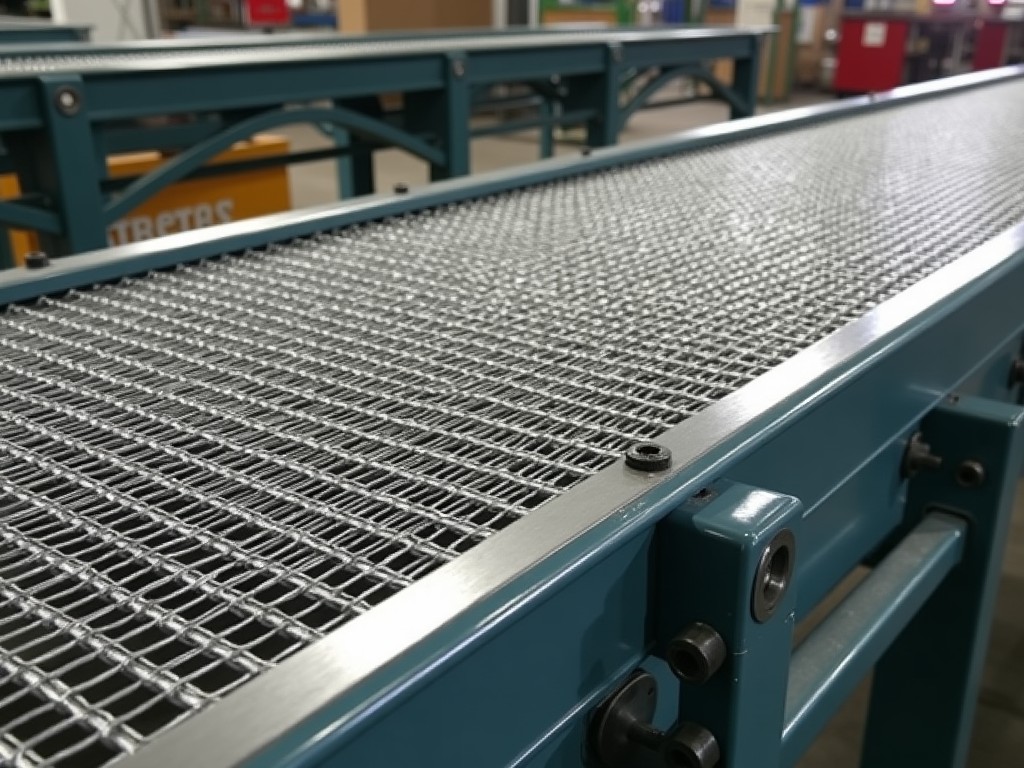
Stainless steel wire mesh conveyor belts are engineered for continuous operation in environments requiring high temperature resistance, corrosion protection, and open-area airflow. Constructed from interlinked spiral or balanced weave wires, these belts provide a stable conveying surface while allowing liquids, gases, or particulates to pass through unimpeded. Common applications include food processing, chemical drying, heat treating, and industrial washing systems where hygiene, thermal stability, and minimal product contact are critical.
Material Composition and Properties
The base material is typically austenitic stainless steel, selected for its combination of mechanical strength and resistance to oxidation and chemical attack. Grade 304 is standard for general industrial use, offering reliable performance up to 870°C in intermittent exposure and 925°C in continuous service. For more aggressive environments involving chlorides, acids, or sustained high temperatures, Grade 316L provides enhanced pitting resistance due to molybdenum content. In specialized cases such as carburizing or nitriding furnaces, heat-resistant alloys like 310S or 330 may be specified to withstand temperatures exceeding 1000°C without scaling or loss of tensile strength.
Wire diameter directly influences belt strength, open area, and flexibility. Common ranges span from 0.8 mm for lightweight, high-airflow applications to 3.0 mm or more for heavy-load conveying in metalworking or ceramic processing. The mesh opening size—defined by the pitch between wires—is tailored to prevent product fall-through while maximizing permeability. Typical opening sizes range from 4 mm × 4 mm for fine particulate retention to 25 mm × 25 mm or larger in drying and cooling zones where unrestricted airflow is prioritized.
Belt Construction Types
Two primary weave patterns dominate industrial use: balanced weave and spiral mesh. Balanced weave belts consist of left- and right-hand spiral wires interconnected by straight cross rods, creating a flat, bidirectional surface with minimal tracking tendency. This design is preferred in applications requiring precise product alignment, such as coating lines or electronics drying. Spiral mesh belts, formed by continuously wound helical wires joined at the edges, offer greater flexibility and higher open area—often exceeding 60%—making them ideal for rapid heat transfer, washing, or drying processes where minimal resistance to airflow or liquid penetration is essential.
Edge finishes are critical for belt longevity and safety. Common options include welded edges for maximum strength in high-tension systems, looped edges for easy splicing and replacement, or sealed margins to prevent fraying and reduce contamination risks in food or pharmaceutical settings. The choice of edge treatment depends on belt width, operating tension, cleaning method, and regulatory requirements such as FDA or EU 10/2011 compliance.
Typical Specifications
| Parameter | Typical Range | Notes |
|---|---|---|
| Stainless Steel Grade | 304, 316L, 310S, 330 | Selected based on temperature, corrosion, and food contact requirements |
| Wire Diameter | 0.8 mm – 3.0 mm | Affects tensile strength, open area, and flex fatigue life |
| Mesh Opening | 4 mm × 4 mm – 25 mm × 25 mm | Customizable to prevent product loss while optimizing airflow or drainage |
| Belt Width | 100 mm – 2000 mm | Limited by manufacturing equipment and support structure design |
| Operating Temperature | -200°C to 1100°C | Dependent on alloy selection and atmosphere (air, inert, reducing) |
| Open Area | 30% – 70% | Calculated from wire diameter and mesh pitch; impacts heat transfer and drainage efficiency |
Industrial Applications and Functional Advantages
In food processing, these belts enable continuous baking, frying, freezing, and washing cycles where sanitation and thermal cycling demand non-reactive, easy-to-clean surfaces. The open mesh design allows water, oil, or steam to drain freely, reducing product contact time with contaminants and simplifying Clean-in-Place (CIP) procedures. Unlike solid belts, wire mesh minimizes product marking and allows for uniform impingement airflow in impingement ovens or spiral freezers.
Chemical and pharmaceutical industries utilize these belts in drying towers, calcination units, and solvent recovery systems where exposure to acidic vapors, solvents, or high-temperature oxidizing atmospheres requires materials that resist both chemical degradation and thermal creep. The inert nature of stainless steel prevents catalytic reactions or product contamination, while the open structure facilitates efficient vapor evacuation and heat transfer from both sides of the product bed.
Heat treatment operations such as annealing, sintering, and brazing rely on the belt’s dimensional stability at elevated temperatures and its ability to convey complex geometries through uniform heating zones. The low thermal mass of the wire mesh minimizes heat retention, allowing rapid temperature adjustments between zones. Additionally, the non-conductive surface (relative to solid metal) reduces radiant heat absorption, helping maintain precise thermal profiles in controlled atmosphere furnaces.
Customization and Integration Considerations
Belt dimensions are not standardized; width, length, and edge configuration are determined by the conveyor system’s drive mechanism, roller diameter, and tensioning setup. Engineers must specify the exact number of pitches per meter to ensure proper sprocket engagement and avoid slippage or premature wear. For systems with nose bars or transfer plates, the belt thickness and flexibility are evaluated to prevent binding or excessive wear at transition points.
Surface enhancements such as PTFE coating or silicone edging may be applied to reduce product adhesion in sticky or heat-sensitive applications like confectionery or adhesive tape manufacturing. These coatings are typically limited to the carrying surface and do not compromise the belt’s structural integrity or open-area performance. In abrasive environments, hardened wire profiles or surface treatments can be specified to extend service life without altering the base weave pattern.
Splicing methods are chosen based on maintenance access and operational continuity. Welded splices provide the strongest joint but require downtime for installation. Mechanical fasteners or plastic rivets allow for quicker replacement and are preferred in modular systems or where frequent belt changes are anticipated. All splicing techniques must maintain flatness and uniform thickness to prevent tracking issues or product tilt during conveyance.
Quality Assurance and Testing
Dimensional verification includes wire diameter tolerance (typically ±0.02 mm), pitch accuracy, and overall width consistency. Each belt undergoes visual inspection for wire integrity, weld quality (if applicable), and edge deformation. Tensile testing of wire samples confirms compliance with material grade specifications, while bend fatigue tests simulate real-world flexing over sprockets to estimate service life under load.
For food-grade applications, surface roughness is measured to ensure cleanability, and material certification (e.g., EN 10204 3.1) is provided to confirm alloy composition and traceability. In high-temperature furnaces, belts may be subjected to thermal cycling tests to verify resistance to scaling, embrittlement, or loss of ductility after prolonged exposure. These evaluations are conducted according to recognized standards such as ASTM A240 for stainless steel plate, sheet, and strip, adapted for wire mesh products.
Packaging is designed to prevent deformation during transit. Belts are wound on cores with internal supports or shipped flat in crates with bracing to avoid kinking or torsional stress. Corrosion-inhibiting vapors or desiccants may be included for long-term storage, particularly in humid climates. Each shipment includes a mill test report, installation guide, and recommended maintenance schedule based on operating conditions.
More Products

Send Inquiry
If you are interested in our products, leave your information here and we will be in touch shortly.