Undermount Kitchen Sink With Basket Strainer
An undermount kitchen sink with an integrated basket strainer is designed for seamless installation beneath the countertop, eliminating exposed rims that can trap debris and compromise sanitation.
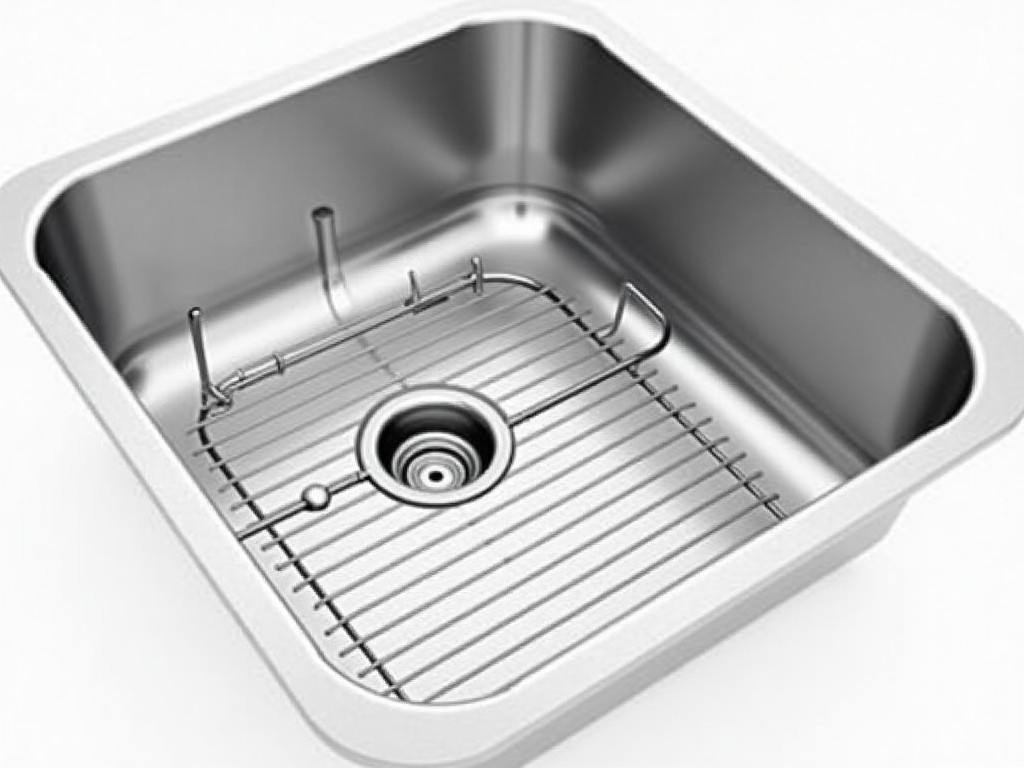
Undermount Kitchen Sink with Basket Strainer
An undermount kitchen sink with an integrated basket strainer is designed for seamless installation beneath the countertop, eliminating exposed rims that can trap debris and compromise sanitation. The basket strainer functions as a removable filter that captures food particles before they enter the drain line, reducing clog risk and simplifying maintenance. This configuration is standard in commercial kitchens, food processing facilities, and high-volume institutional environments where hygiene and workflow efficiency are critical. The system combines a single-bowl or multi-bowl sink basin with a strainer assembly engineered for repeated cleaning cycles and exposure to detergents, grease, and temperature variations.
Material Selection and Corrosion Resistance
The sink basin is typically constructed from 16-gauge or 18-gauge austenitic stainless steel, specifically Type 304 or Type 316, selected for its chromium-nickel alloy composition that resists oxidation and pitting in wet, chloride-exposed environments. Type 316 includes molybdenum, enhancing resistance to saline and acidic cleaning agents common in food service. The basket strainer matches the basin material to prevent galvanic corrosion at the junction; strainer bodies are often forged or deep-drawn from the same grade, with perforations sized to retain particles down to 3mm while allowing unrestricted water flow. Wall thickness and forming tolerances directly impact dent resistance and long-term structural integrity under static and dynamic loads.
Dimensions and Installation Parameters
Standard undermount sink bowls range from 300mm to 500mm in width and 400mm to 600mm in front-to-back depth, with basin depths between 150mm and 250mm to accommodate pot washing and soaking without excessive splash. The basket strainer assembly requires a 89mm (3.5-inch) diameter drain opening in the sink base, centered to align with the plumbing rough-in. Undermount installation relies on adhesive bonding and mechanical clips applied to the underside of the countertop—typically quartz, granite, or solid surface—requiring precise template matching and a minimum 10mm overhang clearance to prevent stress concentration. Countertop material thickness and edge profile must be evaluated to ensure adequate bonding surface and load distribution.
Strainer Mechanism and Flow Dynamics
The basket strainer consists of a perforated cylindrical basket, a locknut assembly, and a rubber or EPDM gasket that seals against the sink’s drain flange. Rotation of the locknut compresses the gasket to create a watertight seal while allowing the basket to be lifted for emptying. Perforation patterns are engineered to balance solids retention with hydraulic efficiency—typically 20–40% open area—to minimize pressure drop during peak flow. Some designs include a secondary fine-mesh insert for applications requiring finer filtration, such as laboratory or pharmaceutical prep zones. Flow rate testing confirms compliance with ASME A112.18.1 standards for drain performance under nominal load.
Load Capacity and Structural Validation
Undermount sinks are evaluated for static load capacity based on the countertop substrate’s ability to support the sink’s weight plus dynamic loads from water, utensils, and equipment. A typical 450mm x 400mm x 200mm sink in 16-gauge 304 stainless steel weighs approximately 12–15kg when empty. When filled with water (8L capacity) and subjected to a 50kg dynamic load (e.g., stacked pots), total force exceeds 60kg, requiring countertop adhesion and substrate strength to withstand shear and peel stresses. Manufacturers specify minimum countertop overhang and adhesive type (e.g., two-part epoxy or silicone-based) based on finite element analysis of stress distribution at the rim interface.
Hygienic Design and Cleanability
The absence of a top rim eliminates crevices where moisture and particulates can accumulate, reducing biofilm formation risk—a key factor in HACCP-compliant environments. Seamless welding of the basin corners and smooth interior finishes (Ra ≤ 0.8μm) prevent particle entrapment and facilitate wipe-down cleaning. The basket strainer’s removable design allows for daily emptying and periodic deep cleaning via soaking or ultrasonic methods. Drain components are accessible without disassembling the sink, enabling routine inspection of gasket integrity and locknut torque. These features support compliance with NSF/ANSI 51 and 3-A Sanitary Standards for food equipment.
Customization Options for Project Requirements
Standard configurations can be adapted to specific workflow needs through dimensional adjustments, bowl partitioning, or accessory integration. Single-bowl units are common in prep areas; double-bowl designs support segregated washing and rinsing zones. Depth can be increased to 250mm for soaking large trays or decreased to 150mm in shallow-depth countertops. Strainer baskets are available with varying perforation sizes (2mm to 5mm) or mesh liners for fine solids capture. Optional accessories include cutlery grids, bottom grids to protect the basin surface, and splash guards mounted to the countertop edge. All modifications maintain material consistency and undermount compatibility.
Quality Control and Manufacturing Consistency
Production begins with coil-fed stainless steel blanks subjected to tensile and hardness testing to verify grade conformance. Forming processes—deep drawing, stamping, or press braking—are monitored for thinning and cracking using in-line thickness gauges. Welded joints (if applicable) undergo dye penetrant inspection to detect surface-breaking flaws. Each sink is checked for dimensional accuracy via CMM or template gauging, particularly the drain hole position and rim flatness. Strainer assemblies are torque-tested to ensure locknut resistance falls within 2.5–4.0 Nm, preventing loosening under vibration while allowing manual removal. Final inspection includes water retention testing to confirm leak-free performance at the strainer interface.
| Parameter | Typical Range | Notes |
|---|---|---|
| Sink Material Gauge | 16–18 ga | Lower number = thicker wall |
| Basin Depth | 150–250 mm | Affects splash and usability |
| Strainer Opening | 89 mm (3.5 in) | Standard drain size |
| Water Capacity (Single Bowl) | 8–15 L | Dependent on dimensions |
| Static Load Limit | 60–100 kg | Dependent on countertop adhesion |
| Surface Finish (Ra) | ≤0.8 μm | Hygienic finish target |
| Locknut Torque | 2.5–4.0 Nm | Ensures seal without over-tightening |
For project-specific requirements including custom dimensions, material upgrades to 316L for enhanced corrosion resistance, or integration with pre-plumbed carts and wash stations, technical consultation is recommended. Provide countertop material details, cabinet opening dimensions, and intended usage profile to ensure proper fit and performance. Contact our engineering team to initiate a quotation process with lead times and packaging options tailored to your facility’s logistics.
More Products

Send Inquiry
If you are interested in our products, leave your information here and we will be in touch shortly.