Wholesale Perforated Metal Sheet Black
Perforated metal sheets with a black finish combine structural integrity with functional surface treatment for applications requiring controlled airflow, light diffusion, acoustic management, or
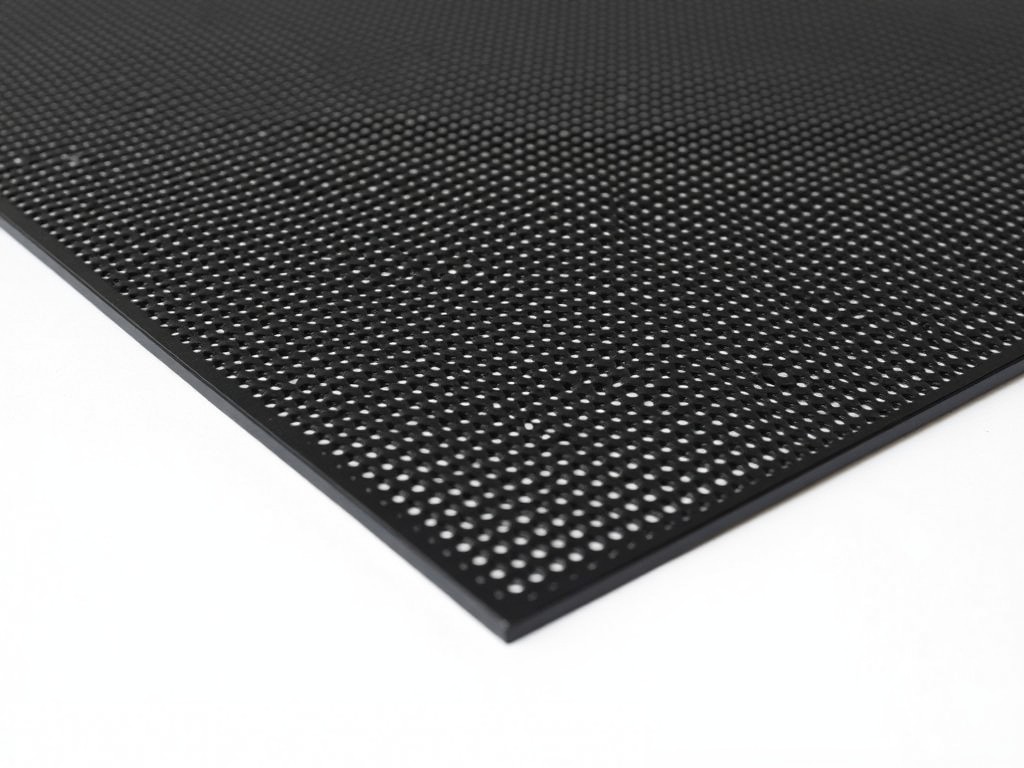
Wholesale Perforated Metal Sheet Black
Perforated metal sheets with a black finish combine structural integrity with functional surface treatment for applications requiring controlled airflow, light diffusion, acoustic management, or visual screening. The perforation pattern defines open area, while the black coating provides corrosion resistance and aesthetic consistency in industrial environments.
Material Selection and Coating Process
Base materials typically include cold-rolled steel, hot-rolled steel, or stainless steel grades such as 304 or 316, selected based on required strength, formability, and environmental resistance. The black finish is achieved through powder coating, electrophoretic deposition (e-coating), or specialized black oxide treatment, each offering different adhesion properties, UV stability, and chemical resistance thresholds.
Powder coating provides a uniform polymer layer with typical film thickness of 60–80 microns, offering good impact resistance and color retention under moderate UV exposure. E-coating delivers superior edge coverage and salt spray performance, often exceeding 500 hours to red rust in ASTM B117 testing, making it suitable for outdoor or high-humidity installations. Black oxide, while thinner, maintains dimensional precision and is preferred where tight tolerances are critical.
Perforation Patterns and Open Area Calculation
Perforation geometry directly influences airflow resistance, sound absorption, and structural load capacity. Common patterns include round, square, slotted, and hexagonal arrangements, each defined by hole diameter, pitch (center-to-center spacing), and stagger angle. Open area percentage is calculated as the ratio of hole area to total sheet area, determining the proportion of unimpeded passage for air, light, or sound.
For example, a 3mm diameter round hole on a 6mm staggered pitch yields approximately 19.6% open area, while a 5mm hole on the same pitch increases open area to about 54.5%. Higher open area reduces pressure drop in ventilation systems but decreases effective load-bearing area. Engineers must balance functional requirements with structural needs, particularly when sheets are used as protective guards, machine housings, or architectural facades subjected to wind or impact loads.
Typical Specifications and Customization Options
| Parameter | Typical Range | Notes |
|---|---|---|
| Sheet Thickness | 0.5 mm – 6.0 mm | Thinner gauges for decorative or filtration use; thicker for structural guards |
| Width | Up to 1500 mm | Limited by press capacity and material coil width |
| Length | Up to 3000 mm | Longer lengths available via splicing or special handling |
| Hole Diameter | 1.0 mm – 20.0 mm | Smaller holes increase tooling wear; larger holes reduce sheet strength |
| Pitch | 2.0 mm – 50.0 mm | Must be > hole diameter to prevent web failure |
| Open Area | 5% – 70% | Dependent on hole size, shape, and arrangement |
| Black Finish Type | Powder coat, E-coat, Black oxide | Selected based on environment, durability, and color consistency needs |
Custom perforation designs, including logos, gradients, or variable density patterns, are achievable through CNC turret punching or laser cutting, though these methods may affect per-unit cost and lead time. Edge treatments such as deburring, rounding, or hemmed borders are available to improve safety and handling. Flatness tolerances typically follow ISO 9044 standards, with deviations measurable under controlled lighting to ensure suitability for precision assemblies.
Industrial Applications and Functional Benefits
In HVAC systems, perforated black metal sheets serve as diffuser faces or return air grilles, where the dark finish minimizes visual glare while the perforation pattern ensures even air distribution. The black surface reduces light reflection in environments such as projection rooms, studios, or inspection booths, where controlling ambient light is critical for visual accuracy.
As machine guards or enclosure panels, the sheets provide physical protection while allowing visibility, heat dissipation, and noise attenuation. The black finish helps conceal dust, oil residue, or minor scratches that accumulate during operation, maintaining a cleaner appearance over time compared to lighter finishes. In acoustic applications, perforated sheets backed with absorbent materials form tuned resonators that target specific frequency ranges, with perforation diameter and depth influencing the absorption peak.
Architectural uses include facade cladding, sunshades, or privacy screens, where the black finish offers a uniform, low-reflectance surface that complements modern design aesthetics. Perforation patterns can be engineered to provide shade while preserving outward visibility, reducing solar heat gain without requiring mechanical shading systems. The coating’s UV stability ensures long-term color consistency in exterior installations.
Quality Control and Testing Protocols
Dimensional verification includes thickness measurement via micrometer, hole size confirmation using pin gauges or optical comparators, and pitch validation across multiple points to detect tool wear or press misalignment. Flatness is assessed using a straight feeler gauge and light gap method, with acceptable deviation typically under 3mm per meter for structural applications.
Coating adhesion is tested per ASTM D3359 (tape test), with acceptable results showing no more than 5% coating removal. Salt spray resistance follows ASTM B117, with test duration varying by coating type—powder coat typically rated for 200–500 hours, e-coat for 500–1000+ hours. Hardness is measured via pencil hardness test, with values commonly ranging from H to 2H for standard powder coats, indicating resistance to marring during handling.
Visual inspection is conducted under standardized lighting (D65 or equivalent) to assess color uniformity, gloss level, and defect visibility. Any blistering, cracking, or uneven coverage is grounds for rejection. Material traceability is maintained through batch numbering, linking raw material certificates, coating parameters, and inspection records to each production lot for auditability and recall readiness.
Ordering Information and Lead Times
Minimum order quantities for standard perforation patterns typically start at one pallet (approximately 500–1000 kg, depending on thickness and size), while custom patterns may require higher volumes due to tooling setup and programming costs. Quotations require specification of material grade, thickness, width, length, hole diameter, pitch, pattern type (staggered or straight), open area target, and preferred black finish type.
Standard lead times for stock materials with common perforations range from 2–4 weeks. Custom tooling or special coatings can extend this to 6–10 weeks. Samples are available upon request, usually shipped within 3–5 business days for standard configurations; custom sample development may incur additional charges and take longer. Packaging includes waterproof wrapping, edge protection, and palletizing for forklift handling, with export shipments compliant with ISPM 15 standards when required.
More Products

Send Inquiry
If you are interested in our products, leave your information here and we will be in touch shortly.