Wholesale Perforated Plate Ss 304
Perforated plates made from stainless steel grade 304 are widely specified in industrial applications requiring corrosion resistance, structural integrity, and controlled fluid or particulate
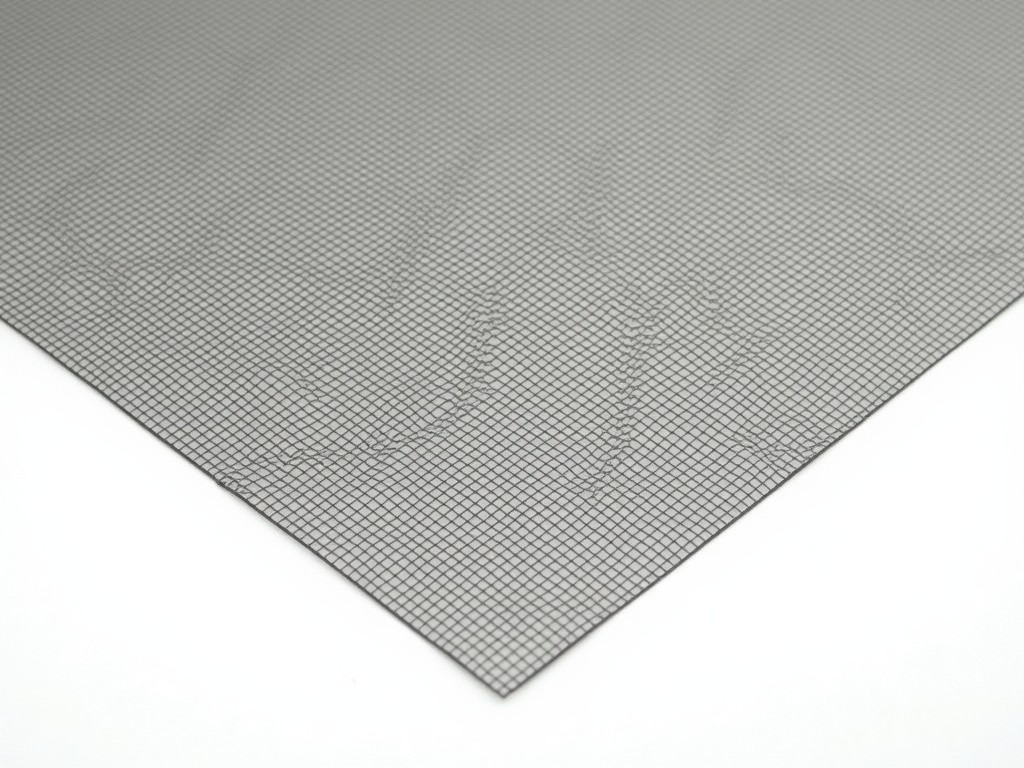
Wholesale Perforated Plate SS 304
Perforated plates made from stainless steel grade 304 are widely specified in industrial applications requiring corrosion resistance, structural integrity, and controlled fluid or particulate passage. The material’s austenitic microstructure provides consistent performance across temperature ranges from cryogenic to 870°C intermittent exposure, making it suitable for environments where oxidation or chemical exposure is a concern. Unlike coated or plated alternatives, SS 304 maintains its protective chromium oxide layer even after surface abrasion, reducing long-term maintenance needs in continuous-operation systems.
Material Characteristics and Selection Rationale
SS 304 contains approximately 18% chromium and 8% nickel, which stabilizes the austenitic phase and enhances resistance to general corrosion in atmospheric, freshwater, and mild chemical environments. Its yield strength typically ranges from 205 to 515 MPa depending on cold work, allowing engineers to select between annealed, quarter-hard, or half-hard tempers based on required flatness and formability during perforation. The material’s non-magnetic nature in the annealed state (though permeability may increase slightly after cold working) is often a deciding factor in applications involving magnetic sensitive equipment or food processing lines where trace ferrous contamination must be avoided.
Compared to SS 316, SS 304 offers adequate resistance to most indoor and sheltered outdoor conditions at a lower material cost, making it the preferred choice when chloride exposure is minimal or intermittent. For applications involving prolonged contact with seawater, deicing salts, or acidic cleaning agents, SS 316 may be recommended due to its molybdenum content. However, in controlled industrial settings such as HVAC plenums, machine guards, or food-grade conveyance systems, SS 304 provides a proven balance of performance, availability, and cost-effectiveness over the product lifecycle.
Perforation Patterns and Open Area Considerations
The functional performance of a perforated plate depends not only on hole size and shape but also on the arrangement pattern, which influences open area percentage, structural stiffness, and flow dynamics. Common patterns include staggered (60°), straight line, and diagonal alignments, each affecting load distribution and clogging resistance differently. Staggered patterns typically provide the highest open area for a given hole diameter and pitch, maximizing throughput while maintaining adequate ligament strength between holes to prevent tearing under pressure differentials or vibrational loads.
Open area is calculated as the ratio of hole area to total plate area and directly impacts pressure drop, screening efficiency, and light transmission. For example, a 3mm diameter hole on a 6mm staggered pitch yields approximately 23% open area, suitable for moderate airflow or liquid filtration, while a 5mm hole on a 10mm pitch increases open area to about 25% but reduces structural continuity. Engineers must balance these factors against the intended load case — whether the plate acts as a protective barrier, a diffuser, or a filtration medium — to avoid over-perforation that compromises rigidity or under-perforation that causes excessive pressure loss.
Standard and Custom Dimensions
Wholesale perforated plates in SS 304 are commonly supplied in standard sheet sizes such as 1000×2000 mm, 1250×2500 mm, and 1500×3000 mm to align with common fabrication presses and laser cutting beds. Thickness options typically range from 0.5 mm to 6.0 mm, with thinner gauges used in lightweight screening or decorative applications and thicker sections selected for load-bearing platforms, machine guards, or pressure-rated housings. Tolerances on thickness and flatness follow ASTM A480/A480M standards, ensuring consistency across batches for automated assembly processes.
Custom dimensions are available upon request, including non-standard widths, lengths, or shaped blanks (e.g., circular, flanged, or notched) to minimize secondary processing. Hole diameter can be specified from as small as 0.8 mm for fine filtration to over 20 mm for large-particle discharge or acoustic damping. Pitch and pattern are fully customizable, allowing duplication of existing tooling or optimization for specific flow characteristics. All custom orders require submission of a detailed drawing or DXF file to ensure accurate tooling setup and first-article inspection.
Surface Finish and Edge Condition Options
The surface finish of SS 304 perforated plate influences both appearance and functional properties such as friction, cleanability, and light reflection. Common finishes include 2B (smooth, matte cold-rolled), BA (bright annealed, mirror-like), and No. 4 brushed (unidirectional grain, Ra typically 0.2–0.4 μm). The 2B finish is standard for most industrial uses due to its uniformity and suitability for further processing, while BA is selected for decorative or hygienic applications where visual clarity and ease of cleaning are priorities. Brushed finishes are often used in architectural or consumer-facing equipment to minimize visible fingerprints.
Edge condition affects safety, handling, and downstream fabrication. Standard options include mill edge (as-cut, may have slight burr), deburred (mechanically or thermally smoothed), and rounded (radius applied for operator safety). Deburred edges are recommended when the plate will be handled frequently or installed in environments where loose particles could contaminate sensitive processes, such as semiconductor manufacturing or food preparation. For plates intended to be welded or fastened, square-cut edges with minimal oxidation are preferred to ensure proper fit-up and weld penetration without requiring extensive pre-cleaning.
Quality Control and Inspection Protocols
Dimensional accuracy is verified using calibrated calipers, micrometers, and coordinate measuring machines (CMMs) for critical features such as hole location, pitch consistency, and overall flatness. Hole diameter is typically inspected via optical comparators or vision systems to ensure adherence to tolerances, which commonly range from ±0.05 mm for precision applications to ±0.2 mm for general industrial use. Open area is validated through statistical sampling, comparing actual hole counts and dimensions against theoretical values derived from the approved drawing.
Material verification includes mill test certificates (MTCs) confirming chemical composition and mechanical properties per ASTM A240/A240M. Surface discontinuities such as scratches, pits, or roll marks are assessed under standardized lighting per ISO 105-B02 or customer-specific visual standards. For applications requiring leak tightness or pressure retention, hydrostatic or pneumatic testing may be performed on sample plates to confirm integrity of the ligament structure between holes. All inspection records are retained for traceability and made available to buyers upon request.
Common Industrial Applications
In HVAC systems, perforated SS 304 plates serve as diffuser plates in plenums, where the staggered hole pattern ensures uniform air distribution while resisting corrosion from condensation and occasional cleaning agents. The material’s ability to maintain surface integrity over years of thermal cycling reduces the risk of particulate shedding into airstreams, supporting indoor air quality standards. Unlike aluminum or galvanized alternatives, SS 304 does not produce white rust or flaking oxides that could clog downstream filters or sensors.
Food processing facilities utilize perforated SS 304 plates in drying trays, washing conveyors, and sorting screens, where the non-toxic, non-reactive surface complies with FDA and EU food contact regulations. The ease of cleaning — including resistance to high-pressure washdowns and alkaline detergents — minimizes biofilm formation and supports HACCP compliance. Hole patterns are often customized to match product size, allowing smaller items to pass through while retaining larger debris, optimizing throughput without compromising hygiene.
Industrial machinery manufacturers integrate perforated SS 304 plates as motor guards, coupling shields, and ventilation panels, where the balance of strength, corrosion resistance, and airflow is critical. The material’s fatigue resistance under cyclic loading ensures long-term reliability in vibrating environments, such as near pumps or compressors. Compared to plastic or painted steel guards, SS 304 maintains its protective function even after impact or abrasion, eliminating the need for frequent repainting or replacement in harsh industrial settings.
Packaging and Logistics for Wholesale Orders
To prevent surface damage during transit, perforated plates are typically interleaved with acid-free paper or plastic film and stacked on wooden pallets with corner protectors. Edge protection is applied using cardboard or polyethylene guards to avoid chipping or bending during forklift handling. Moisture barrier bags are included for overseas shipments to mitigate condensation risks, particularly important for preserving the passive oxide layer on SS 304 in humid climates. All packaging is designed to meet ISPM 15 standards for international shipping.
Load securing involves strapping or stretch wrapping to prevent shifting, with clear labeling indicating material grade, dimensions, heat number, and handling instructions. Plate orientation is marked to avoid unnecessary re-stacking at the destination. For custom-shaped or thin-gauge plates, additional support such as wooden crates or A-frames may be used to prevent flexing. Documentation including packing lists, inspection certificates, and origin declarations is enclosed in a waterproof pouch attached to the pallet.
Comparison Table: SS 304 vs. Alternatives for Perforated Plates
| Property | SS 304 | SS 316 | Galvanized Steel | Aluminum 5052 |
|---|---|---|---|---|
| Corrosion Resistance (Indoor) | Excellent | Excellent | Good (until coating damage) | Excellent |
| Corrosion Resistance (Salt Spray) | Moderate | Good | Poor | Good |
| Typical Yield Strength (MPa) | 205–515 | 215–550 | 250–350 | 110–280 |
| Max Continuous Use Temp (°C) | 870 | 925 | 200 (coating limit) | 300 |
| Non-Magnetic (Annealed) | Yes | No | No | Yes |
| Relative Material Cost | Medium | High | Low | Medium |
The table above illustrates key performance differentiators to assist in material selection. SS 304 provides a balanced profile for most industrial perforation applications, offering sufficient corrosion resistance without the premium cost of SS 316. While galvanized steel has lower upfront cost, its protective zinc coating can be compromised during perforation, exposing the base steel to corrosion at hole edges — a risk mitigated in SS 304 by the homogeneous nature of the alloy. Aluminum offers lightweight advantages but lacks the strength and elevated temperature capability of stainless steels, limiting its use in high-pressure or load-bearing perforation applications.
More Products

Send Inquiry
If you are interested in our products, leave your information here and we will be in touch shortly.