B2B Plastic Coated Diamond Mesh Fencing
Plastic coated diamond mesh fencing is a corrosion-resistant perimeter solution engineered for industrial, commercial, and infrastructure applications where long-term durability and low maintenance
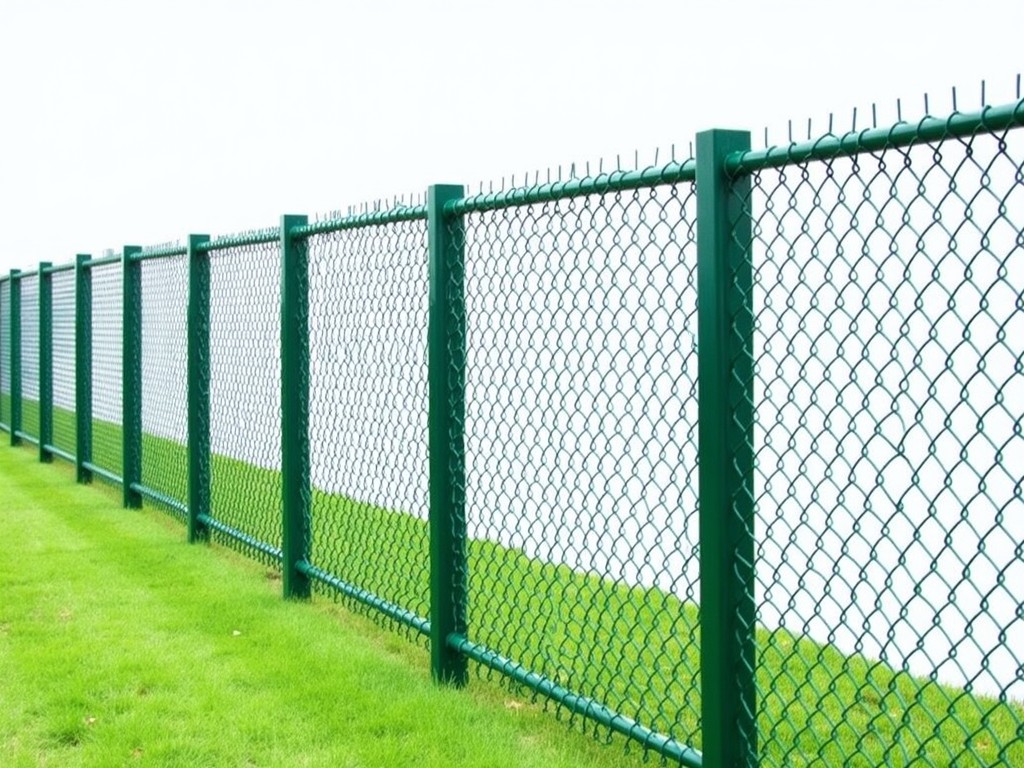
B2B Plastic Coated Diamond Mesh Fencing
Plastic coated diamond mesh fencing is a corrosion-resistant perimeter solution engineered for industrial, commercial, and infrastructure applications where long-term durability and low maintenance are critical. The base structure consists of galvanized steel wire woven into a diamond pattern, subsequently encapsulated in a thermoplastic coating—typically polyvinyl chloride (PVC) or polyethylene (PE)—to protect against environmental degradation. This dual-layer construction combines the tensile strength of steel with the chemical and UV resistance of polymers, making it suitable for harsh environments including chemical plants, wastewater facilities, mining sites, and outdoor storage yards.
Unlike bare galvanized or painted alternatives, the plastic coating eliminates direct exposure of the steel substrate to moisture, salts, and industrial pollutants, significantly extending service life. Coating thickness typically ranges from 0.3mm to 0.8mm, depending on project specifications, and is applied via extrusion or dip-coating processes to ensure uniform coverage, including at wire intersections. The result is a barrier that maintains structural integrity and appearance for 15–25 years under normal conditions, reducing lifecycle costs associated with repainting or replacement.
Core Technical Specifications
Performance is governed by standardized parameters that allow engineers to compare options objectively. Key variables include wire gauge, mesh aperture, coating type, and tensile strength, all of which influence load resistance, flexibility, and installation practicality. These specifications are not arbitrary—they are derived from field performance data and material science principles to ensure suitability for specific stress conditions such as wind load, impact resistance, or vibratory environments.
For example, a 2.0mm core wire with 50mm x 50mm aperture offers different deflection characteristics than a 3.0mm wire with 100mm x 100mm aperture, even if both use identical coating. Engineers must evaluate these trade-offs based on site-specific risks: tighter meshes resist small-object intrusion but increase wind loading; heavier gauges improve impact resistance but raise handling complexity. The following table outlines typical ranges for industrial-grade plastic coated diamond mesh fencing.
| Parameter | Typical Range | Notes |
|---|---|---|
| Core Wire Diameter | 1.8mm – 3.2mm | Galvanized steel (Z275 or higher) |
| Mesh Aperture | 25mm x 25mm – 100mm x 100mm | Diamond pattern; nominal opening |
| Coating Thickness | 0.3mm – 0.8mm | PVC or PE; measured over wire crest |
| Tensile Strength (Wire) | 350 – 550 MPa | Post-galvanizing, pre-coating |
| Coating Adhesion | Minimum 15 N/mm (peel test) | ASTM D4541 or equivalent |
| UV Stability | Minimum 2000 hours (QUV) | No cracking, chalking, or delamination |
Material Selection Logic
The choice between PVC and PE coatings depends on environmental exposure and mechanical demands. PVC offers superior abrasion resistance and rigidity, making it preferred in high-traffic zones or where mechanical damage from tools, vehicles, or debris is likely. Its higher hardness (Shore D 40–50) reduces surface scoring but may increase brittleness at low temperatures. PE, by contrast, provides greater flexibility and impact absorption at sub-zero conditions, with better resistance to stress cracking under prolonged strain—ideal for regions with freeze-thaw cycles or seismic activity.
Both materials are compounded with UV stabilizers (typically hindered amine light stabilizers, HALS) and antioxidants to prevent polymer chain degradation. Color pigments are dispersed throughout the coating matrix, not applied as a surface layer, ensuring consistent appearance even if scratched. Black, green, and gray are standard due to their UV stability and low visibility of dirt; custom colors require minimum order quantities and may affect lead time due to pigment stabilization testing.
Galvanization quality is equally critical. The steel wire must meet minimum zinc coating standards (e.g., Z275 per ASTM A653) to prevent under-film corrosion. Inadequate galvanization leads to rust migration beneath the plastic layer, causing blistering and delamination over time. Reputable manufacturers test adhesion using cross-hatch and peel methods per ISO 2409, ensuring the coating remains bonded under flex and impact.
Industrial Applications and Rationale
In wastewater treatment plants, plastic coated diamond mesh fencing secures open tanks and clarifier perimeters where constant exposure to hydrogen sulfide, methane, and aqueous chlorides would rapidly degrade uncoated steel. The coating acts as a barrier to permeation, while the open mesh design prevents gas accumulation and allows visual inspection—critical for safety compliance. Unlike solid panels, it does not trap moisture or create microclimates that accelerate corrosion.
Mining operations use this fencing around tailings ponds and equipment yards to resist abrasion from silica dust and occasional impact from falling rock. The diamond mesh flexes under impact rather than cracking, dissipating energy through wire deformation. Coating thickness is often increased to 0.6–0.8mm in these applications to counter mechanical wear, with blue or red pigments sometimes specified for high-visibility safety zones.
Data centers and substations specify plastic coated mesh for perimeter security where electromagnetic transparency is required. Unlike solid barriers, the open weave does not interfere with RF signals or grounding systems. Additionally, the non-conductive coating eliminates stray voltage risks, making it safer than metallic alternatives in high-voltage environments. Installation typically includes grounding clamps at posts to maintain equipotential bonding while preserving the fence’s dielectric properties.
Customization and Ordering Considerations
Industrial projects rarely use off-the-shelf specifications. Customization begins with defining the mechanical load case: is the fence a visual deterrent, a climb barrier, or a structural windbreak? This determines wire diameter and aperture. Environmental data—pH of soil, salt spray concentration, temperature extremes—guides coating material and thickness selection. Height, post spacing, and gate integration are then modeled against local wind codes (e.g., ASCE 7) to prevent resonance or buckling.
Manufacturers typically require the following for accurate quotation: wire diameter, mesh size, coating type and color, roll height and length, post specifications (material, size, spacing), and any required accessories (tension bars, tie wires, ground sleeves). Lead times vary from 2–4 weeks for standard configurations to 6–8 weeks for custom colors or non-standard apertures due to tooling changes. Samples are available upon request and usually include a 300mm x 300mm swatch with coating adhesion and UV data sheets.
Packaging is optimized for site handling: rolls are wound on rigid cores with protective outer wraps to prevent coating abrasion during transit. For export, additional moisture barriers and corner protectors are used. Rolls are labeled with batch numbers traceable to raw material certificates and coating batch logs, supporting quality audits and warranty claims.
Quality Control Philosophy
Quality is verified at multiple stages, not just final inspection. Wire is tested for zinc coating weight and tensile strength before weaving. Post-weaving, the mesh undergoes width and aperture verification using laser gauges to ensure dimensional consistency. Coating application is monitored in real time via laser thickness sensors, with statistical process control (SPC) charts tracking variation across each roll.
Finished rolls are subjected to mandatory tests: coating adhesion (peel), flexibility (mandrel bend at -20°C), and accelerated weathering (QUV or Xenon arc). Batch release requires all samples to meet minimums—not averages—ensuring no weak points enter shipment. Documentation includes material certificates, test reports, and a traceability matrix linking each roll to its resin lot and galvanization batch.
This approach reduces field failure risk by addressing variability at the source. Unlike end-of-line sampling, which may miss localized defects, in-process controls catch issues such as uneven coating or wire nicking during weaving. For critical infrastructure projects, third-party inspection is often specified, and manufacturers provide hold points for witness testing of adhesion and tensile properties.
For technical consultation, specification support, or to request a project-specific quotation, contact our engineering team. Provide your site conditions, required dimensions, and performance expectations to receive a tailored solution with full documentation.

Product Categories


Send Inquiry
If you are interested in our products, leave your information here and we will be in touch shortly.